I commented on this late 19th Century masterpiece in “If you can keep your head when all about you are losing theirs…” and now add a reading which I have put on YouTube.
https://youtu.be/-HNiUMy4e68
Category: Windows to the Numinous
-

If….by Rudyard Kipling
-

John Keats – Ode To Autumn – a Reading
I have already written a few words about Ode to Autumn but felt minded to record my own reading of it.
Forgive the sheer vanity but it just felt something I needed to do. I have never been a luvvie, a Thespian. God forbid.
Professional luvvies can be bad enough but amateurs are almost inevitably excruciating. I hope therefore that my (almost) non-existent readers will forgive this strange departure.
Partly, I did it because it was fun. Partly because my wife has a fantasy that I might be a budding podcast star. I don’t think she realizes you have to be female, with Botox and big tits to achieve that. And apparently if you want to appeal to the Afro Americans you need to be both female and a clone of one or other Kardashian (Kim?) with a huge bum.
Anyway, onward. I bought a retro microphone called Blue Snowball Ice and set out to inflict my painful drivel on an unsuspecting public.
I used excellent free audio recording software called Audacity and spent, what, six or seven hours fiddling around with it trying to make myself sound less of an aged old fart than I actually am.
I am amazed and mortified at how old I sound – I don’t feel it. But that is what they all say!
-
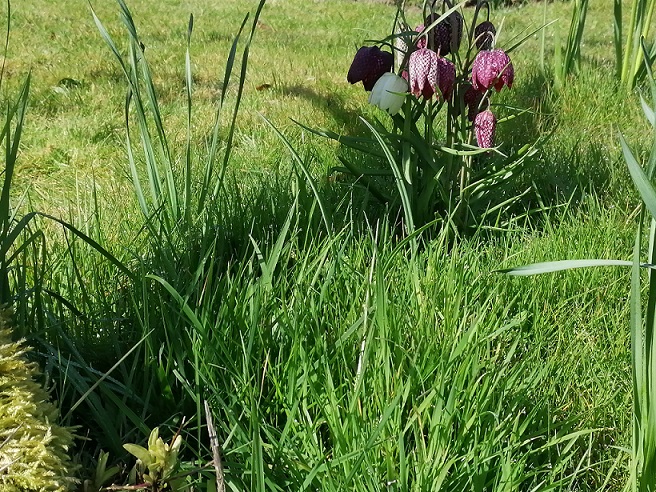
If you can keep your head when all about you are losing theirs….
Kipling’s poem “If” is profound and moving.
I don’t give a fig that spoilsports like George Orwell considered Kipling a jingoistic outrage. I don’t give a whit that he was a child of the British Empire, which, in this revisionist age those of a smaller mind would have us deride.
How easy it is to criticize with the benefit of hindsight.
As ever I take the words at their face value. I do not comb through the life of the man trying to come up with reasons why I should dislike the poem because I have or don’t have political quarrels with its author.
“If” is meet and right. It is full of good things. It inspires the soul. It tells me how I should lead my life and I am grateful for the inspiration, the thought, the teaching. Down with the politically correct who would like to ban Kipling or eviscerate his works as they have done with children’s author Enid Blyton.
To censor or criticize historical works in the light of current thinking is an invidious and dangerous form of censorship. A nonsense. George Orwell and his like were wrong. What mealy mouthed crusader can object to If? Or indeed The Famous Five?
But enough ranting, back to the poem. Is this not a way you would want to lead your life? I know, were I a character of somewhat stronger constitution, that I would lead my life by the words of this wise poem.
I must not “look too good, nor talk too wise”. Guilty as charged I fear. I may talk the talk but at heart, down below, when push comes to shove I am as flawed as my neighbor. Yep, good tip Rudyard, thanks. Must try harder not to be a loud mouthed hypocrite.
Can I “meet with Triumph and Disaster, And treat those two impostors just the same”? Well no I can’t but I know therein lies the secret of happiness. What else is Buddhism all about if not retaining equanimity? What is the Tao te Ching if not going with the flow?
“If you can talk with crowds and keep your virtue, Or walk with Kings—nor lose the common touch” – how right he is, what sentiments! I’m not sure that I can, though I know I perhaps I ought. I retain, I stubbornly cling to the upper middle class Englishness into which I was born. Westminster and Oxford, a cut glass accent. And I am not ashamed, in reality, so to do. I just wish that others had been born with like privilege and advantage.
And if you can live by Kipling’s wise precepts: “Yours is the Earth and everything that’s in it”.
Yes Rudyard Kipling, I am with you. You are a man whose sentiment I admire and whose advice I accept.
Your poem is great and wise and good.
-

Here lies one whose name was writ in water.
Far from disappearing, Keats and his incomparable poetry have lived on after his death.
How should you approach Keats? What should you do with his works? How should you interpret them?
I can only answer for myself; that I find pleasure in taking poetry at face value. I find no need to agonize, to wander in endless circles wondering what he meant by his immortal lines.
Being neither intellectual nor aesthete, I make of them what I will. I let them do for me what beauty always does – elevate my mood, inspire me, give me a glance of the transcendent, the sublime.
Take the Ode to Autumn. Autumn is personified – it conspires with the sun:
To bend with apples the moss’d cottage-trees,
And fill all fruit with ripeness to the core;Redness, ripeness, plumpness. The beauty of rural life, of humble cottages. The sweetness of fruit, a harvest of plenty celebrated in ancient musty churches where children sing simple songs of thanksgiving.
Even hardened bankers and their dreary clerks, the Marleys, Scrooges and Cratchits, can have their spirits lifted, as the festivals of autumn presage those of Christmas and the revelations that season’s spirits will bring. And on after that in the never ending rhythm of the earth and the sun.
Of course we must not imagine there ever existed such a place as “Autumn” other than in the mind of poets, but then all reality exists in our minds. Why not let a fable or two dwell there as well? The unobserved tree living silently in the woods exists, but with no observer who will celebrate its life? Who will appreciate its beauty? Perhaps we give Autumn a validity by observing it. Perhaps the tree living silently in the woods needs us after all.
Maybe the beauty of that faery tale, the rural idyll, can become our reality. At the very least, Keats’ words can accentuate, enlarge the natural beauty we see around us in this season of fruition and plenty:
Season of mists and mellow fruitfulness,
Close bosom-friend of the maturing sunKeats conjures up a scene so colorful, so joyful in its gentle melancholy, that spring can wait its turn. Autumn has its deep beauty too. Autumn is sitting on a granary floor, drowsed with the fumes of poppies. Autumn loads and blesses “with fruit the vines that round the thatch-eves run”.
Let’s not fool ourselves – Keats lived in times as brutal as our own. More so. The dark satanic mills so feared by Blake were spreading like evil, black mold. Conditions in the factories were bleak and child labor produced goods which many (most) could not afford His own life was a tragic one, cut short by disease. His family were taken from him before their time. He could never marry – his love for Fanny remained unrequited, he could not afford matrimony.
But we must take beauty where and when we can. We must believe that times can and will improve in the millennia to come. While waiting, the words of Keats can only improve our experience in what we think of as our “reality”.
-

Stephen Fry’s Hippopotamus
Fry is a comic genius, although his comedy is always tinged with darkness. Erudite, witty and (dare I say it) profound, this upper middle class Englishman certainly appeals to others who share his background. But I would imagine his wit is appreciated by a far wider audience.
Few things in life bring me laughter these days but Fry’s work is a welcome exception. I watched the recent film of Hippopotamus last night and I laughed out loud.
Netflix is so full of dark, satanic crime and this gentle, humorous work made me realize (once again) that we are what we consume. If alcohol brings depression we have only ourselves to blame. No-one forces its pernicious influence on us. Likewise, if Wallander makes you gloomy, switch over to the Hippopotamus.
Burnt out, louche poet and theater critic Ted Wallace visits friends at Swafford Hall, at the behest of his goddaughter, to verify the healing miracles apparently being performed there.
Ted is a bit of a pig, never mid hippo. Over the hill, irascible and drunk he serves as a sober reminder of what we could so easily become. He is hilariously rude to all and sundry. The original grumpy old man on a steep descent to the hereafter.
Swafford Hall and its inhabitants are all too familiar, it is all so quintessentially English. Though I avoid such places like the plague these days, it took me back to a time long ago when I imagined such invitations were worth seeking. Callow and foolish youth.
It’s mostly fun all the way through. Filthy vulgar fun. Well that’s Stephen Fry for you, god bless him. A joy to watch or read.
And yet there are elements here which give one pause for thought. Pause for more serious reflection. Ted is a man who feels the cynicism so many of us come to share. Poetry is hard work, not joyful and creative inspiration. His foolish young nephew has yet to be disabused.
Ted has lost his way, his early promise. He has writers’ block; no poem has come from his pen in decades and he feels it. Life has caught up with him and he drinks to come to terms with it. He can’t stand humbug and crass fools. He stands up in the theater in front of the entire audience and tells the cast their play is crap.
The miracle he is sent to investigate turns out to be spectacularly and hilariously un-supernatural.
The book humorously parodies one of our greatest failings, or perhaps weaknesses. The desire for miracles. The desire for magic, for superhuman powers. For gods and prophets, for cures and mysticism. For salvation, if only from mundanity and the sheer boredom of base reality.
And yet, unlike with many of Fry’s works, there is redemption. The gut wrenching realization of the “cured” that they are not, is balanced by a beautiful poignancy. The girl who sent Ted on his mission dies from her leukemia and yet her very demise seems to have saved our Ted. Her death is sad; so is the denial of the miraculous.
But Ted’s muse has returned. He takes up his pen and writes the first poem in decades. Life is sad – if you let it be. But death is only death and those of us who are not there yet may as well rejoice in our creativity while we still have the chance.
Perhaps the miracle is that we ever lived.
-

Where are the songs of spring?
…..Where are the songs of spring? Ay, Where are they?Think not of them, thou hast thy music too….AutumnJohn KeatsWhat exquisite bitter-sweetness, an English autumn in the countryside. Burgeoning hedgerows, the apple trees in the cottage garden loaded with red sweetness, the waning autumn sun filling the world with its mournful rays.It’s the end of the summer holidays – no Englishman can forget the days when his parents sent him off at Victoria Station, on the school train to his spartan boarding school on the Kent coast.His trunk loaded with tweed suits for Sunday best, stout walking shoes, thick trousers, jerseys and his prep school rug for the end of the bed. Back to the dormitories, sweet rationing, cold playing fields and choir practice for the Sunday services at the ancient Saxon church at the top of the village.It was a day of quiet and serene pleasure. We pottered in the garden, we cycled along the still green lanes.We were youth and we were age; a delightful 16 year old niece provided the former, myself the latter. My wife somewhere in between.A meditation on death? Perhaps, especially as we passed my parents newly carved headstone in the local church. But more joy than sadness I think, a day when eternity seemed to have a vivid reality and the passing of the seasons but a pleasant distraction.Do I mourn the passing days? Do I mourn years past? No, not today at least.It was a day to live, a day to bathe in autumn sunlight and a piercing blue sky. A day to live for and not a day to fear; certainly not for the future.A day for gratitude; a day to rejoice in what is, not mourn what is no longer. -
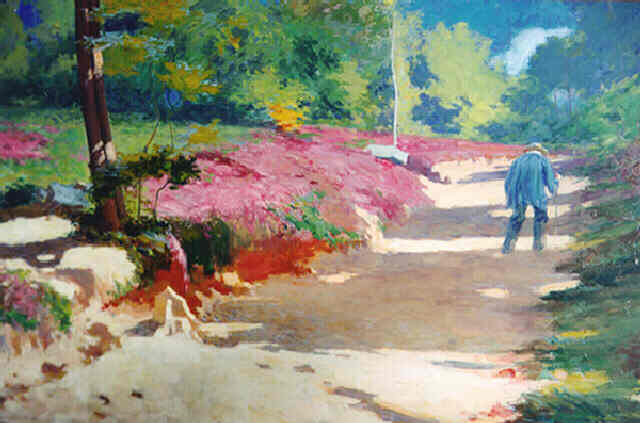
Consider the Lilies of the Field…
…how they grow; they toil not, neither do they spin…Behold the birds of the heaven, that they sow not, neither do they reap, nor gather into barns…
I have often wanted to be a tree. Preferably an oak; preferably in some far flung province inaccessible to man.
I have spent some weeks in meditation. Not on my knees or my backside. Not in some temple or man made edifice.
But in simple existence, simple awareness of the passing days, the season, the comings and goings of the world. To feel the summer breeze, the gentle waving of leaves and branches. The dawn chorus, the cooing of pigeon. Waves, sky, hot and cold. Rain and dry. Beauty in nature and in art.
And then I spoiled it, I let the serpent into Eden, I picked the apple. I stopped my flow, I ceased to let the world wind over and around me and I sought, once again, toil and the world of commerce.
It was an error to open my computer, a grave mistake to enter the dark caverns of the world wide web, the dark satanic mills of finance.
Would there have been any way of earning my daily bread which would have enabled the poetry to continue to flow? Or does “the world” always have to entail disillusion and anxiety, irritability and bad temper?
I have been observing my moods carefully recently for a number of reasons, not the least my interest in experimenting with micro-dosing to expand the doors of my perception.
For weeks I have been walking, wandering aimlessly, enjoying pure existence. A sparrow, if you like, or an oak tree or Ent. I have observed as I have wandered. And I have let go, let all things pass. My mind has taken very different paths, my thoughts have expanded. The predominant feeling has been one of pure harmless joy; an innocence combined with a great enrichment of the imagination. An expansion of my mind without even the necessity of a hallucinogenic door opener.
I then I blew it. I knocked on the dark doors of commerce; I spent some hours looking at financial arbitrage. I revisited the squalor of money and finance, of greed and business.
I became less observant but before the glass darkened too thoroughly, before the mirror became too opaque, I was able to notice what it was doing to me. Irritability was the main evil and a far decreased ability to take pleasure in what was around me.
So I have switched it all off again; for a few weeks at least. Will I return to it when I am back in my study? Can it be done without irritation? Can I learn to combine commerce with a joy in life?
I will have to try. And if I can not, I must switch off commerce for good. Close down the mill and head for the hills. Live in a green and pleasant land.
-
Thoughts from the back of beyond.
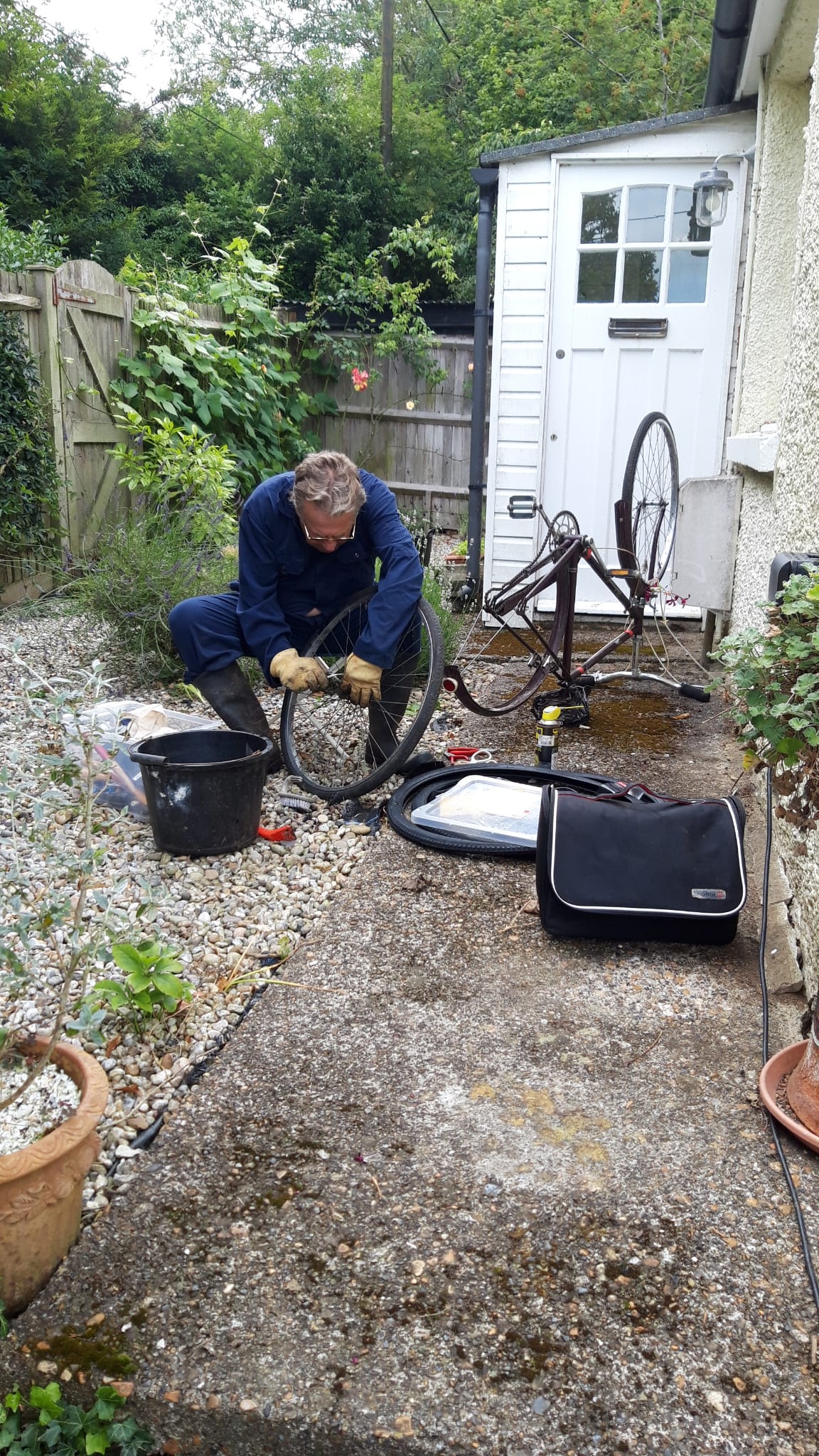
The back of beyond is where I want to be. And I am back, in the back of beyond. I have come in a full circle.
It is difficult to imagine that such isolation can be found in this overcrowded little island, and yet in the north Devon area, around Hartland Point, it is almost possible to go off grid.
The nearest fuel is about 20 miles away and the local shops sport little other than canned food and the occasional brown, rotting banana.
I have been coming here with my late 18th Century parents in law for nigh on 35 years, and their three daughters, straight out of Jane Austen.
In the 90’s I was furiously dealing in junk bonds and Nasdaq new issues. I had to climb to the top of a local muck heap to get a faltering signal and put my orders through to a bemused broker in New York.
Despite the evident disapproval of my in laws (busy sewing tapestry and looking for Mr Darcy for the other two daughters), I am grateful for those years of frenetic activity. Without those harried times I would have spent my life as a slave in some awful bank, in some ghastly metropolis.
My childhood was spent in the back of beyond, metaphorically at least. My pleasures were carpentry and the sea, walking and reading. I wanted to be a farmer or an artisan. I never wanted to end up in the City of London, let alone those of Tokyo or Hong Kong.
Did greed get the better of me? Or necessity perhaps.
But I am back where I started. Sitting on a deserted beach in the middle of nowhere. Quietly walking the leaf clad lanes; noiseless other than the bleat of sheep, the call of birds, the murmur or sometimes crashing of the waves.
It is an area of the most profound peace. A few artists and potters, the odd jolly lesbian commune, growing organic vegetables and probably a few cannabis plants or magic mushrooms.
For many years I have pictured a more permanent existence here; who knows, perhaps I too could grow magic mushrooms and live on thin air. It is the sort of place where my young investment banking son is almost tempted to do the same.
Need the world always be so busy? Need we be dominated by busyness? Do we need salesmen and CEOs, greed and corruption?
Perhaps we do. But if I had my time again I would probably opt out and join the jolly lesbians on their commune.
-

Art as a lens on “reality”.
You may be forgiven for mistaking the image above for photo montage. But it is not: it is the London Mustaba project, a temporary (and contemporary) work of art, and it floats on the Serpentine, in Hyde Park.
It is Christo and Jean – Claude.
When I saw it it struck me as hideous, so I went to see the accompanying exhibition at the Serpentine Gallery. I soon became converted to “oil drum art”. I saw a stark utilitarian beauty in their structures.
I had loved many other pieces of their work; to be honest, I am not sure why. The sheer audacity perhaps of altering vast natural landscapes with a “valley curtain”; of disguising structures like the Pont Neuf in Paris with wrapping.
It is also about shock – jolting you out of the mundane. The Mustaba on the Serpentine struck me as an alien spaceship and suddenly I saw the beauty. Yes it is man-made, mechanical if you like, but in an Ian Banks “Culture” sort of way; it is huge, colorful, magnificent and daring. It ought not to be there and perhaps at its centre there lurks a “Mind”.
As so often these days I am trying to see the world through different eyes: to use a different lens to understand “reality”.
To intuitively grasp that in a sense, all reality is subjective; a figment of our own minds rather than an absolute.
Shocks like this help.
Our senses allow us to experience only a small part of the universe. We can only see lightwaves of a particular wavelength. We sense time even though it may not exist. We believe we have a past and a future even if in reality the present may be all that is granted to us.
Expressions such as “mind bending” are perhaps not so trite after all.
-
Art as metaphysics
I have sometimes wondered whether art has any importance, and if so, what? In more lucid moments I recognise art as the very essence of the soul, a window to consciousness. Not only that of the artist but of our own.
Let us play, by juxtaposing the word “art” with other words of less ethereal evocation. Politics, business, factory, terror, famine, cruelty.
Art can contain all of those, can be “about” all of those. Art can be the outpouring of a tortured soul and often is.
But art can also be about beauty, meaning, reflection. It can be about opening the mind and re-configuring the brain to lead us from dull and worn patterns of thought towards something higher altogether.
I wrote recently about psilocybin and its role in opening the mind, making new connections. Perhaps art can perform some of the same functions.
I was taken aback today by the statue of Diana (above) in Green Park, London. It was a surprise – I had not expected to see it (it was new to me) and when I did it spoke of all manner of things.
Sinuous branches and golden leaves woven in twisting metal. How like the London plane trees I was walking under and yet how different – its beauty took me from London to Lothlorien.
And from there to Narnia and Archenland, to the fauns and dryads and wood elves. To Arcadia and to Eden.
The lithe elegance of the female form and that of the dog – both as curved and sinuous and beautiful as the branches and golden leaves that carry them.
So much for fantasy and yet not so. Not a falling back to base reality, but a realisation that in base reality itself beauty can be found every bit as luminous or indeed numinous. Our minds reflect natural beauty and the beauty of nature is reflected in our minds. The two should not be segregated.
Art can be missed altogether if you so much as blink your eye. The healing of art can be overlooked by all of us caught up in survival and the daily grind.
And yet life can itself become art; should perhaps.
It is universal, it is not just in the eye of the beholder. Like consciousness itself, it has, maybe, a separate existence andis a law of physics in its own right. A close relative, or perhaps derivative of consciousness.