Category: Windows to the Numinous

  • A Garden in the Night

    A Garden in the Night

    Last night was a night of my soul, but not a dark one.

    I am aware where true happiness lies and nowhere was that more evident than in the middle of a starlit, cool summer night dreaming in my garden.

    I had commented to a friend during the day that my version of life was best summed up by Mathew 6:25-34 in sharp contradistinction to a summary I had read of a book called “Moonshots: Creating a World of Abundance”.

    According to that book, it seems that a better world requires that I get up at 4 am every morning, become an “entrepreneur” and run something called a “for profit”.

    Instead I lay in the dark and gave thanks that I was as far removed from such a dystopian nightmare as it is possible to get.

    It had been a day of intense heat, such as I am not used to and have come to dread. 33% in the shade – nothing for Madrid or Texas no doubt, but enough to induce in me a sense of panic and claustrophobia. Enough to send me off to the beach and take a very unaccustomed John the Baptist.

    By evening a coolness had spread, and the middle of the night found me sleeping in the garden. Dozing perhaps, dreaming certainly, meditating.

    A sense of calm and gnosis crept over me. I heard a gentle murmuring all around me; I heard night sounds of animals I might have recognized by day, but whose voices were until then a mysterious closed book to me.

    The over riding emotion was oneness. I wondered at one stage whether my mind was disintegrating along with my no longer young body. Perhaps my end was coming or was it my beginning? Regardless, it was neither harrowing nor joyous, just intensely peaceful. An overwhelming acceptance of what is. A strong grasp of the infinity all around me and the certain knowledge that all was somehow well, dissolved as I felt in the universal.

    More properly speaking I was at the foothills of disintegration but such absorption was felt to be a progress, and achievement of some sort and not an ending.

    Above all I was where I should be, where I belonged. I was nature, I was that vastness above. I was that haunting animal cry, I was the coolness of the night and its starry blackness.

    There is yin and there is yang, it is said. There is no beauty without ugliness, no goodness without sin. Is that true I wonder? And if so can the whole come to be seen as beautiful anyway?

    I think maybe the latter. Perhaps it is a question of acceptance, of letting go. And yet if you are yin I do not think you can survive in a world of yang. Not unless you have managed to transcend the physical and become pure spirit.

    Where once I was prepared to try out the world portrayed in that book, to imagine that “for profit” and “entrepreneurship” was the way to go, that was all yang to my yin.

    Even as a small child, at heart I realized my yingness but for so much of my life pretended I was yang. Instead of “for profit” my reality was the lilly. Instead of entrepreneurship, my soul was in truth a bird which did not wish to gather in barns. I did not wish to sew nor to reap.

    Consider the lilies of the field, how they grow; they toil not, neither do they spin.

    And thus in the middle of last night, in the cool and under the canopy of the stars I felt myself; as I am. I looked to the night sky and felt I am that. I heard the night owl cry and that too was me. The quiet susurration of distant waves, the gentle rustle of leaves and branches in a cool night wind. That too was me; I was that.

    Do I wax too poetical, do I lose my meaning in a sea of fantasy. No, I think not. I was a part of reality last night and content to exist or not. If there was yin mixed in with yang, I was not seeing it. Or was I seeing a bigger picture altogether – the glory of yin and yang combined in an unblemished whole. I was bathed in a glorious unity and nothing seemed to matter. I did not seem to be body or earthbound, transcendence seemed somehow to have happened.

    I do not intend to return.

  • The Past is a Foreign Country

    The Past is a Foreign Country

    They do things differently there. Or do they? Man’s real fear is of the unknowable future.

    I was sitting in a quiet Wimbledon garden chatting to my two lovely nieces. One is an undergraduate studying classics at Oxford and the other hopes to go to Durham shortly to read English. Bright, wonderful little sparks of life they do not possess an ounce of malice between them and in their quiet company I can often feel at peace with the world

    We were discussing Roman literature and suddenly the glorious security and certainty of reading Cicero, Livy or Pliny struck me forcibly.

    Whatever we say about re-interpreting the past, it is difficult to deny the veracity of the written word. Fools and knaves may deny the holocaust but it would take a bigger fool indeed to look at the works of a classical author, copied faithfully throughout the centuries, and claim he did not write them.

    Thus, whatever re-interpretation pushy academics may place upon the words of a classical author, it is reasonably certain that many of these works remain as written. It remains the case as it has done for the past two thousand years.

    There is thus a security in reading such works. This happened, that happened. This is how this author felt about his world, his life. His writing is a fly in amber, a fossil record, a tablet written in stone. Immutable.

    Einstein may have posited time to be non existent; that past, present and future do not flow. But it is not so for we mere mortals. If the future is knowable, we do not know it.

    How we long for gnosis, for revelation. How many questions there are for which we have eternally sought answers. How consistent and poignant our search for meaning in a capricious universe. How numerous the grand theories of reality we have invented to comfort ourselves. The gods, the voids, the nirvanas.

    Do we find comfort in such things? Perhaps we do; the mystic would certainly claim so. Some of us are lucky enough to have had glimpses through the doors of perception; or at least to believe so.

    We look for certainty in the past and can find great comfort in its famliliar and sometimes warm embrace. The very stones of Oxford itself breathe a kind of warmth, a blanket of security and beauty. There was I too, many years ago, reading history in those ancient hallowed halls. Walking those paths where scholars have walked for nigh on a thousand years.

    Feeling continuity, peace, a sense that all is well.

    Do I seek the same thing in my beloved country churches? A sense that even if the future is unknowable, I can at least wrap myself in the familiar clothing of Norman arches and ancient stained glass windows.

    Far from being a foreign country, I would argue to my nieces that the past is a present comfort to us. That we can derive joy and meaning from our living history and use it to help us see our place in our vast and ever changing universe.

    Not so that we become ossified, not so that we find ourselves fossilised in these ancient writings and stones. But so that we can congratulate ourselves on some of our better achievements, our greater glories. So that we can more clearly see our past mistakes and look to a brighter if unknowable future. Where there we may indeed hope to do things differently.

  • From the Hymn of Empedocles

    From the Hymn of Empedocles

    We overlook everyday beauty, dogged as we so often are by anxiety about the future. Here is how Mathew Arnold puts it.

    IS it so small a thing
    To have enjoy’d the sun,
    To have lived light in the spring,
    To have loved, to have thought, to have done;
    To have advanced true friends, and beat down baffling foes;

    That we must feign a bliss
    Of doubtful future date,
    And while we dream on this
    Lose all our present state,
    And relegate to worlds yet distant our repose?

    Not much, I know, you prize
    What pleasures may be had,
    Who look on life with eyes
    Estranged, like mine, and sad:
    And yet the village churl feels the truth more than you;

    Who ‘s loth to leave this life
    Which to him little yields:
    His hard-task’d sunburnt wife,
    His often-labour’d fields;
    The boors with whom he talk’d, the country spots he knew.

    But thou, because thou hear’st
    Men scoff at Heaven and Fate;
    Because the gods thou fear’st
    Fail to make blest thy state,
    Tremblest, and wilt not dare to trust the joys there are.

    I say, Fear not! life still
    Leaves human effort scope.
    But, since life teems with ill,
    Nurse no extravagant hope.
    Because thou must not dream, thou need’st not then despair.

    Mathew Arnold was an English poet and an inspector of schools in 19th Century England. The son of Thomas Arnold, renowned headmaster of Rugby school. A bright cove, he was educated at Winchester and then Balliol College Oxford.

    Did he embody the principles he so eloquently describes in his poetry or was his a life of drudgery, disappointment and pain?

    Arnold was, it seems, a good man. A lifelong Liberal and supporter of Gladstone – the only politician for whom I have ever had much time. He criticized “the great Philistine middle-class, the master force in our politics.” And how right he was; dumb materialism, the pursuit of wealth, the desecration of a once green and pleasant land by the ugly stain of greed and industry.

    These Philistines were “humdrum people, slaves to routine, enemies to light”. And still they are.

    As to religion, he veered in a very modern direction. Talking of Salvation by Jesus Christ, he commented:

    “Never let us deny to this story power and pathos, or treat with hostility ideas which have entered so deep into the life of Christendom. But the story is not true; it never really happened”.

    “The personages of the Christian heaven and their conversations are no more matter of fact than the personages of the Greek Olympus and their conversations.”

    Arnold was captivated by the beauty surrounding religious belief, whilst deeming it a man made fable, invented to soothe man’s troubles in a random and fearful universe.

     Arnold’s dramatic poem Empedocles on Etna (from which the above extract was taken) concerns events leading up to the supposed suicide of Empedocles, the pre-Socratic Greek philosopher. It is said he cast himself into the flames of Mount Etna.

    Clearly Empedocles is imputed with something of the poet’s own disillusionment with the world:

    He is too scornful, too high-wrought, too bitter.
    ‘Tis not the times, ’tis not the sophists vex him;
    There is some root of suffering in himself,
    Some secret and unfollowed vein of woe,
    Which makes the time look black and sad to him

    As so often there is a stark contrast between the ideal that we seek and the inner discontent we suffer. Clearly like all of us, the poet seeks happiness and fulfillment and in the brighter lines of the poem he seems to have found a route to satisfy those wishes. We should enjoy the sun, we should revel in the beauty around us. We should live for the moment, we should not pin our hopes as the religious do on the fable of a blessed state to come.

    We should not “feign a bliss Of doubtful future date“. We should live in the now and not mortgage ourselves to some promised and doubtful future.

    And what of the historical Empedocles? He lived 2,500 years ago in Sicily, we are told. Apparently he sought release from the wheel of re-birth by purification and abstinence. Not a happy soul then? Or was he? Perhaps he achieved the bliss he so clearly sought.

    Whether we speak of Arnold or Empedocles, it seems clear that both looked for what so many of us have sought in the hundreds of thousands of years of human consciousness. Happiness, peace, release from fear and uncertainty. Purpose and meaning.

    In a sense if you feel compelled to write about such a quest (whether in verse in 19th Century England or in prose on a 21st Century website) then you are not quite there.

    And yet we are told there are means by which we may climb off the wheel of re-incarnation. Techniques by which we may return to union with the whole, to be re-absorbed by the divine.

    I find myself in the shoes of Sisyphus at a later and more satisfactory juncture in his tale. I have pushed the rock to the top of the hill for the last time and have dismissed the false gods who condemned me to such absurdity.

    I have kicked the rock of Sisyphus into the abyss and have walked off to enjoy the sun and to live lite in the spring.

    I wonder if Arnold ever achieved this?

  • The Medici

    The Medici

    If you are tempted to envy the wealth, power and influence once wielded by this famous Florentine dynasty, consider what it took to achieve and maintain it.

    I highly recommend watching the series currently available on Netflix if you want to learn how not to live your life. While none of the violence is particularly graphic, I have nonetheless found myself sleeping badly.

    The bank is endlessly on the edge of collapse following some crisis or another. No change there then: think Barings and Lehman.

    The family is under constant physical threat from their banking and political rivals. The Medicis are not averse to lashing out themselves.

    Life seems to be constant strife and fear which must, you would have thought, tarnish all that beauty around them.

    What use are statues by Donatello or paintings by Botticelli and Michaelangelo if you live in fear of a dagger in your back round the darker alleys of Florence or Venice.

    Intrigue and violence and a constant battle to stay top dog can’t be much fun. Nor can it have been greatly amusing to find yourself married off to some ugly old tart for the good of the bank or the family.

    But it’s all good fun, and, I am reliably informed, reasonably accurate.

    If you find yourself less than enthralled by the behaviour of these ancient magnates you will at least gasp at the Renaissance beauty their wealth commissioned.

    Stunning palaces and works of art, churches, libraries, all the fun of the fair. How very ironic that such beauty should arise from such venality but then it has always been so.

    Bestial Popes, venal Cardinals and such beautiful, ethereal music and architecture. How do they go hand in hand? More kiddy fiddling than god fearing I suspect. I will never be able to reconcile such bizarre contradictions.

    Are we that much better off today? Does great beauty and art still have to rely on sordid business and corruption?

    I don’t think as a species we have changed much over the 500 years since the Medicis first ruled Florence. In essence it’s still a smash and grab show.

    These days I don’t really give a toss. Although I wish the world were otherwise.

    But the series has really captivated me. I am forced into a sneaky and grudging admiration for those ghastly rogues and can’t wait to go back to Italy once the Black Death has retreated.

    A month in Tuscany beckons.

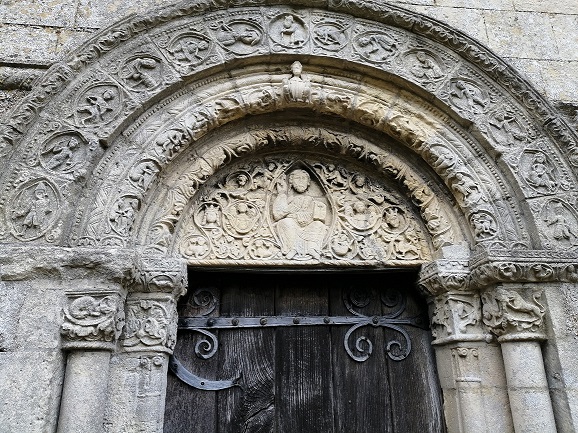
    My only visit to Florence has thus far been to its railway station and I have no pictures to hand. You will have to content yourselves with the above photograph of one of England’s finest remaining Norman churches. It is to be found in a tiny village called Barfreston, a few miles from where we live.

    I wonder whether it was built with dirty money? The Normans were a horrible bunch too.

  • The Path of Slowness

    The Path of Slowness

    Slowness seems to become an ever more important part of my life. It is the opposite of rushing and busyness and activity for its own sake. It is a vital ingredient, in my case at least, in encouraging me along the path I wish to follow.

    There is something about quiet deliberation which takes my mind and my body into the stream of life, into the flow. Not the life of acquisition, power or human ambition but by contrast a withdrawal therefrom and an immersion into silent contemplation. Which is where the true stream is to be found.

    If you were to ask me “of what?” then I would be hard pressed to answer exactly what it is that I contemplate. Contemplation for me is more a case of simply being in a state of receptivity to come what may. It is not an active seeking, it is a listening. It is not thought, it is an absence of thought.

    I am in the middle of some exercise; or rather, taking a tea break. Few would agree to calling my afternoon’s activity exercise. Perhaps it is the sort of activity confined to the sloth.

    Our afternoon walk was rained off. We had bundled out only to be turned back by tumultuous rain and loud thunder. I wandered out instead to our crumbling summer house in the garden and set to for some serious Pilates. Joseph Hubert would doubtless disown me, but it became a sort of meditation. Holding the limbs, stretching, taking a long, long time about it. The result was both physical and mental. The physical effect was pleasing – a slow burning in the muscles, a satisfying glow. The mental effect was calming and boosted by the natural drugs which exercise brings with it.

    Altogether a most satisfactory effort.

    Some people, I am sure, zone out after or during their marathon or peddling at speed up and down the mountains along the Tour de France.

    My form of exercise has become a slower and more deliberate one. More of a meditation in the way that Thich Nhat Hanh talks of walking.

    After some thirty years of seeking, it seems I may at last have found. Something. I said only half jokingly to a friend that perhaps my moods have improved so dramatically because I have given up, given in. But maybe there is more truth to that than I realized.

    If you are naturally of a contemplative turn of mind there can be little more damaging and destructive than living in the world we humans customarily inhabit. It is so often said that our desires can never be fulfilled but the truth of that statement is so little understood.

    My own disappearance into slowness (or do I mean slothfulness?) has not involved donning a loincloth and sitting in the lotus position by the Ganges. I have undertaken no great works of piety. Nor has it included (nor will it) the wearing of brightly colored robes and the incantation of esoteric Eastern words. I have not undertaken works of great charity. My journey has not involved gathering a crowd around me to whom I can impart such profound thoughts as I have been able to collect. While raking in a fortune from my misguided disciples.

    My journey has simply involved saying “enough”. And not feeling guilty about having “enough”. Enough at least to retreat, metaphorically, far from the beaten track. An off grid wilderness in the heart of the increasingly suburban South East coast.

    The retreat and the slowness, the silence and the emptiness have taken all sorts of forms and become ever more important to me.

    Once upon a time I sought wisdom in books or the words of others. Only this morning I was reading Plotinus and thinking about Jung. But only casually; long gone are the days when I would comb such authors for answers, the truth or the way.

    I have determined that the way is only inward and that by travelling within one discovers the universe to be a sort of giant Russian Doll. Or, in more modern terms, a Tardis.

    I am no longer given to great philosophical or mystical expositions. I am pleased that Plotinus seems to have discovered the Plot, and I glad he discovered the Way. But I do not wish to read 1,000 pages of his thoughts or anyone else’s. I do not wish to make up my own great treatise. I have no desire to discover how many angels can dance on a pinhead or to give the answer to those breathlessly waiting.

    In days gone by I may have taken the time of day from Thomas Aquinas. I sat upon the Cloud of Unknowing and nodded in the direction of St John of the Cross and his miserable Dark Night.

    Somehow, these days that seems counter productive. And unnecessary.

    No one can inform you better than yourself. You are unlikely to come across any wisdom greater than that which comes to you as you withdraw from the nonsense and sit quietly to listen.

    If any of this sounds arrogant, that is not my intention at all. I have spent some two years writing this blog for myself and slowly a light has dimly penetrated the gloom. It has been a helpful process.

    Largely it has involved a casting off, a throwing out. If I look back at what I have written over the last two years I can see a notable and important decrease in anger and frustration as the months passed by. And I can see that my scope has narrowed down to what I am seeking.

    I no longer feel moved to write about injustice, corruption, politics or the human condition. It all sucks and I’m sorry for that.

    Do I sense that there is another world? An ultimate “reality”? Have I had glimpses of it? Perhaps so or perhaps my increasingly optimistic outlook is merely a matter of my withdrawal from so many aspects of life which I find distasteful, vulgar, damaging and unpleasant.

    Have I found real and lasting peace or do I sit at the top of a roller coaster waiting for a terrifying descent into Stygian gloom? I hope the former but if the latter I suspect I would, if not welcome it as an old friend, then at least laugh at its ephemeral nature and look forward to its passing.

  • To Seek Silence

    To Seek Silence

    Silence is not the absence of sound but the absence of noise. Noise is more than the presence of undesired sound.

    For the Seeker, Silence is indeed the absence of unwanted acoustic vibration but equally importantly, Silence is a life in which the Ten Thousand Things of the Tao have been recognized as mere noise. And disregarded in the search for meaning.

    The noise a seeker avoids is similar to the random fluctuation of data which, in the scientific endeavor, obscure and mask the “signal”.

    No statistician, I can nonetheless describe noise in layman’s terms after decades of studying financial markets looking for “signals” in the noise.

    In the markets, data at its purest consists of the daily Open, High, Low and Closing prices of an instrument, together with the volume traded for the day. In a wider context, financial data consists of a myriad of other factors, many of which can be totally ignored.

    When picking investments, you can and should ignore the vast majority of available data. It is just meaningless noise. The signal pointing to successful investing depends on filtering out the endless nonsense which most punters consider important. Hence the quantitative investor will not bother with the news and he very probably won’t read a company’s financials. The signal is in the price and most of the rest of the detail is irrelevant.

    And so in life. Most of it is meaningless noise which you must filter out if you seek the absolute.

    Leave the human anthill be. See it for what it is. Pointless, unnecessary and destructive workings of the reptilian brain.

    The endless search for “stuff” to satisfy desires which can never be sated.

    Most humans are, in a sense, barely more sentient than the birds and the bees. No more “aware” than the ants who blindly build the anthill. They work and build, they kill and destroy, they dominate and subjugate. If asked “why?” most would be puzzled by the question. Awareness is not a widely distributed human characteristic.

    The search for silence is not foremost among human preoccupations, although it should be.

    I have headed this post with a picture of my beloved Book of Common Prayer which I took in an equally loved local church, where I am wont to sit in contemplation several times a week, as part of my daily wanderings. These days I must sit in the sun in the churchyard and do without the prayer book. Equally pleasant. Equally contemplative – your companions have certainly found silence.

    I am not a Christian. I happen to love the prayer book for the beauty of its language and the good sense of the Psalms. I happen to love English churches for the perfection of their architecture and the deep silence and peace they provide.

    But I am just as happy to sit awhile in a Buddhist temple and often used to when I lived in Japan.

    Dogma is the enemy of those who seek to discover the source, the signal, the meaning. But the thoughts of Rumi, Meister Eckhart and the many, many others I have read over the years? That is a very different matter. Such people have buried themselves deep in the silence. They have touched the face of the Absolute. They have seen Reality. And their descriptions of what they have found are remarkably similar be they Sufi, Jew, Christian or Buddhist. Or indeed any of the other half decent creeds out there.

    I have found a depth of Silence recently which I have all too rarely achieved in the past. I have been six or eight weeks buried in the countryside of East Kent which I have always loved. No trips to the Big Smoke. No shops, no barbers, no doctors, no contact. Well, other than the odd sneaky visit to chat to my little sister over the garden wall. When my hyper -vigilant wife is not looking. Self isolation is taken to great extremes in our little three person family unit.

    I feel that I have reached a different stage in life. A firmer understanding of what and why and all those tiresome questions which have so long beset me.

    I do not despise the world, I just do not want anything to do with the way it normally works or the way so many people customarily think or behave. I do not say that they are right or wrong – just different and not as I would have it.

    So, acceptance. Perhaps that is they key which has emerged from the silence. Equanimity. Peace. And problems of course do not end. Difficulties are always with us. But again, acceptance rather than battling against reality is what counts.

    Have I seen the face of god? Have I achieved union with what is? Omniscience perhaps?

    No. No to all of that. But I have seen a place of peace and silence in the middle of turmoil. An eye in the center of the storm. And that is where I hope to stay.

    Seek the Silence.

  • Glimpses of “Truth”

    Glimpses of “Truth”

    Enjoying the cool spring sunshine this morning, I had a moment of truth as my eye was caught by dew drops in the long grass. I was sitting in our beautiful patch of wild meadow at the bottom of the garden.

    There was nothing great or overarching about this brief revelation. I did not become either omniscient or omnipotent but I did feel a deep connection with self, or at least the collection of perfectly ordinary atoms I am made of.

    Thanks to a mind which could kindly be described as unquiet, I have spent many years wondering about the koan. What is nirvana and how do you get there?

    The presence of fear has been the greatest barrier to achieving a quiet mind Although I suspect many other destructive emotions have contributed over the years to the tempest which has often raged inside me.

    I started the morning thinking about the meaning of money, its love and its strong connection to fear.

    It is not that I have lacked money over the years but the fear of lack has dominated my life. Which is odd, considering that for many years I have understood the meaninglessness of material possessions. The pointlessness of one small collection of elements from the periodic table feeling the need to control another and larger collection.

    The key of course is fear. The terror evolution has saddled us with to ensure our survival and hence the continuance of our species.

    The objects of our fear come in many shapes and sizes but they all seem to boil down to a fear of annihilation. Pain, hunger, cold. Those might be three of our greatest concerns.

    And perhaps all the other destructive emotions which can overcome us derive from these very basic insecurities. What are jelaousy, anger and envy if not the realisation that somebody else seems to have it better than we do?

    A bigger car, the better to tear around in and dominate others with our undoubted superiority. And so it goes with many other material possessions or indeed our relationships. A more attractive partner, the fitter to reproduce. More land and a bigger house, the better to keep the barbarians at the gate. Power; the power to take what we think we need and to prevent others from taking what we have got.

    The initial realisation of “truth” must necessarily involve silence, isolation and letting go. Some might call that meditation and there are many forms of that practice, not all of which entail sitting on the floor like a vegetable. Although I have no doubt some find that a valid path.

    But back to money and survival for a bit, if I may. There is that hallowed old trope about learning to fish and I think we all need that skill in equal measure if we are ever to create a better society.

    If we had a skill from which we knew we could feed and house and clothe ourselves we may not feel fear. And given such a skill, I suspect most of us would not feel the need to amass wealth. It would become superfluous.

    The problem with our society is that the ability to provide ourselves with the basics of life has always involved conflict and doing down the other. It has never been as simple as learning to fish – someone else will always claim it is his pond, his sea and will kill to maintain his “rights”.

    Fear for our own survival has, since the earliest days, meant violence. Hunter gatherers kept neighboring tribes off their hunting grounds and when agriculture was invented so were property rights.

    Suddenly, fear driven by the need for security meant grabbing land and excluding the neighbors and so it has continued.

    In feudal Britain we still have families controlling hundreds of thousands of acres. And of course we have the more modern equivalent of the feudal landlord – the business titan controlling the means of production and distribution.

    And lo! We are struck by a deadly plague and the grapes of wrath grow fat once again.

    The little man can not fish. He us banged up in a government housing block and his feudal employer has laid him off.

    Neither can the small shopkeepers and business people, purveyors of baubles and mostly useless trinkets, any longer fish for their supper.

    And nor can the myriad of human drones on the antheap. Suddenly our rods are removed and the lakes and seas of commerce are boarded off from us, fences erected to prevent the spread of the plague.

    And that is the precise point at which you recognise how fragile and foolish our society is and always has been.

    The problem is that we are all so far removed from the basic necessities of life. How many of us can literally fish to feed ourselves? Or grow crops or raise animals.

    Most of us these days produce sterile and ultimately useless services. Perhaps we all need access to the means of production. To land, water, the elements.

    I take it as a basic truth that our society needs urgent and drastic reform but I had not intended this piece to become a political diatribe, so let me return to where I started out: sitting in the meadow at the bottom of my garden. Contemplating “truth” and enjoying a series of small revelations.

    And suddenly the nature of my error strikes me as I refocus on the beauties of nature.

    Let go – society is unlikely to change yet a while, and who am I to say that it should.

    Contentment and peace come from withdrawing from the concerns of the world and in focusing on the bigger picture. I can feel, in a real sense, not my “connection” to nature, as I sit here in the middle of it, but my absorption in it. I am nature and it is me.

    Far from wishing the world and it’s peoples to go to hell in a handcart, I wish for all of us a better life.

    But I rather doubt that betterment will come from fiat.

    If it comes at all, my suspicion is that it will come from inside us and not from external utopian upheaval. That the search must be an inner journey and that only from within will the answers be found. A better world must be made individual by individual.

    Given certain basic needs, contentment can be found in simplicity. In silence, in beauty and in nature. In the realization that we are already where we are supposed to be and that there is nowhere to go.

    And the plague? If it can be avoided then well and good. If it takes us, so be it. Perhaps all is as it should be. Perhaps, as Julian of Norwich so beautifully put it:

    All will be well and all manner of things will be well.

  • William Blake – The Lamb and The Tyger

    William Blake – The Lamb and The Tyger

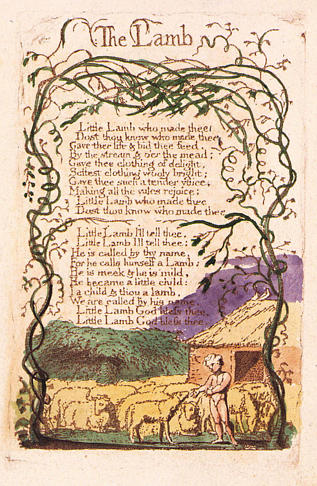
    The Lamb and the Tyger. Songs of Innocence and Experience

    I decided to read and record two poems from William Blake’s Songs of Innocence and Experience. I chose the Lamb from the Songs of Innocence and its counterpart the Tyger from the Songs of Experience.

    I have enjoyed Blake for many years, although perhaps “been fascinated by” might be more accurate. I have never been altogether too sure whether Blake is to be enjoyed or endured. A man of often terrifying vision.

    I have given a little of my own interpretation of these contrasting poems, and I hope that this causes no difficulty, neither upsets others’ notions of what these works signify. My interpretation is, needless to say, my own.

    The podcast can be found at:

    iTunes

    Spotify

    It can also be found at Pocketcasts by searching for “Weltanschauung” via an app on your pad or mobile.

  • Doing it Differently

    Doing it Differently

    Breaking up my routine seems to add enormously to my well-being. While I might not persuade my wife to let me go trekking in the Empty Quarter, even mild change can be very beneficial.

    Many clergymen tend to be sniffy about Cathedrals; they are elitist it seems. Let them sniff – they are wonderful places to while away an hour or so on a cold March afternoon.

    Too shamefaced to blag my way in free on some vacuous pretext, I decided to become a Friend of Canterbury Cathedral – at £40 per annum for a husband and wife team.

    Worth every penny and probably right to help prop up that precious edifice.

    But what I chose to do today is not the point; that what I did was different and that I visit Canterbury infrequently is what makes the difference.

    I suppose in some senses what I did today was much the same, mentally, to what I do every day. Meditate, ponder, question.

    But perhaps I brought a different and satisfactory slant to it by sitting in the Choir stalls in a beautiful and ancient church and emptying my mind for a while. And chatting to the organist who seemed a civilized and pleasant fellow. Such simple, satisfying pleasures.

    Yes, of course I “know” Canterbury but somehow wandering down the streets and just letting it all wash over me was the experience I was looking for. Everything was just slightly, minutely different and it worked for me. Spotty, merry students. Earnest old dears spending their last days as guides. Slightly different smells, noises, vistas.

    I think I have spoken before about the feeling that experience is now what counts for me. Today was just such an experience.

    Experience in terms of phenomenal, psychological events. Qualia. Experience in terms of the senses rather than the intellect.

    I wonder whether I have had enough of intellect? Certainly the knowledge I seek these days is that which can only be found within. I have had a lifetime of book learning and it can only take you so far. I have had a lifetime of worrying about the world, or perhaps more accurately my place in it. Or even more accurately, lack of place.

    So there you have it. I was letting go in Canterbury. Not exactly wild, daring or outrageous. But satisfying nonetheless and I feel better for a slightly “different” afternoon.

  • Sex Education – Netflix

    Sex Education – Netflix

    While the repressed prude may find Sex Education distasteful, those with a more discerning eye will value its gentle humour and shrewd commentary on human nature.

    You are unlikely to be disappointed if you yearn to hear the words “labia” or “penis” brandished with pride. Although (mercifully), such body parts are not actually on show, the series tackles in a sympathetic and amusing fashion the anxieties suffered by teenagers struggling to come to terms with their sexuality.

    In the modern fashion, most sexual tastes are catered for and most races. Teenagers flip from boyfriend to girlfriend, from black to white and all shades in between. They move between raucously funny school musicals (where Romeo and Juliet is played out in a forest of vaginas and giant phalluses) to the stirring music of a gospel black church.

    What do I like about this series? Everything! It is so rare that I am moved to laugh out loud and I am not ashamed to say that there were moments I found very touching (not in the phyiscal sense!).

    It is all centered around Moordale High School, run by the emotionally and sexually stunted headmaster Mr Grof.

    Grof bullies his son Adam who in turn takes it out on a gay black youth called Eric. I won’t spoil the fun, but Adam redeems himself publicly and handsomely in the second series.

    The star of the show? Well for me it would be the beautiful Gillian Anderson who is taking a break from the X Files to play the sex therapist mother of Otis, the nerdy teenager on whom much of the series concentrates.

    And Otis – what a lovely, lost kid. Deserted by his father, Otis looks for love and makes life difficult for his long suffering (and sole care giving) mother. Otis gives sex advice for money to his school mates, even though for much of the series he remains a virgin. Assisted by his manager the lovely Maeve Wiley, the school rebel with whom, naturally, Otis falls in love. Will his love go unrequited or will Maeve the body banger fall for his charms, intellectual or otherwise?

    I won’t spoil it for you.

    There is love here, and not only in the physical sense. Everyone gets a chance at redemption and everyone eventually manages to throw off their nastiness and find their good side.

    I am a succor for love, I admit it. What a change this series makes from the endless violence offered up by Netflix. Warmth, humour, vulgarity. Outright hilarity.

    Given the choice, wouldn’t you rather be made to feel good?