Tag: Poetry

  • YouTube Trailer

    YouTube Trailer

    Encouraged and enthralled by Kim Kardashian West (not sure where the West comes from) I was wondering whether to record a welcome video for my YouTube Channel.  Or is it called a “trailer”? Or does it matter? How very confusing.

    Young Kim has 1.33 million subscribers and her YouTube channel  seems to be about beauty, make up, white Rolls Royces, proud breasts, enormous bottoms and spending money on consumer goods.

    I currently have 9 subscribers, no white Rolls Royce, a distaste for reality TV and a strong dislike of consumer spending.  And my wife looks nothing like Kim, oddly enough.

    I think Kim must be some sort of American version of our own sweet Essex Girl, but bigger, sexier, more glamorous.

    Oh dear, rambling again.

    So why does a curmudgeonly old misanthrope bother with YouTube and the internet? I can only say that reading a poem out loud and recording it seems to have had an effect on me.

    You have to understand the poem to read it out loud. It makes you concentrate, it makes you appreciate exactly what the poet is trying to tell you.  And provided his message is something you want to hear, the experience is a wonderful one. Whether the listener would say the same is quite a different story.

    This blog is unashamed catharsis. I read and write and ramble and it all means something to me. Well, quite a lot actually. I think the same will be true of YouTube.

    I will not be recording Sylvia Plath. I will not be reading Virginia Wolf. I must stop banging on about the negative and concentrate instead on the wonders of life and universe, for there are many.

    I am sorry for our Sylvia and all like her but I think I must focus on less needy folk, less dire poems. Joy and wonder not misery and introspection.

    And I must give up on politics – I’m no social reformer, simply because I have no idea what we as a society should do. I haven’t a clue what could replace the capitalist model, no idea how to help the world’s poor, and even less intuition as to how the venal of this world might be persuaded to be less so.

    So my Channel – what are my intentions for it? My plans?

    Well, poetry, yes. My favorite bards, some of whom I have not revisited since university. John Donne and the metaphysical poets in particular. Some of Shakespeare’s sonnets.  The War Poets.

    And perhaps a book or two, or at least a reading here and there from some of my favorite texts. A Christmas Carol, Tolkien, CS Lewis. Copyright permitting.

    And exploration of the new, the unfamiliar.  To push my limits outwards, to expand my boundaries.

    And who am I doing all this for? Do I write to be read, do I speak to be heard?  Well, if you so choose, listen to me by all means. But perhaps this journey is primarily my own.

    Perhaps, like a tree in the forest, I may not exist unless I witness myself through word and thought, if not deed. Perhaps my outpourings are themselves a witness to my existence.

    I write, I speak, therefore I am.

  • If….by Rudyard Kipling

    If….by Rudyard Kipling

    I commented on this late 19th Century masterpiece in “If you can keep your head when all about you are losing theirs…”  and now add a reading which I have put on YouTube.
    https://youtu.be/-HNiUMy4e68

  • John Keats – Ode To Autumn – a Reading

    John Keats – Ode To Autumn – a Reading

    I have already written a few words about Ode to Autumn but felt minded to record my own reading of it.

    Forgive the sheer vanity but it just felt something I needed to do.  I have never been a luvvie, a Thespian. God forbid.

    Professional luvvies can be bad enough but amateurs are almost inevitably excruciating.  I hope therefore that my (almost) non-existent readers will forgive this strange departure.

    Partly, I did it because it was fun.  Partly because my wife has a fantasy that I might be a budding podcast star. I don’t think she realizes you have to be female, with Botox and big tits to achieve that. And apparently if you want to appeal to the Afro Americans you need to be both female and a clone of one or other Kardashian (Kim?) with a huge bum.

    Anyway, onward. I bought a retro microphone called Blue Snowball Ice and set out to inflict my painful drivel on an unsuspecting public.

    I used excellent free audio recording software called Audacity and spent, what, six or seven hours fiddling around with it trying to make myself sound less of an aged old fart than I actually am.

    I am amazed and mortified at how old I sound – I don’t feel it. But that is what they all say!


  • If you can keep your head when all about you are losing theirs….

    If you can keep your head when all about you are losing theirs….

    Kipling’s poem “If” is profound and moving.

    I don’t give a fig that spoilsports like George Orwell considered Kipling a jingoistic outrage. I don’t give a whit that he was a child of the British Empire, which, in this revisionist age those of a smaller mind would have us deride.

    How easy it is to criticize with the benefit of hindsight.

    As ever I take the words at their face value. I do not comb through the life of the man trying to come up with reasons why I should dislike the poem because I have or don’t have political quarrels with its author.

    “If” is meet and right. It is full of good things.  It inspires the soul.  It tells me how I should lead my life and I am grateful for the inspiration, the thought, the teaching. Down with the politically correct who would like to ban Kipling or eviscerate his works as they have done with children’s author Enid Blyton.

    To censor or criticize historical works in the light of current thinking is an invidious and dangerous form of censorship.  A nonsense. George Orwell and his like were wrong.  What mealy mouthed crusader can object to If? Or indeed The Famous Five?

    But enough ranting, back to the poem. Is this not a way you would want to lead your life? I know, were I a character of somewhat stronger constitution, that I would lead my life by the words of this wise poem.

    I must not “look too good, nor talk too wise”.  Guilty as charged I fear. I may talk the talk but at heart, down below, when push comes to shove I am as flawed as my neighbor. Yep, good tip Rudyard, thanks. Must try harder not to be a loud mouthed hypocrite.

    Can I “meet with Triumph and Disaster,  And treat those two impostors just the same”?  Well no I can’t but I know therein lies the secret of happiness. What else is Buddhism all about if not retaining equanimity? What is the Tao te Ching if not going with the flow?

    “If you can talk with crowds and keep your virtue,  Or walk with Kings—nor lose the common touch” – how right he is, what sentiments!  I’m not sure that I can, though I know I perhaps I ought.  I retain, I stubbornly cling to the upper middle class Englishness into which I was born. Westminster and Oxford, a cut glass accent. And I am not ashamed, in reality, so to do. I just wish that others had been born with like privilege and advantage.

    And if you can live by Kipling’s wise precepts: “Yours is the Earth and everything that’s in it”.

    Yes Rudyard Kipling, I am with you. You are a man whose sentiment I admire and whose advice I accept.

    Your poem is great and wise and good.

  • Here lies one whose name was writ in water.

    Here lies one whose name was writ in water.

    Far from disappearing, Keats and his incomparable poetry have lived on after his death.

    How should you approach Keats?  What should you do with his works? How should you interpret them?

    I can only answer for myself; that I find pleasure in taking poetry at face value. I find no need to agonize, to wander in endless circles wondering what he meant by his immortal lines.

    Being neither intellectual nor aesthete, I make of them what I will. I let them do for me what beauty always does –  elevate my mood,  inspire me,  give me a glance of the transcendent, the sublime.

    Take the Ode to Autumn.  Autumn is personified – it conspires with the sun:

    To bend with apples the moss’d cottage-trees,
    And fill all fruit with ripeness to the core;

    Redness, ripeness, plumpness. The beauty of rural life, of humble cottages.  The sweetness of fruit, a harvest of plenty celebrated in ancient musty churches where children sing simple songs of thanksgiving.

    Even hardened bankers and their dreary clerks, the Marleys, Scrooges and Cratchits, can have their spirits lifted, as the festivals of autumn presage those of Christmas and the revelations that season’s spirits will bring. And on after that in the never ending rhythm of the earth and the sun.

    Of course we must not imagine there ever existed such a place as “Autumn” other than in the mind of poets, but then all reality exists in our minds. Why not let a fable or two dwell there as well?  The unobserved tree living silently in the woods exists, but with no observer who will celebrate its life? Who will appreciate its beauty? Perhaps we give Autumn a validity by observing it. Perhaps the tree living silently in the woods needs us after all.

    Maybe the beauty of that faery tale, the rural idyll, can become our reality.  At the very least, Keats’ words can accentuate, enlarge the natural beauty we see around us in this season of fruition and plenty:

    Season of mists and mellow fruitfulness,
    Close bosom-friend of the maturing sun

    Keats conjures up a scene so colorful, so joyful in its gentle melancholy, that spring can wait its turn. Autumn has its deep beauty too.  Autumn is sitting on a granary floor, drowsed with the fumes of poppies. Autumn loads and blesses “with fruit the vines that round the thatch-eves run”.

    Let’s not fool ourselves – Keats lived in times as brutal as our own. More so. The dark satanic mills so feared by Blake were spreading like evil, black mold. Conditions in the factories were bleak and child labor produced goods which many (most) could not afford His own life was a tragic one, cut short by disease.  His family were taken from him before their time.  He could never marry – his love for Fanny remained unrequited, he could not afford matrimony.

    But we must take beauty where and when we can.  We must believe that times can and will improve in the millennia to come.  While waiting, the words of Keats can only improve our experience in what we think of as our “reality”.

  • Where are the songs of spring?

    Where are the songs of spring?

    …..Where are the songs of spring? Ay, Where are they?
    Think not of them, thou hast thy music too….
    Autumn
    John Keats
    What exquisite bitter-sweetness, an English autumn in the countryside.  Burgeoning hedgerows, the apple trees in the cottage garden loaded with red sweetness, the waning autumn sun filling the world with its mournful rays.
    It’s the end of the summer holidays – no Englishman can forget the days when his parents sent him off at Victoria Station, on the school train to his spartan boarding school on the Kent coast.
    His trunk loaded with tweed suits for Sunday best, stout walking shoes, thick trousers, jerseys and his prep school rug for the end of the bed. Back to the dormitories, sweet rationing, cold playing fields and choir practice for the Sunday services at the ancient Saxon church at the top of the village.
    It was a day of quiet and serene pleasure.  We pottered in the garden, we cycled along the still green lanes.
    We were youth and we were age; a delightful 16 year old niece provided the former,  myself the latter. My wife somewhere in between.

    A meditation on death? Perhaps, especially as we passed my parents newly carved headstone in the local church. But more joy than sadness I think, a day when eternity seemed to have a vivid reality and the passing of the seasons but a pleasant distraction.
    Do I mourn the passing days? Do I mourn years past? No, not today at least.
    It was a day to live, a day to bathe in autumn sunlight and a piercing blue sky. A day to live for and not a day to fear; certainly not for the future.
    A day for gratitude; a day to rejoice in what is, not mourn what is no longer.
  • Do Not Stand by My Grave and Weep

    Do Not Stand by My Grave and Weep

    Do not stand at my grave and weep,
    I am not there, I do not sleep.
    I am a thousand winds that blow,
    I am the softly falling snow.
    I am the gentle showers of rain,
    I am the fields of ripening grain.
    I am in the morning hush,
    I am in the graceful rush
    Of far-off birds in circling flight.
    I am the starshine of the night.
    I am in every flower that blooms,
    I am in still and empty rooms.
    I am the child that yearns to sing,
    I am in each lovely thing.
    Do not stand at my grave and cry,
    I am not there – I did not die.

    “Do Not Stand at My Grave and Weep” is a poem written in 1932 by Mary Elizabeth Frye.  It was beautifully set to music by Howard Goodall as part of his Requiem: Eternal Light.

    “Do not stand” forms the Lacrymosa.  There is a reasonable performance on Youtube but you really need to listen to the original  recording by the Christ Church Cathedral Choir (Oxford).  You can hear this version (or at least the Lacrymosa) on Spotify.

    I do love the music and was lucky enough to perform it for Howard Goodall recently, as part of a small choir. He was kind enough to express enthusiasm for the performance but then he is probably just very polite. I am sure he says the same to everyone who performs his works, however badly.

    Goodall is an excellent presenter and has recorded some wonderful programs on music,which are well worth listening too.

    He has composed much music for films and television.

    If I were to have any adverse comments at all on Eternal Light, it does perhaps come across as slightly “commercial”, slightly “popular” in the  Lloyd Webber sense.

    Nonetheless it is beautiful music and wonderful to sing.  The peoems he sets to music are superb.

    My favourite is the poem he uses for his Dies Irae:

    Dies irae, dies illa.
    Calamitatis et miseriae, dies magna et amara valde.
    That day, the day of wrath, calamity and wretchedness
    That great and bitter day

    In Flanders fields the poppies blow
    Between the crosses, row on row,
    That mark our place; and in the sky
    the larks, still bravely singing, fly
    Scarce heard amid the guns below.

    We are the Dead. Short days ago
    We lived, felt dawn, saw sunset glow,
    Loved and were loved, and now we lie,
    In Flanders fields.

    Take up our quarrel with the foe:
    To you from failing hands we throw
    The torch; be yours to hold it high.
    If ye break faith with us who die
    We shall not sleep, though poppies grow
    In Flanders fields.

  • Ozymandias, King of Kings

    Ozymandias, King of Kings

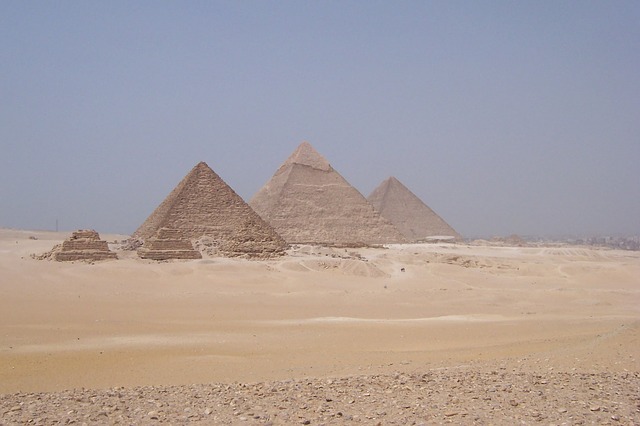
    Written by  Percy Bysshe Shelley in the early 19th Century, if there can be said to be polarity in Romanticism, then this poem plumbs the depths, rather than praising in the heights.  And yet there would be no yin without yang, no black without white.  No journey of the soul is complete without contrast.

    Hubris writ large, this work begs to be read by moguls and titans across time.  In a few simple and elegant lines, base ambition and materialism is exposed as futile vanity.  Our universe is governed by entropy and decay.

    And yet, tantalisingly, an eternity of sorts may be attained by “information” – knowledge and ideas transmitted through time. Arguably information needs a physical base, but the words of this poem have survived intact for 200 years and may last for many more as a popular meme in a living culture.

    Ideas and memes are not subject to physical decay; not so “two vast and trunkless legs of stone” which “stand in the desert”.  Not so the empire of  Ozymandias.

    Perhaps Ozymandias (or Rameses II as he was known in a different language) was the pharaoh of the Exodus.  Regardless, nothing much of him or his works has survived in material terms. His was not a 1,000 year reich.

    Does poem this inform our weltanschauung? Does it suggest a better way of life? Or at least one more meaningful.

    A search for meaning and knowledge may leave a more lasting legacy than the construction of an empire. The works of Isaac Newton or Albert Einstein may be of more lasting value than those of a business leader who constructs his empire much as a dung beetle rolls and buries his sustenance.