Tag: Poetry

  • No Man is an Island

    No Man is an Island

    Peace can be found by treating life as a whole, and not otherwise.

    Holism is an ancient philosophical concept stretching back over much of human history, even if the word itself arose from the unlikely pen of Jan Smuts early in the 20th century.

    If we have become jaded by the often comic use of the word in ‘new age’ marketing ploys, we ignore the concept itself at our peril.

    If we dig a little more deeply, we become enmeshed in the endless debate between the metaphysicians and the materialists.  The materialists hold that all things can be explained by reference to the parts from which they are made. Their opponents argue that the whole is greater than the sum of its constituent parts.

    Emergence, to put it another way. We humans are made from the apparently inert substance from which the rest of the universe comes, and yet consciousness arises.

    We humans are a complex adaptive system within an infinitely larger system.  We cannot be understood without studying the whole. 

    No man is an island,
    Entire of itself;
    Every man is a piece of the continent,
    A part of the main.
    If a clod be washed away by the sea,
    Europe is the less,
    As well as if a promontory were:
    As well as if a manor of thy friend’s
    Or of thine own were.
    Any man’s death diminishes me,
    Because I am involved in mankind.
    And therefore never send to know for whom the bell tolls;
    It tolls for thee.

    It isn’t just poetry: John Donne was profoundly correct.

    So the seeker of tranquility must first look at himself and then take the wider world into account.  As to himself, he must consider not only his mind and body but also their interactions with the environment.

    Health in mind and body spring from pretty simple routines, but surprisingly few of us are willing to put in the effort.  The right foods, avoiding junk and alcohol. Exercise and relaxation. Avoiding excess (in anything).

    Balance in other words, a middle way. Again, common sense which doesn’t actually seem too common.  Some of course can’t follow these routines: poverty, illness, incarceration aren’t helpful to a balanced way of life.

    And as to our interactions with the rest of the world, it is difficult to imagine that a life of intolerance, cruelty, violence or aggression can bring much happiness.  Do unto others. And yet of course so many of us fail to take the point. Or refuse to. Or don’t want to.

    I find it difficult to imagine that Benjamin Netanyahu can congratulate himself on a life well lived. It is hard to believe he and his cronies have found peace or can sleep at night.

    But on a smaller scale, even the most humble seeker of peace won’t succeed unless he tries to live in harmony with those around him. To give out kindness not abuse. To think and act with decency and respect towards all those he comes into contact with.

    Holism: no man is an island. We are part of a biosphere, an ecology. Part of a society.  Even if we are of a hermetic bent, we can still ruin the life of those around us if we are careless in our words and actions.  And if we ruin the lives of others, if we treat animals with careless cruelty, if we don’t give a damn about our planet or our environment – then it is hard to imagine we ourselves will find much peace.

    But you have to start somewhere. We may not be an island but if we are to comprehend what we are and where we fit in, it is best to start with our own thoughts. Since no action happens unless it is born as a thought.

    Ignore the scientists who say we are  robots and that thoughts do not precede actions, that the only causality is physical. Atoms hitting atoms over billions of years so that we can retrace our history to the beginning and see our future to the end.

    We must assume causation from thought. We must assume that at our very centre we are our thoughts.

    In the beginning was the thought.

    If you cannot initially change your thoughts, you can at least watch them. And if you become proficient enough in watching, you soon find you can resist acting on uncharitable or harmful thoughts. Eventually such unwanted thoughts become less frequent. With luck they may disappear altogether.

    Right thinking is where we want to get to. Everything else follows from an internal benignity.

    Aligning your thoughts with a desired pattern of behaviour seems to become self propelling. As man thinketh.

    It’s always a work in progress of course. A lifelong effort to be what we would like to be and to behave as we would wish. No doubt some succeed more entirely than others, some more quickly and some less so.

    But to make a start, to begin to turn out life upside down and get it “right”, brings with it tangible, concrete rewards. Or so most of us are likely to find.

    No man is an island and without taking ourselves in hand, living well as a whole and as part of a whole, we are unlikely to find peace.

    It has taken me most of my life to reach such a conclusion, and it’s entirety to put my views even partially into action. Better late than never.
  • From the Hymn of Empedocles

    From the Hymn of Empedocles

    We overlook everyday beauty, dogged as we so often are by anxiety about the future. Here is how Mathew Arnold puts it.

    IS it so small a thing
    To have enjoy’d the sun,
    To have lived light in the spring,
    To have loved, to have thought, to have done;
    To have advanced true friends, and beat down baffling foes;

    That we must feign a bliss
    Of doubtful future date,
    And while we dream on this
    Lose all our present state,
    And relegate to worlds yet distant our repose?

    Not much, I know, you prize
    What pleasures may be had,
    Who look on life with eyes
    Estranged, like mine, and sad:
    And yet the village churl feels the truth more than you;

    Who ‘s loth to leave this life
    Which to him little yields:
    His hard-task’d sunburnt wife,
    His often-labour’d fields;
    The boors with whom he talk’d, the country spots he knew.

    But thou, because thou hear’st
    Men scoff at Heaven and Fate;
    Because the gods thou fear’st
    Fail to make blest thy state,
    Tremblest, and wilt not dare to trust the joys there are.

    I say, Fear not! life still
    Leaves human effort scope.
    But, since life teems with ill,
    Nurse no extravagant hope.
    Because thou must not dream, thou need’st not then despair.

    Mathew Arnold was an English poet and an inspector of schools in 19th Century England. The son of Thomas Arnold, renowned headmaster of Rugby school. A bright cove, he was educated at Winchester and then Balliol College Oxford.

    Did he embody the principles he so eloquently describes in his poetry or was his a life of drudgery, disappointment and pain?

    Arnold was, it seems, a good man. A lifelong Liberal and supporter of Gladstone – the only politician for whom I have ever had much time. He criticized “the great Philistine middle-class, the master force in our politics.” And how right he was; dumb materialism, the pursuit of wealth, the desecration of a once green and pleasant land by the ugly stain of greed and industry.

    These Philistines were “humdrum people, slaves to routine, enemies to light”. And still they are.

    As to religion, he veered in a very modern direction. Talking of Salvation by Jesus Christ, he commented:

    “Never let us deny to this story power and pathos, or treat with hostility ideas which have entered so deep into the life of Christendom. But the story is not true; it never really happened”.

    “The personages of the Christian heaven and their conversations are no more matter of fact than the personages of the Greek Olympus and their conversations.”

    Arnold was captivated by the beauty surrounding religious belief, whilst deeming it a man made fable, invented to soothe man’s troubles in a random and fearful universe.

     Arnold’s dramatic poem Empedocles on Etna (from which the above extract was taken) concerns events leading up to the supposed suicide of Empedocles, the pre-Socratic Greek philosopher. It is said he cast himself into the flames of Mount Etna.

    Clearly Empedocles is imputed with something of the poet’s own disillusionment with the world:

    He is too scornful, too high-wrought, too bitter.
    ‘Tis not the times, ’tis not the sophists vex him;
    There is some root of suffering in himself,
    Some secret and unfollowed vein of woe,
    Which makes the time look black and sad to him

    As so often there is a stark contrast between the ideal that we seek and the inner discontent we suffer. Clearly like all of us, the poet seeks happiness and fulfillment and in the brighter lines of the poem he seems to have found a route to satisfy those wishes. We should enjoy the sun, we should revel in the beauty around us. We should live for the moment, we should not pin our hopes as the religious do on the fable of a blessed state to come.

    We should not “feign a bliss Of doubtful future date“. We should live in the now and not mortgage ourselves to some promised and doubtful future.

    And what of the historical Empedocles? He lived 2,500 years ago in Sicily, we are told. Apparently he sought release from the wheel of re-birth by purification and abstinence. Not a happy soul then? Or was he? Perhaps he achieved the bliss he so clearly sought.

    Whether we speak of Arnold or Empedocles, it seems clear that both looked for what so many of us have sought in the hundreds of thousands of years of human consciousness. Happiness, peace, release from fear and uncertainty. Purpose and meaning.

    In a sense if you feel compelled to write about such a quest (whether in verse in 19th Century England or in prose on a 21st Century website) then you are not quite there.

    And yet we are told there are means by which we may climb off the wheel of re-incarnation. Techniques by which we may return to union with the whole, to be re-absorbed by the divine.

    I find myself in the shoes of Sisyphus at a later and more satisfactory juncture in his tale. I have pushed the rock to the top of the hill for the last time and have dismissed the false gods who condemned me to such absurdity.

    I have kicked the rock of Sisyphus into the abyss and have walked off to enjoy the sun and to live lite in the spring.

    I wonder if Arnold ever achieved this?

  • William Blake – The Lamb and The Tyger

    William Blake – The Lamb and The Tyger

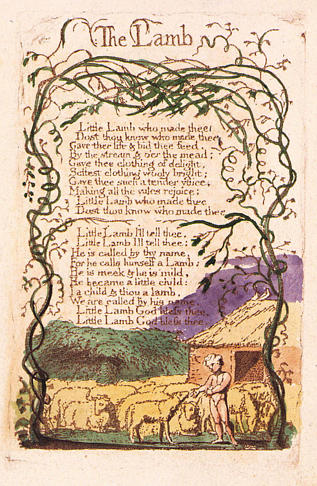
    The Lamb and the Tyger. Songs of Innocence and Experience

    I decided to read and record two poems from William Blake’s Songs of Innocence and Experience. I chose the Lamb from the Songs of Innocence and its counterpart the Tyger from the Songs of Experience.

    I have enjoyed Blake for many years, although perhaps “been fascinated by” might be more accurate. I have never been altogether too sure whether Blake is to be enjoyed or endured. A man of often terrifying vision.

    I have given a little of my own interpretation of these contrasting poems, and I hope that this causes no difficulty, neither upsets others’ notions of what these works signify. My interpretation is, needless to say, my own.

    The podcast can be found at:

    iTunes

    Spotify

    It can also be found at Pocketcasts by searching for “Weltanschauung” via an app on your pad or mobile.

  • What is the Purpose of Poetry?

    What is the Purpose of Poetry?

    Does poetry have a purpose? If so, then what?

    I noticed today that by far the majority of WordPresss bloggers who have been kind enough to like or follow my blog are poets. It set me thinking.

    Why on earth would a poet want to read anything I write? Then I realized that perhaps my goal and that of a poet are in fact the same. And that therefore there may not be so much difference between my prose and their poetry.

    My URL is “zenothestoic”. The title of my Blog is ” Weltanschauung ” – a Search for the Soul. According to Wikipedia:

    Weltanschauung is a concept fundamental to German philosophy and epistemology and refers to a wide world perception. Additionally, it refers to the framework of ideas and beliefs forming a global description through which an individual, group or culture watches and interprets the world and interacts with it.

    In a sense I have been writing “poetry” or at least writing prose but in a style which resembles somewhat the style of poetry.

    So if I have been writing poetry, to what end?

    Well I think the title of my Blog probably gives my game away. The purpose of my poetry (or prose, if you insist) is to help me understand the world and my place in it. Exactly the same purpose underlies my flirtatious dalliance with religion, art and music.

    And I suspect in essence poets (real poets) write poems for much the same reason. Including those who wrote the beautiful Book of Psalms.

    There is poetry even in science. When I read Richard Dawkin’s “Unweaving the Rainbow” I saw his sense of wonder and compared it, strangely, with that of a mystic or a poet.

    Because Dawkins believes he deals with science. And he does. But from science he gets much the same sense of wonder, much the same sense of pantheistic mystery as I might get from reading the Psalms aloud in a windswept and empty Norman church in the middle of the Shires.

    Science is wonder. Yes, science seeks rather more practical applications for its answers but it nonetheless receives a sense of awe from its subject matter – the universe, its origins and its “purpose”. Or its workings, in any event.

    So in a sense I see the same “use” and “purpose” in many different fields.

    In my case, poetry helps me to see and experience wonder. Even a war poem can help me to understand life, to broaden my horizons while confirming my view that life should not be about war. Or indeed hatred or any of our destructive emotions.

    My old Sweet etcetera is a case in point. What an absurdity, that war; any war. And foolish relatives at home taking pride in their son’s death and misery in the trenches.

    So for me the purpose of poetry is both to free and to focus my mind, if that makes any sense to you. A poem can make my mind soar like a mystic to dance in the sheer beauty of creation. But at the same time it can reaffirm the absurdity of most of what we humans wrongly consider important.

    Without poetry, art and music we would be dead souls, condemned to wander in the dark.

  • Crossing the Bar – Alfred Lord Tennyson

    Crossing the Bar – Alfred Lord Tennyson

    Sunset and evening star,
          And one clear call for me!
    And may there be no moaning of the bar,
          When I put out to sea,

       But such a tide as moving seems asleep,
          Too full for sound and foam,
    When that which drew from out the boundless deep
          Turns again home.

       Twilight and evening bell,
          And after that the dark!
    And may there be no sadness of farewell,
          When I embark;

       For tho’ from out our bourne of Time and Place
          The flood may bear me far,
    I hope to see my Pilot face to face
          When I have crost the bar.

    This is one of those rare poems which do not require great depth of thought or analysis to enjoy. No looking up of dull professors and their equally boring commentary. It is a piece of gentle beauty even you and I can understand.

    It is of course about the poet’s death. He wants calm at his death. He wants to cross the Styx, the Bar not in a storm, not with waves pounding on the metaphorical sandbar which separates life and death, but with quiet and peace.

    A deep, slow moving river is quiet and so with a deep, calm sea. “The boundless deep” should be a quiet place when we cross it, not full of “sound and foam”.

    Sunset, twilight and after that the dark. And yet Tennyson clearly expects to meet his Pilot, his god – he does not seem to be expecting darkness at all but some sort of afterlife. Hence there should be no sadness of farewell at his end.

    He was, it is said, a deeply depressed man, our Alfred. Full of melancholy and anxiety. Perhaps he hoped for better in death. It is a cause for wonder that a man possessed of such melancholy managed to create such beauty, such music in words.

    He was also it is said, deeply unconvinced by conventional religion. “There lives more faith in honest doubt, believe me, than in half the creeds.”

    A modern man, a man of science who does not seem to have been taken in by an anthropomorphic god. He wanted explanations of his world, he wanted the physicists and the chemists to tell him what it was all about. He didn’t want to take it on “faith”.

    His idea of the divine was pantheistic, modern. A follower not of Moses but Spinoza. His god most certainly existed but was abstract and impersonal. Not the sort of fellow who chucked a few stone tablets at you down Mount Sinai.

    God and Nature as two names for the same reality : that is certainly a god I can happily live with. Indeed if that is my Pilot, I would happily meet him.

    I first came across this poem when singing a setting by Parry, our home grown Edwardian genius. I can’t remember where we sang it – it may have been at a charity concert in Corpus Christe college Oxford.

    Whatever. I was, and remain, deeply affected both by the poem and the music.

  • Gerard Manley Hopkins – Heaven Haven

    Gerard Manley Hopkins – Heaven Haven

    I HAVE desired to go
    Where springs not fail,
    To fields where flies no sharp and sided hail
    And a few lilies blow.

    And I have asked to be
    Where no storms come,
    Where the green swell is in the havens dumb,
    And out of the swing of the sea.

    I wonder how many of us feel like this? I am not alone, surely?

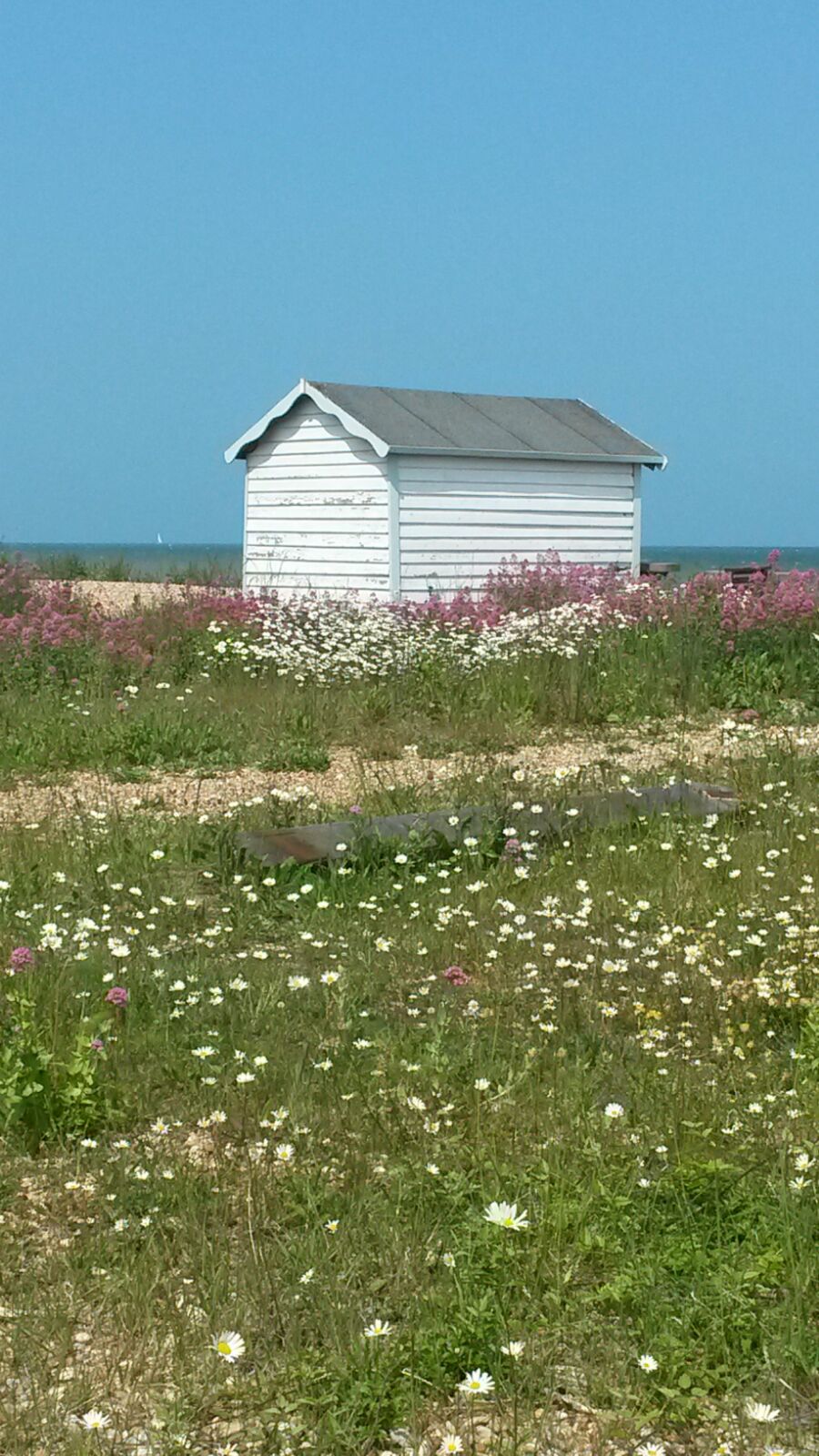
    The sub-title is “A Nun Takes the Veil” and although, even in these gender neutral days, I would be hard pushed to do that, I have often envied the quiet of a monastic garden. Peace and plenty, a place where the water does not dry up. Stillness and calm, safety from the storms of the sea. Beauty: a field where a few lilies bloom.

    Yes, I would like all of that. A place with no hailstorms. A haven where the terrifying green swell of a rough sea holds no sway.

    One would guess that is what the poet yearned for as well, diagnosed as he has been, albeit posthumously and speculatively, with bi-polar disorder. Tragically, he never achieved heaven on earth, but then perhaps as a Jesuit priest, he did not expect to. Christians have ever been “jam tomorrow” people who, apparently, find contentment (or at least fulfillment?) in being as miserable as hell on earth since they are so certain that better is to come after their deaths.

    How damaging are such views, not so far removed from those of the Jihadist. How much more satisfying to make a heaven on earth and to achieve happiness in the here and now, rather than gamble on an uncertain and improbable future.

    I have reached a deeply satisfactory understanding, very recently, of the part that poetry can play in soothing the mind. It seems to have its part to play in making a better place of the here and now. It leads me on a dream, a pleasant and beautiful mind wander. Reading Heaven-Haven fills me with warmth; it puts me in such a place as Hopkins describes, where water does not fail and where lilies bloom.

    We live only partly in “reality” if at all. In a very real sense “reality” is what we make it. Think comforting and beautiful thoughts and in some sense those thoughts become your reality. Perhaps I am thinking of the extraordinary Dietrich Bonhoeffer who argued that Christians should act in the world rather than retreat from it, and who maintained calm and equanimity throughout his terrible treatment and eventual death at the hands of the Nazis.

    I strongly disagree with the necessity of sharing “in the sufferings of God at the hands of a godless world” but Bonhoeffer’s stoicism was remarkable.

    I am, alas, an escapist. I seek Heaven-Haven in the here and now and a poem like this somehow points the way, in a tantalizing and not quite properly defined fashion. In some sense I am deeply affected and moved by religious thought.

    And yet I do not believe we have to surrender ourselves to an unproven deity. I do not believe we have to resign ourselves to hell on earth,

    I do believe that this life, this here, this now could become what man has sought over the eons. I do believe, very strongly, that we can pull ourselves up by our own bootstraps. It will take a combination of philosophy and science. It is in our hands to solve pain and hunger and to replace it with joy and plenty, not for the few but for the many.

    Gerard Manly Hopkins soothes my often troubled mind. I want that field where lilies bloom and somehow, reading this poem, I can almost touch it.

    Image: Tate Gallery

    Music:Heaven Haven by Alexander Campkin, sung by the Fulham Camerata,

  • My Old Sweet Etcetera – A Reading

    My Old Sweet Etcetera – A Reading

    For Eleanor

    This anti war poem, written by American poet EE Cummings and published in 1926, is such a perfect specimen of the genre.

    The speaker lies, perhaps dying, in the horrific, mud filled trenches of Northern France. The rest of his family plays the jingoistic game so favored at the time by those who went nowhere near those killing fields.

    His mother wishes him a death of glory, his father claims he would willingly have sacrificed himself on that futile, cruel cross.

    Barking mad old Aunt Lucy believes she knows just what her nephew is fighting for.

    And the sacrificed boy, one of the millions, lies in the filth dreaming of his girlfriend and her etcetera.

    I have sworn recently not to get angry anymore but reading such verse makes it a hard task to forswear criticism.

    General Melchetts all, and worse still the politicians, emperors and business people who let such futility occur in the name of patriotism, commerce and empire.  But enough. There is beauty and sadness here in equal measure. Enjoy the poem for what it is and pray for peace.

  • La Belle Dame Sans Merci – John Keats – a Reading

    La Belle Dame Sans Merci – John Keats – a Reading

    She sits wrapped in furs on an ancient Celtic floor, chanting her soft ballads and staring at smoke from a peat fire curling softly up and round and out of the roof. She has lived many lives and known many names; no doubt she will live many more. She is the Lady of the Green Kirtle, Queen of the Deep Realm, she is Lamia. She lures men to their death.

    The wind howls outside, along the sea loch and the birds cry their mournful song. She is wronged, mis-portrayed, misunderstood by generations. No Siren she but mere mortal, demonized by hapless storytellers who know no better.

    She is Eve, cast out of the Garden of Eden, she is the cause of all our suffering. No noble savages, we seek to blame womankind, when blind evolution alone has done us wrong.

    Our Circe, our witches, our magical world view are as present now as ever they were. They lull and caress us, inspire and guide us, if not literally then in the imagination of our hearts. To be human is to imagine. To imagine defines us, renews us.

    The poem tells a beautiful and ancient story, and what is our life but a story? Perhaps we live but a story after all.

    It is cold and dark and winter:

    “The sedge has withered from the lake, And no birds sing.”

    The knight is “haggard and so woe-begone.”

    The Belle Dame is

    “a faery’s child, Her hair was long, her foot was light,And her eyes were wild”.

    But her love, it seems, was nothing but

    ” A faery’s song”,sung “to pale kings and princes too, Pale warriors, death-pale were they all”.

    And in the end the Belle Dame was just a dream, like life itself.

    “And I awoke and found me here,

    On the cold hill’s side”

    Wrapped in the beauty of myth ancient and modern we create our own truth, we bring meaning to a universe some say is dark and cold and without purpose. Sometimes sad and sometimes not, our stories and our poems, our Green Ladies and our Belles Dames are reflections of our desires and anxieties.

    We are the stories we tell about ourselves. We are our myth in all its richness and beauty. In the world of our imagination there need be no ugliness, and without our imagination we would have no fire, no wheat to harvest, no wheel.

    Heaven and Hell are creatures of our own making. We have imagined them and it is in our power to create in our own lives a “heaven” or a “hell”. May more of us choose the former over the latter and “nirvana” can be here and now.

  • A reading: Sonnet 18, Shakespeare

    A reading: Sonnet 18, Shakespeare

    I have already written a few words on this, most famous of Shakespeare’s Sonnets and have just placed my own reading on Youtube. If you were to ask me why I bother, I would have to reply, simply, that it gives me great pleasure. While none may care to hear me, I have nevertheless read, and that, for me, is the only excuse I need.

    And yes, I chose to illustrate my reading with a beautiful woman, even though I know the poet wrote to a young man.

  • Shakespeare: Sonnet 18

    Shakespeare: Sonnet 18

    The first big error in my analysis is to head this post with a picture of a beautiful woman.

    As per Wikipedia:

    Gather Ye Rosebuds While Ye May is an oil painting on canvas created in 1909 by British Pre-Raphaelite artist, John William Waterhouse. It was the second of two paintings inspired by the 17th century poem “To the Virgins, to Make Much of Time” by Robert Herrick

    Yep, every-man’s favorite bard was referring to a boy, a youth.  Well I prefer to think of a woman when I read this poem, and it’s my blog anyway so I shall do as I please. And I love the corny and over-blown Pre-Raphaelites.

    I’m not at all sure that the poem will stand too much analysis – it is simple enough. It has 14 lines of iambic pentameter, three quatrains followed by a couplet. It has the following rhyme scheme: abab cdcd efef gg.

    The poem’s subject matter changes in the third quatrain: from a comparison of the youth and nature’s beauty, to the question of eternity, that favorite subject of poets (and indeed of many of us).

    And in the concluding couplet, the punchline: this poem grants the youth eternity. So long as there exist readers, the youth will live in verse.

    Probably the best known of William Shakespeare’s sonnets, it should, in my view, be taken simply at face value. For enjoyment. The thought itself is rather beautiful – that a youth (a part of nature) should be compared to the beauty of another part. We can see the summer’s day, all of us. And the buds of may. And the sun. All beautiful aspects of life on this planet which we have witnessed and enjoyed for ourselves.  And yet the youth’s beauty (in the eye of the poet at least) is apparently of a greater excellence yet.

    Poetic licence of course, mere advertiser’s puff but charming, engaging nonetheless.  Oddly enough for me the beauty only fully emerges in the reading, the physical recitation of these words.

    The rhythm lulls, it adds beauty and, it seems, meaning to the words. The combination is sensuous, it seems to soothe, to stroke.

    Research into the nature of consciousness suggests that the pleasure pain axis is a matter of rhythm and harmony (or the lack thereof), at heart a matter of mathematics which can be described by vibration. I seem to feel intuitively what the researchers mean when I read well constructed poetry.