Tag: Happiness

  • ebook Download

    ebook Download

    A Weltanschauung

    A Weltanschauung – 292 Downloads

    The download button above enables you to download a free ebook in epub format to your own device (PC, Tablet, Mobile Phone). You will see the file’s name is A-Weltanschauung-Zeno-the-Stoic.epub and the file size is around 6 mb.

    I haven’t written a fancy introduction or included any further comment at all. Its simply an ebook version of this website for those who find, like myself, that it is a great deal easier reading an ebook than endlessly scrolling through websites.

    As I have often said before, my only real purpose in writing was originally to explain the world to my own satisfaction. My essays have become my garden. Like Candide, I have ceased to wander.

    These days I like to imagine my plea for peace and meditation may make some small mark on a troubled world.

    The front cover features a painting by Poussin – Et In Arcadia Ego. A momento mori. A suitable reflection on the transience of earthly life.

    The ebook contains every post on this website from its inception in March 2018 up to and including 3rd March 2026

    Each post has an image and the text of the post. I have not included the comments made on posts (if any) nor clutter like menus which would have greatly increased the file size and made the book far less readable.

    The total number of posts is 380.

    EPUB (short for “Electronic Publication”) is the global industry standard for digital books. Unlike a PDF, which acts like a static “digital photocopy” of a physical page, an EPUB is designed specifically for screen-based reading.

    Key Characteristics

    • Reflowable Text: The most important feature. The text automatically adjusts to fit any screen size, whether it’s a small smartphone or a large tablet. You won’t need to “pinch and zoom” to read.
    • Customizable Layout: Readers can change the font size, typeface, line spacing, and background color (e.g., switching to “Dark Mode”) to suit their preferences.
    • Open Standard: It is a non-proprietary format maintained by the W3C (World Wide Web Consortium), meaning it isn’t owned by a single company.
    • Technical Structure: Under the hood, an EPUB is essentially a “website in a box”—a ZIP archive containing HTML files for text, CSS for styling, and images.

    Compatibility

    • Supported Devices: It is the native format for almost all e-readers, including Kobo, Barnes & Noble Nook, Tolino, and PocketBook.
    • Kindle Support: While Amazon previously ignored EPUB in favor of its own formats (MOBI/AZW), modern Kindle devices now support EPUB files sent via the Send to Kindle service.
    • Apps: You can open EPUBs using free apps like Apple Books, Google Play Books, or the Libby app for library loans.

    See the following link to download the file onto your kindle:

    Send to Kindle

    It works very well. Kinde is the only ebook reader I use and I have not tested the file on other devices but it should work fine.

  • A Garden in the Night

    A Garden in the Night

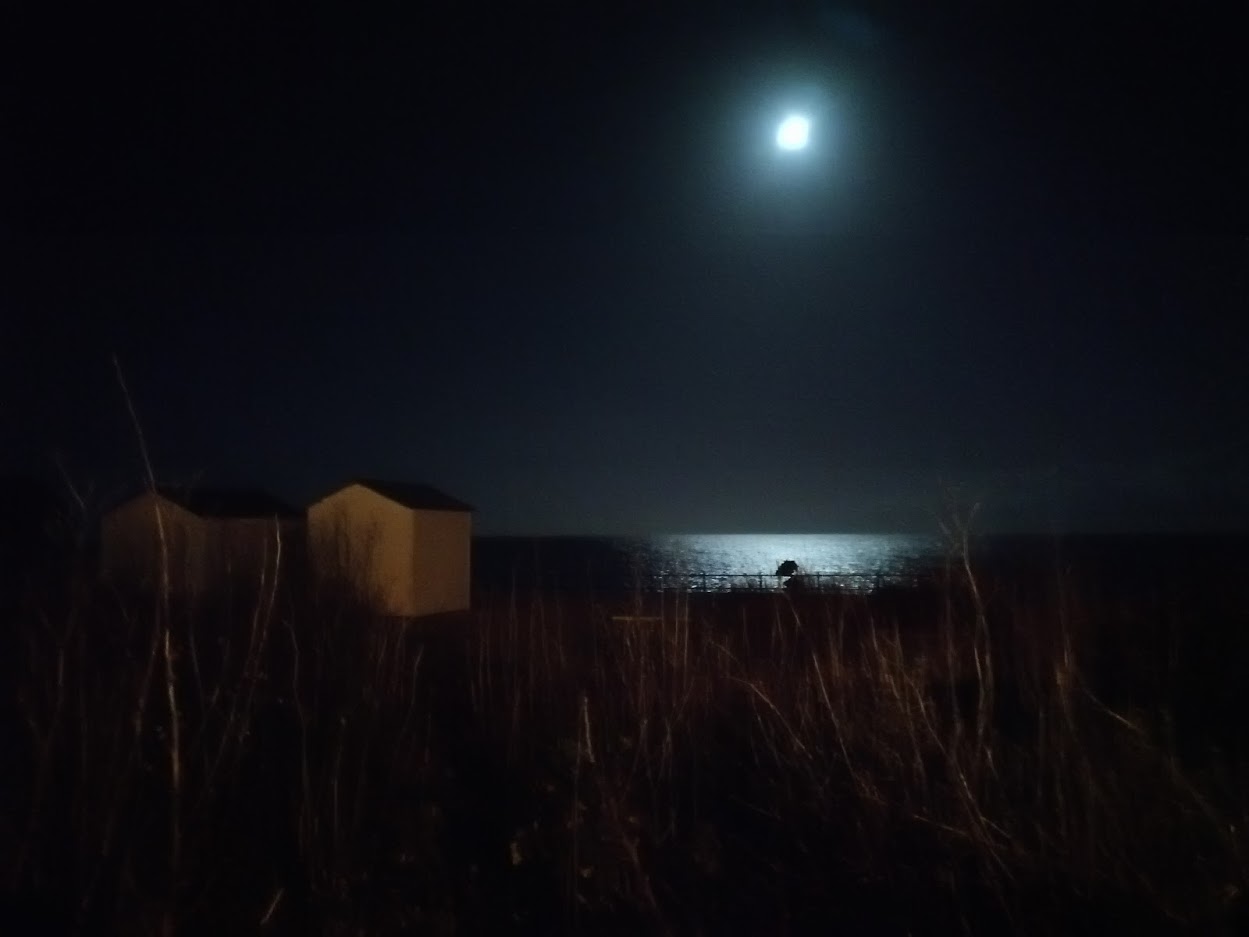
    Last night was a night of my soul, but not a dark one.

    I am aware where true happiness lies and nowhere was that more evident than in the middle of a starlit, cool summer night dreaming in my garden.

    I had commented to a friend during the day that my version of life was best summed up by Mathew 6:25-34 in sharp contradistinction to a summary I had read of a book called “Moonshots: Creating a World of Abundance”.

    According to that book, it seems that a better world requires that I get up at 4 am every morning, become an “entrepreneur” and run something called a “for profit”.

    Instead I lay in the dark and gave thanks that I was as far removed from such a dystopian nightmare as it is possible to get.

    It had been a day of intense heat, such as I am not used to and have come to dread. 33% in the shade – nothing for Madrid or Texas no doubt, but enough to induce in me a sense of panic and claustrophobia. Enough to send me off to the beach and take a very unaccustomed John the Baptist.

    By evening a coolness had spread, and the middle of the night found me sleeping in the garden. Dozing perhaps, dreaming certainly, meditating.

    A sense of calm and gnosis crept over me. I heard a gentle murmuring all around me; I heard night sounds of animals I might have recognized by day, but whose voices were until then a mysterious closed book to me.

    The over riding emotion was oneness. I wondered at one stage whether my mind was disintegrating along with my no longer young body. Perhaps my end was coming or was it my beginning? Regardless, it was neither harrowing nor joyous, just intensely peaceful. An overwhelming acceptance of what is. A strong grasp of the infinity all around me and the certain knowledge that all was somehow well, dissolved as I felt in the universal.

    More properly speaking I was at the foothills of disintegration but such absorption was felt to be a progress, and achievement of some sort and not an ending.

    Above all I was where I should be, where I belonged. I was nature, I was that vastness above. I was that haunting animal cry, I was the coolness of the night and its starry blackness.

    There is yin and there is yang, it is said. There is no beauty without ugliness, no goodness without sin. Is that true I wonder? And if so can the whole come to be seen as beautiful anyway?

    I think maybe the latter. Perhaps it is a question of acceptance, of letting go. And yet if you are yin I do not think you can survive in a world of yang. Not unless you have managed to transcend the physical and become pure spirit.

    Where once I was prepared to try out the world portrayed in that book, to imagine that “for profit” and “entrepreneurship” was the way to go, that was all yang to my yin.

    Even as a small child, at heart I realized my yingness but for so much of my life pretended I was yang. Instead of “for profit” my reality was the lilly. Instead of entrepreneurship, my soul was in truth a bird which did not wish to gather in barns. I did not wish to sew nor to reap.

    Consider the lilies of the field, how they grow; they toil not, neither do they spin.

    And thus in the middle of last night, in the cool and under the canopy of the stars I felt myself; as I am. I looked to the night sky and felt I am that. I heard the night owl cry and that too was me. The quiet susurration of distant waves, the gentle rustle of leaves and branches in a cool night wind. That too was me; I was that.

    Do I wax too poetical, do I lose my meaning in a sea of fantasy. No, I think not. I was a part of reality last night and content to exist or not. If there was yin mixed in with yang, I was not seeing it. Or was I seeing a bigger picture altogether – the glory of yin and yang combined in an unblemished whole. I was bathed in a glorious unity and nothing seemed to matter. I did not seem to be body or earthbound, transcendence seemed somehow to have happened.

    I do not intend to return.

  • On Choosing Happiness

    On Choosing Happiness

    I believe on any number of counts, including personal experience, that we have the power to choose to be happy but that the road is not altogether straightforward.

    Our philosopher friends would tell us that happiness is a “quale” – one of a number of different “qualia” which we humans can experience. Qualia are subjective conscious experiences and other examples include emotions such as sadness or anger, or the taste of wine, the redness of an evening sky, the joy in music.

    A quale is “what it subjectively feels like to”….feel sad or happy, or even to be a bat. Or to stare at beauty or ugliness and feel something about it. It is simply the way things seem to us. The nature and even the existence of qualia is a hotly debated topic and Wikipedia has a fair selection of current views on the matter.

    Need this debate worry a seeker of happiness? Not if you are one of the lucky few who by nature get up in the morning with a smile on their face and warm instantly to the day.

    To those of us not so favoured in our disposition, it would augur well to think a little on the subject of happiness and to ponder what it might be and where it might come from.

    I have said elsewhere that much has been written on consciousness, but little empirically proved. In relation to qualia it is fair to say that nothing has been proved as to how or why they arise.

    Progress has indeed been made on what philosophers of mind like to call the “easy” problem of consciousness. The behavioral aspects. Neuroscientists and their learned brethren have made much progress in mapping the neural correlates of our actions and experiences – we are learning to see which parts of the brain light up when we raise our hand, see a bright light, or have an orgasm.

    We most of us readily accept that these are all physical attributes of our make up. That part of us, our brain, which enables us to drive a car, speak, or go to work belongs very much to the physical realm. While we have a very long way to go before answering the “easy” questions of consciousness, few would doubt that the answers will come from physics and its derivative disciplines.

    The “hard” question of consciousness (a term coined by philosopher David Chalmers) is the problem of explaining why and how sentient organisms have qualia or phenomenal experiences. How and why such experiences arise from the simple atoms we are made of.

    As Chalmers put it:

    It is undeniable that some organisms are subjects of experience. But the question of how it is that these systems are subjects of experience is perplexing. Why is it that when our cognitive systems engage in visual and auditory information-processing, we have visual or auditory experience: the quality of deep blue, the sensation of middle C? How can we explain why there is something it is like to entertain a mental image, or to experience an emotion? It is widely agreed that experience arises from a physical basis, but we have no good explanation of why and how it so arises. Why should physical processing give rise to a rich inner life at all? It seems objectively unreasonable that it should, and yet it does.

    My own preference is to believe that this aspect of consciousness, just “is”. That phenomenal experience is a fundamental aspect of nature in the same way as electromagnetism or gravity.

    Phenomenal experience is what you get when matter is arranged a certain way. Where it comes from or why we may never know. It is irreducible – you can’t look into it and expect to find anything deeper. In the same way we may have to accept that electromagnetism just “is” or that matter may be made up of infinitely small strings of vibrating energy.

    Where does all that leave you as a seeker of happiness? It leaves you in the position of needing to explore what factors, internal and external, physical and mental, will produce in you this subjective experience we call happiness.

    Happiness is a pleasant or joyful emotion we subjectively feel within us. We take pleasure in our lives, in our work, in our families and all those around us. We are positive, we are hopeful and often as a result, kind and loving.

    What external, physical factors may help to bring about such a state? Taking care of our material well being first and foremost, although the ascetic may take a different view. Looking after our health, eating and drinking properly, finding warmth, shelter and medicine when we need it. Exercising, being engaged, active in the world.

    Some of us will have different external needs to others. I may crave peace, silence and nature, others the excitement of the urban sprawl and the company of fellow humans. But whatever it is, this is the easiest part of happiness – you can mostly fix it.

    The internal, mental elements are something else and here it is not yet clear where you can choose and when your material constitution chooses for you.

    Here there is overlap between our own volition and introspection and the way our brain is wired, but both can be fixed. And my certainty is that the mechanics of so fixing our physical machinery will become ever more sophisticated and effective – thanks of course to science.

    Even if happiness is irreducible – even if like its fellow qualia it’s instantiation in base matter remains a mystery, we will become ever more able to induce that state.

    If we are physically broken we must try to fix ourselves – our brain that is. My friend Alfred seems to have made great steps in that direction with the use of psilocybin.

    The volitional part requires us to consider choice: are we free to choose? Do we have free will? We must proceed on the basis that we are so free – to concede to determinism is unlikely to ease the mind.

    And what mental effort must we make to enter the land of the blessed?

    Belief, above all we must cultivate belief. Belief in ourselves. Belief that even if the universe has no meaning or purpose pe se, we can create that for ourselves. Kindness also – we must extend it to ourselves and others. Love, by any other name.

    And interest and knowledge and beauty and good things. We must sing and paint and draw and dance – we must pour our thoughts and actions into those things we know creates in us the subjective experience we so desire.

    Have I gone too far? Will I be accused by the skeptical physicalist of spouting new age nonsence and airy-fairy bullshit?

    Perhaps so, but to such people I would say “this is how I see it”, “this is how I try to achieve happiness and often achieve it”. If for some of my readers I manage to bring a smile of recognition to their face, then I too will feel a measure of happiness and achievement for having done so.

  • The Contented Craftsman

    The Contented Craftsman

    Is there anything so wondrous as a man truly happy in his own skin and content with his life and his occupation?

    As Dr Beran Wolf wrote:

    “If you observe a really happy person, you will find them building a boat, writing a symphony, educating their son, growing double dahlias in their garden, or looking for dinosaur eggs in the Gobi desert. They will not be searching for happiness as if it were a collar button that has rolled under a radiator.”

    Today was one of those days. A special day full of special moments but none so captivating as meeting Chris Viner at his shop Soldiers of Rye.

    Magical things do happen and as we walked through Rye and saw Chris sitting in his shop window painting toy soldiers, I  knew one of those moments had arrived.

    My wife tends to get fed up when I accost people and talk to them but it was she who immediately said I must go in and talk to Chris. It just had to be done.

    Chris has a Father Christmas twinkle in his eye; kindliness, boyish enthusiasm and quiet contentment are evident from the off.

    I knew I had to chat. He is the toy maker in Chitty Bang Bang, he is the Sandman, he belongs in a fairy tale.

    Did you know that lead soldiers were hollow?  If you make them out of solid lead, they are too heavy and collapse at the ankles. These days toy soldiers are made of a mixture of metals and so can be made solid.  Chris carves the master copy out of clay and then creates a mould so that, once he has replicated Winston Churchill, he can satisfy the insatiable demand for effigies of our great leader and orator for years to come.

    Gordon of Khartoum is a popular purchase and the Japanese can’t get enough of Sherlock Holmes and Dr Watson.

    What is there that is so satisfying and appealing about a man at his craft? How often have I wanted to be a binder of books in leather or to pursue the making of miniature furniture as I did as a child.

    Is it the manual element? It is certainly satisfying to create out of our own hands. The art, the creativity? Yes that too.

    Is there a hermeticism about it which appeals to me? I think that plays a large part in its attraction.

    There is something almost earthy, fundamental about the craft. It links us to the material out of which this rocky outcrop is made and to the produce which grows on it. Lead, wood, leather. Rich, aromatic, satisfying. Textured, physical, comforting.

    But Chris was also more than his craft. He had a wisdom and kindness which shone through.

    One of his sons had started in finance in the soulless City of London and hated it. Many a father would have been horrified that his son wanted out of a lucrative career, but Chris’ advice was that his son should leave immediately and follow his passion. This son’s real love was archaeology and so he went back to university and then went on to work as an archaeologist in Cambridge. The other also son found himself and his career misaligned and so Chris and his wife had him move back home to follow his love of painting. That son now has exhibitions all over the world.

    So you see, there are good things in the world and good people. Would that they continue to flourish and thrive.

  • Philosophy – Would we need it if we were happy?

    Philosophy – Would we need it if we were happy?

    Would we spend so much time in hand wringing existential anxiety if we discovered the genetic code of the pain pleasure axis?

    I rather doubt it. Or if we did, the questions which philosophy has traditionally sought to address would become much less important to us. I was enjoying a discussion on “materialism” on Steven Yate’s enjoyable website Lost Generation Philosopher and thought to make one or two comments on his latest musings on “Materialism” as set out below.

    Maybe it’s just me but I worry about “philosophy” far less (if at all) when “happy”. I am deeply interested in the nature of human consciousness and can not help but think that an understanding of the “pain pleasure” axis on a scientific basis, coupled with the ability to shift our position on that axis, would solve many of our problems. War, aggression, poverty and oppression might look rather more manageable if we could overcome our genetic inheritance and steer our species along a more productive and happy path.

    Long live the Abolitionist Project.

    “All we are is dust in the wind.”

    Or chemical scum as Stephen Hawkings put it. I wonder whether life need be so very complex as your posts suggest? I wonder if beneath your philosophical musing you may be able to wring great simplicity out of great complexity?

    After all String Theorists would have us believe that all matter, all energy is at bottom a “mere” collection of one dimensional strings of energy.

    I wonder whether humans might do better by seeking the way to manipulate the pain pleasure axis than spend an eternity wondering about questions which are, for the foreseeable future, unanswerable.

    At heart, it seems probable to me that there is no “meaning” other than that we create in this arguably pantheistic universe.

    You, me and everyone else has various basic needs. Perhaps society should work on satisfying those first and at the same time make universal happiness the goal since that, I believe, must be what drives us all in the end. Even if most of us do not realise it.

    Frankly after a lifetime of search the sort of philosophy promoted by David Pearce is all that interests me. And research into qualia and the pain pleasure axis. If we get that right, my belief is we would find existential anxiety to be a mere symptom of deep rooted human fear and unhappiness.

    Incidentally non of what I say is criticism. I like your post very much and agree with the vast majority of what you say. My own website is subtitled “Weltanschauung – a search for the Soul”. Even though like you I am a man of science and therefor use the term metaphorically.

    My comments are therefor not flippant, nor meant to be. And I am serious about David Pearce and the abolitionist project.

    I do not believe that we will find absolutes in the universe other than the physical laws that you describe. But we must not forget the many worlds theory which may yet prove to have found the winning formula in which case physical laws are not absolutes but will differ from universe to universe.

    Science and philosophy are all that we have, practically speaking, to lead us forward. And indeed all that we should have now that the man of reason has disposed of god and his ilk.

    So we may as well use science and reason to make ourselves happy. There may be no up and no down in the universe. No left and no right. Equally therefore no “right” and no “wrong”.

    Therefore perhaps happiness is the only worthy pursuit. Yes we may argue that Pol Pot’s happiness or Stalin’s may be in torture, ethnic cleansing and murder but my suspicion would be that were these men truly “happy” and at peace with themselves they would not find the need to make a hell of the lives of their compatriots.

  • How to be a Happy Human

    How to be a Happy Human

    Given the basic needs of life and in the absence of physiological abnormality, the solution is fairly simple.  The trick is to keep applying it.

    Would that I were, or ever had been capable of taking and applying my own advice – but hey! We all have our blind spots. I will leave aside the usual crass (but nonetheless vital) banalities.  Yes, yes Dr Lederman I know: exercise, healthy food, the absence of harmful drugs and stimulants, a fulfilling occupation.

    Oops! The latter is by no means so simple in this shitty world we have created. And fulfilling occupations will become even more of a shibboleth as AI and Jeff Bezos lookalikes dominate our barren landscape.

    OK well leaving aside Bezos and the awfulness of capitalism, it is obvious we must negotiate the pleasure pain axis and go for the nicer end. So….and here at last I come to the point, if we think we know what gives pleasure, do we know how to avoid pain?

    No, I am not trying to be my usual deep, impenetrable, smug self here.  I am merely trying to learn my own lessons and to be better at applying them.  And I would say that one important element that stands at the pleasure end of the axis is “peace”, and its antithesis (which sits right at the opposite end of the pleasure -pain axis) is conflict.

    The absence of conflict, means, by and large that you will find yourself at peace. Peace is a surprisingly big word. Its not just for the sickly sweet god botherers (oops! conflict alert!) although we could all learn a lot from their source material.

    No, “Peace” is really big and grown up and important. And it exists.  It exists for some of us all too fleetingly, nonetheless once tasted we should be able to build “peace muscles” so that peace comes effortlessly to us.

    If I think about moments when I have felt true peace, it becomes obvious to me that those moments contained no conflict, internal or external.  Internal conflict is when your mind churns with one of humanity’s least attractive qualia: anger, envy, hatred, negativity for instance. External conflict (while the inevitable result of internal conflict) need not be full scale physical aggression to be harmful.

    So what happened yesterday? I took pointless issue with some self styled internet cult leader.  Did I get particularly upset? Was I thoroughly unpleasant and unnecessarily rude to this latter day “christian” nutter?  Well no, to any of those things, and yet I am only too well aware that I do tend to major in harmful polemic. How about my diatribe against the Pig, the Salesman and the Snob? Who happens incidentally to be a single bête noire who manages to roll into one awful golem all those characteristics.

    Well I really don’t like the guy’s behaviour and he has done a lot of harm Down Deal but is this the right way to treat him?  Certainly not from his point of view even though my polemic is probably objectively justified but, you know, why bother?

    So what should I do? What should any of us do? I think the answer must be to enter into conflict as seldom as humanly possible and only when utterly, completely unavoidable.  The Pig needed to be seen off but I did not need to write about him.  Conflict with the Pig is inevitable if you want to be left with a shirt on your back and shoes on your feet but that conflict should not be wallowed in, exaggerated or dwelt upon. Or written about.

    So I mustn’t do it anymore. He must be firmly slapped down every time he puts his awful snout in someone else’s trough but I must leave it at that. And how about Davos 2019? Was that conflict?  It was not meant to be and yet a friend took it as such. I thought humour, he thought polemic. I was indeed taking the piss out of the windbags who go there but I did not intend any particular malice and it did not wind me up; so perhaps the jury is out on that one.

    Where does this leave me? It leaves me sitting in a civilized study surrounded by antique furniture and books in one of the world’s most affluent cities.  Much to be grateful for.  That’s at the pleasure end of the axis. And there is a lot else I fill my life with which is also at the “good” end of that axis. Classical music, singing bass rather badly, writing, fiddling with arcane investment algorithms.  Poetry, art, walking, mountains, the sea.

    So, it is the pain end I need to work hard on. And apart from popping the occasional medicinal Magic Mushroom, that is best done by minding my own business and trying to write only positive things.  While ignoring all that, and all those,  which and who annoy me.

    There! And end to conflict will make me a happier human and it will do the same for you.


  • Scandinavian Happiness

    Scandinavian Happiness

    Reading Sofia Helin’s thoughtful interview in the Guardian this morning, I am disappointed to hear that Scandinavian happiness is “more a matter of class whether you can afford to take time to take care of yourself”.

    I am really not too sure about the “class” aspect but you have to be correct on the “afford”. We humans need some basic level of material comfort to be “happy” although of course this is not of itself bound to result in “happiness”.

    In my ignorance when I watch the many excellent Scandinavian dramas available on Netflix or the BBC, I always work on the naive assumption that the world of smorgasbord is a happy socialist paradise. Rather like The Culture but without the Minds. I am disappointed to hear that it is not.

    Happiness or its lack is, currently, part of the human condition for most of us. Perhaps all of us. There are so many things we need to put right but my belief is that in the end “all will be well and all manner of things will be well” to quote Julian of Norwich.

    No amount of thought or cathartic writing or goodliness will save us. In the end, I fear, the worst and most serious aspects of melancholy have to be a medical affair. And on that front I believe eventually suffering will be abolished.

    I am sorry I can not share your faith in a god. But perhaps eventually my faith in human ingenuity and an eventual triumph of “good” over “bad” will come to amount to the same thing.

    An enjoyable and thoughtful interview. Thank you.

  • Ich Bin ein Londoner

    Ich Bin ein Londoner

    JFK famously said “Ich Bin ein Berliner” but I can perhaps more accurately say the same thing about London. Officially a cockney, since I was born in Guys Hospital, I have lived in London all my life but with long intervals in far flung outposts of the British empire and other parts foreign.

    I have told myself for most of my adult life that I hate the place and certainly years spent in very much calmer environments ( or more “interesting” environments – like Hong Kong) were experiences I would not have missed.

    But how foolish not to appreciate my magnificent home town.  I had the luck to be at school in the shadows of Westminster Abbey and I think in those days I really did appreciate the beauty of its shady cloisters, the morning prayers and the freedom to wander that hallowed ground at will.  Brought up for much of the time in busy Kensington there were joys there to behold as well, and I was probably peripherally aware of those too.

    But yesterday was one of those rare occasions when I have been able to empathise with foreign friends who adore the city and come as willing and frequent visitors.

    It was a perfect sunny, late spring day and I went for a kulturfest at the National Gallery in Trafalgar Square. Such was its grandeur and such its contents that I almost wondered why I had bothered with Berlin, or Zurich or even Venice.  Or why I am planning to spend a month in Florence.

    While the art was an intense fulfillment, my quiet stroll back home was revelationary. Where I could stuck to London’s leafy and magnificent parks and was amazed to see patches of meadow in Green Park – a stone’s throw from Buckingham Palace. Bluebells were everywhere in the dappled shade, as well as all sorts of other natural beauty my ignorance of botany prevents me from listing.

    Knightsbridge was next and its appeal is slightly lessened these days by vast stretched limos, often with lurid gold trim and blacked out windows, especially around Hyde Park Corner and the more louche hotels.

    I imagine the sleazy and corrupt inside such Behemoths, they jump straight out of the pages of a John le Carre Novel.  The dark glasses of the african dictator, the big time crooks and money launderers, the plastic smile and breasts of the accompanying courtesans, the gold medallions on the hairy chests of the fake suntanned biznismen, the entrepreneurs and the whole zoo of other real world Arthur Daley’s and politicians.

    But I digress and must dismount from my favourite hobby horse – the world was built by such people and is run by them.  Live with it!

    It did not distract me from a day of sheer wonder at the magnificent architecture of the Mall and Clarence House or even the quiet pleasure of the many sleepy and sun drenched residential roads I weaved my way through on my way home.

    Yes, Ich bin ein Londoner and yesterday I was happy to be.

  • Happiness

    Happiness

    Happiness is perhaps most usefully described as the absence of unhappiness.

    Happiness is not to be found in self help books.  Happiness is not the reward of an imaginary god for following the ways of righteousness.  Happiness is an emotion.  It is a consequence of consciousness. It is a quale.  It almost certainly has a physiological basis as well as a subjective and more elusive cause.

    It is helpful to distinguish happiness from a state of euphoria.  States of euphoria are often described by mystics and can be seen as a transcendence of normal reality – an elevation to another plane of existence perhaps, real or merely perceived.

    Happiness is best thought of as a more “normal” state of affairs and certainly more “easily” achievable.  But perhaps less easily “sought”.  We know how to seek euphoria. We know that it can be attained through meditation and sometimes through an intense reaction to something physical such as music, nature or art.  We know that euphoria can be achieved through the use of drugs such as DMT or psilocybin.

    So far as we know states of euphoria are temporary phenomena – not sustainable over long periods of time. Although we may wish it were otherwise.  Happiness by contrast (certainly as defined by the absence of unhappiness) can continue for prolonged periods.

    If happiness is the absence of misery then we need to eliminate misery. Misery can be caused by hunger, pain, loneliness and many other negative emotions such as envy, hatred and anxiety.

    Hunger can be avoided by meaningful work – meaningful because a lack of meaning in our work can in itself be a cause of unhappiness. Physical pain can often be treated by medicine but sadly not always.

    Hatred and envy may be a matter of choice: do we have to feel envy? Do we have to feel hatred? These may be areas where we can change our mind and our behaviour for the better.

    Above all we need to realise that we do not fully understand emotions and can not entirely explain them. Modern science tends to take a reductionist view of the matter – emotions are physiological and the neural correlates of happiness can be read by an MRI machine.

    You are left therefore with trial and error.  A satisfying occupation, good nourishment, health, physical exercise, beneficial social interaction are all factors which may help to combat negative emotion.  Being fully engaged in a satisfying life may be as close as we will ever get.