Tag: Reality

  • “Just the chemicals”?

    “Just the chemicals”?

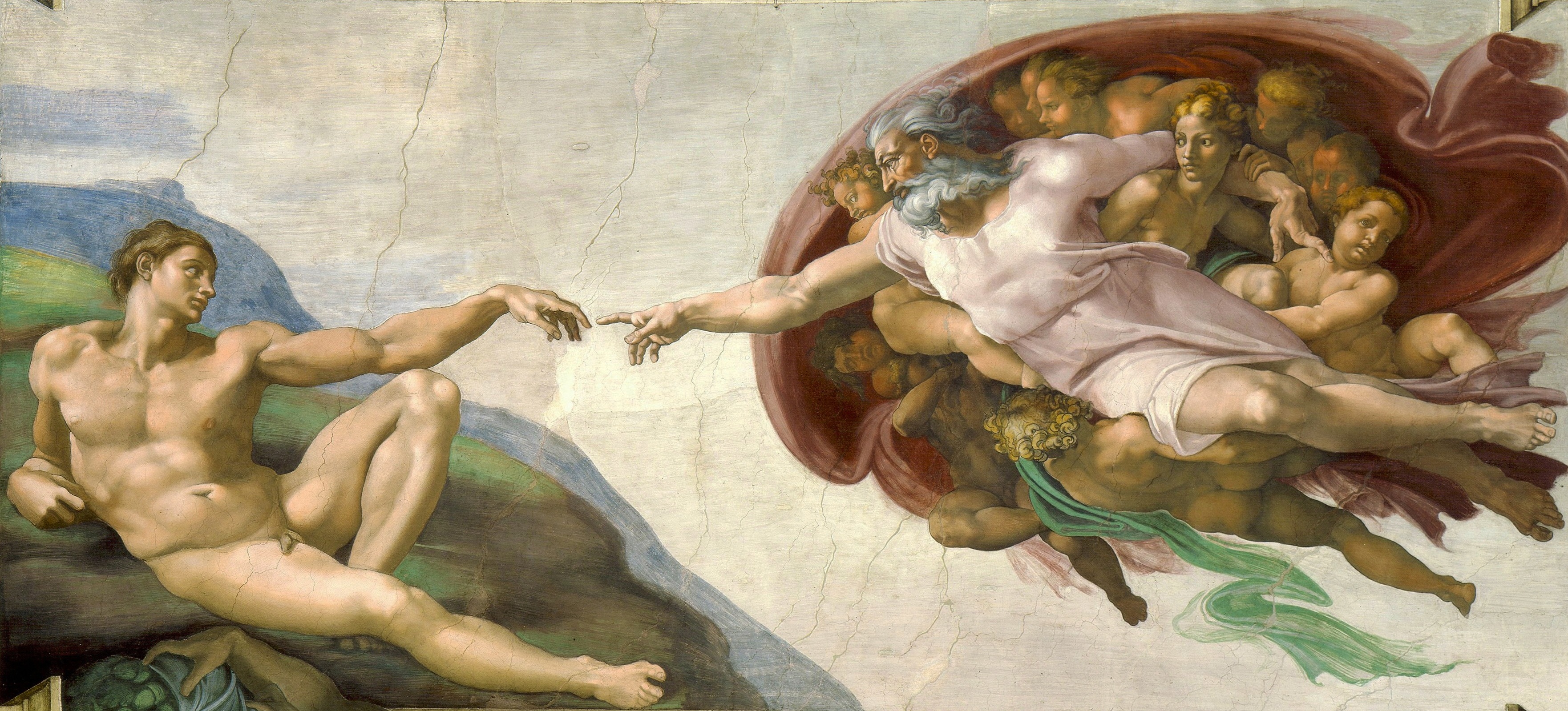
    Or does meditation reveal the face of god?

    These are nuanced questions.  I have spent much of my life seeking the face of god and I shall assert that I have seen that face.   Although my god is that of Spinoza and Einstein, not that of Abraham.  My “god” is that revealed by the Tao, by Zen.  My god is that of nature, of flow, of unity with all that is.

    Scientists are swift to disparage the experience of altered states of reality, but I believe they are missing the point.

    Such states have been reported throughout history and most religions have been founded by people believing they have discovered a higher truth through such experiences.

    I believe that in order to understand such alternative states, it is important to consider first what we know of consensus reality – the “normal” state with which we are all familiar.

    Waking up in the morning and taking the underground to work. Chopping wood, carrying water. Looking at art or a sunset. Climbing a mountain or rowing a boat.

    Let us accept that we only access reality second hand, through our senses, and not directly. Touch, smell, sight and hearing – these senses are communicated to the brain by the nervous system and then interpreted by the brain.

    Consensus reality is possible since humans are all wired more or less the same and hence will get similar signals from the external world and interpret those signals in a broadly similar manner.

    But recognise that this is only a human reality. You and I might see the sky as blue and the sun as a fiercely bright orb in the sky. Other forms of consciousness will not. They may be colour blind for instance. To humans rotting meat smells terrible, to other animals which thrive on eating carrion, it may not.

    We humans may not be able to alter some of our sensory apparatus (yet?) but there are aspects of our consciousness we can alter.

    And therefore we can access realities very different to consensus reality – the ordinary variety which most of us experience most days of the week.

    Science is just at the beginning of its research into the effects of meditation on the human mind and body, but the findings so far are very convincing to those who have deep experience of the practice.

    The chemical effects of deep and long-term frequent meditation are a complex and still debated topic. Research is ongoing and the mechanisms are likely to be multifaceted. While definitive answers are currently not available, several avenues of investigation are revealing potential impacts:
    Neurotransmitter Changes: Meditation practices are associated with changes in neurotransmitter levels, particularly:
    Increased GABA: GABA is an inhibitory neurotransmitter that helps regulate neuronal activity. Studies suggest meditation might lead to increased GABAergic activity, potentially contributing to the calming and stress-reducing effects often observed.
    Decreased Cortisol: Chronic stress is linked to elevated cortisol levels. Meditation has been shown to reduce cortisol levels, particularly in response to stressful stimuli, possibly through a combination of factors.
    Changes in Dopamine and Serotonin: These neurotransmitters play roles in mood regulation and reward pathways. Some studies hint at potential changes in dopamine and serotonin activity resulting from the practice of meditation, but the specific mechanisms and remain unclear.
    Brain Structure Changes: Meditation has been linked to structural changes in the brain, particularly in areas associated with:
    Amygdala (stress response): Some studies suggest meditation may reduce the size or activity of the amygdala, which is central to processing emotions, especially fear and anxiety.
    Hippocampus (memory and learning): Increased hippocampal volume is a possible effect, which aligns with the cognitive improvements often reported with meditation practices.
    Prefrontal Cortex (executive functions): Meditation may strengthen the prefrontal cortex, which is involved in higher-order cognitive functions like attention, focus, and decision-making.
    HPA Axis Modulation: The hypothalamic-pituitary-adrenal (HPA) axis is a crucial system for managing stress responses. Meditation might modulate the HPA axis, potentially altering the body’s stress response by influencing cortisol secretion.
    Inflammation: Some evidence indicates that meditation may reduce inflammatory markers in the body, possibly through pathways related to the stress response.
    The specific chemical effects of meditation can vary greatly depending on the individual’s practice, the length and frequency of practice, and individual genetic predispositions.
    In summary:
    there’s compelling evidence suggesting that deep and long-term meditation can induce changes in neurotransmitter levels, brain structure, and the body’s stress response. However, more robust research, particularly longitudinal studies, is needed to fully characterize the complex interplay of these effects.

    So yes, the effects I am seeing in my mind and my body, in my thoughts and my actions are occasioned by changes in the physical nature and composition of “myself” (whatever that is) brought about by natural causes, by chemicals, by biology.

    But then so is everyday reality, and mine was far from pleasant.

    What has changed then is my ability to access a “different” reality, or perhaps to access reality in a very different way.

    In concrete terms, I experience different and new qualia.  I experience far less of those unpleasant and destructive qualia which for so long destroyed my life.

    This in itself is to look through the doors of perception upon a world entirely different from the one I used to think I saw.

    Key aspects of qualia:

    Subjective Experience: Qualia are fundamentally about the feeling or sense of something. It’s not about the physical properties of the stimulus, but the experience of those properties. The redness of red is not simply the wavelengths of light reflected from an object, but the particular feeling of red.

    Intrinsic Properties: Qualia are considered intrinsic to the experience itself. They are part of what it’s like to have that experience. They are not dependent on other factors or our knowledge of them. The redness of red doesn’t depend on my knowing what wavelength of light causes it; it’s part of being red.

    We can never directly access another person’s qualia. We can only infer them from their behaviour and reports, but those reports are ultimately based on their subjective experience.

    Qualia are often closely tied to the content of experience. The pain of a headache is about the headache. The taste of chocolate is about chocolate. This intentionality is what distinguishes qualia from purely physical sensations.

    The Hard Problem of Consciousness: Philosopher David Chalmers famously identified the “hard problem of consciousness” as the problem of explaining qualia. How can physical processes in the brain give rise to subjective experience? This is a significant challenge, as there’s no obvious physical correlate to the feeling of redness, for example.

    Philosophical debates surrounding qualia:

    Physicalism vs. Dualism: Physicalists argue that all mental states, including qualia, are ultimately reducible to physical processes in the brain. Dualists, on the other hand, argue for a fundamental distinction between mind and matter, suggesting that qualia might not be fully explained by physical science.

    Eliminative Materialism: Some philosophers argue that qualia are not real and that our folk psychology understanding of them is flawed. This position, known as eliminative materialism, suggests that our common-sense understanding of qualia will eventually be replaced by a more scientifically accurate account.

    Property Dualism: Property dualism suggests that qualia are non-physical properties that emerge from physical processes but aren’t reducible to them.

    Functionalism: Functionalists argue that qualia are not essential to understanding the mind. They focus on the role of mental states rather than their subjective character.

    Examples illustrating the concept:

    Redness: The redness of red isn’t just a description of a physical property; it’s a unique and personal experience of color.

    Pain: The pain of a headache isn’t just a neurological signal; it’s a distinct, unpleasant feeling.

    Emotion: The feeling of joy isn’t just a physiological response, but a complex experience with a unique subjective quality.

    Understanding qualia is a complex and ongoing philosophical challenge. There isn’t a universally accepted answer to their nature or relationship with the physical world. But the pursuit of answers helps us grapple with the fundamental questions of consciousness and what it means to be human.

    In particular my every day experience under the influence of deep and frequent meditative practice gives me experiences and feelings and insights which are entirely new to me.  In effect my physical reality has become entirely different. Whether you wish to call that another world or some subset of ordinary existence is of little import.

    One welcome qualia (a new arrow indeed in my sorry quiver) has been antaraxia, but there are many more.  Some of which are difficult to describe – or at least I don’t seem to have the language to describe them.


    Ataraxia represents a state of undisturbed mental tranquillity, a freedom from emotional turmoil and the anxieties that plague the human condition. It’s not simply the absence of pleasure or happiness, but rather a deep-seated inner peace achieved through understanding and accepting what is beyond one’s control.
    Some believe that external events – wealth, health, reputation, and even the actions of others – are ultimately indifferent to one’s true well-being. These external factors are not inherently good or bad, but only our judgements about them create suffering. By focusing on what we can control – our thoughts, judgments, and actions – we cultivate virtue and ultimately achieve ataraxia.
    This doesn’t mean suppressing emotions or ignoring problems. Instead, it involves understanding the difference between what we can influence and what we cannot. When confronted with an adverse event, we might aim at understanding its true nature, acknowledging its inevitability, and reacting with reason and virtue. This allows us to avoid the emotional turbulence that often accompanies negative experiences, maintaining a calm and serene state of mind, and fostering ataraxia.
    Crucially, ataraxia is not a passive state of apathy. It’s a powerful state of mental clarity and resilience that allows individuals to respond effectively to life’s challenges without being overwhelmed by them. By aligning actions with virtue and reason, we might aim to find inner peace and freedom, a sense of inner harmony even amidst external adversity.

    And lastly what have I seen, what is this face of god?

    I have always been strongly drawn to the divine, although religion is not a word I have ever been entirely at home with. Nor “god” for that matter.  Perhaps I should say, rather, that I have always sought meaning, explanations – not unlike the scientist I should have been.

    And that I have always experienced moments of intense connection to things beautiful, mysterious and apparently remote.

    But those things are better described by eastern philosophy than western religions.

    A universe profoundly interconnected and perhaps infinite, perhaps undying. A fecund infinity, a vast and infinite sea of wonder and potential, for ever existing and forever, in some senses, unchanging.

    So the face of my god seems so very close to that Spinoza or Einstein believed he saw.

    Not a being outside of the universe, but the universe itself. Not a god to receive supplication and prayer. Not a god to raise Lazarus from the dead or part the waters of the red sea for his tribe to flee Egypt.

    But instead, a unified whole comprising every great mystery we see around us, from suns and black holes to animal consciousness and beyond.

    Einstein didn’t believe in a personal God who intervened in the universe’s workings. Instead, he described his belief as a “religious feeling” or “a cosmic religious sense.” He saw the universe as governed by rational laws that he believed reflected a deeper order. His understanding of God was more akin to a force or principle that underpinned the natural order, rather than a being with human-like attributes. He often referred to this as “the mystery of the universe,” a profound awe and reverence for the underlying beauty and harmony of nature’s laws. He used terms like “the divine,” “the universe,” and “the cosmos” when discussing this.

    Crucially, Einstein’s concept of God was deeply influenced by Spinoza. Spinoza, a 17th-century philosopher, argued for a pantheistic view, where God is not separate from the universe but is the universe. The universe is God’s body, and God’s essence is expressed through the natural laws and order of the cosmos. Einstein, like Spinoza, saw the universe as a unified, rational system governed by discoverable laws, and he viewed the awe-inspiring order of nature as a reflection of this divine principle. Einstein’s God was not a personal entity interacting with the world, but rather the immanent order and rationality of the universe itself. This aligned closely with the pantheistic perspective. He rejected the idea of a God who answered prayers or performed miracles, instead emphasizing the beauty and harmony of natural laws as a source of awe and reverence.

    So “is it just the chemicals”? I would argue for an emergent view.

    In the beginning there was “no-thing”. Then came the most basic of elements, and then the entire periodic table was formed in the vast crucibles and furnaces we call stars.

    And then on earth at least came life. And then consciousness – the ability to self reflect, to wonder, to seek the face of god.

    And so my writing is emergent – and so are my thoughts. The agency may be chemicals and biology, but the result is so much more. My consciousness, my thoughts, my being has emerged from apparently inert matter. As has yours.

    And my meditation has caused further reactions in my physical mind and body which have brought new insight and qualia which I have never before witnessed or felt.

    And peace.

    Is that just chemicals? I would argue the sum of the parts is greater than the whole. But try it and see. 

    As for myself, I am quite satisfied with the results of meditation and suspect that if you put it in the water, a very different world would result.
  • Song of the Abbey

    Song of the Abbey

    In an ancient abbey on a remote hilltop they sang to their god in harmony.

    A tenor and a bass, a clutch of sopranos and a few mellifluous altos, whose voices rose up and above the gothic arches to the heavens themselves.

    The great Cathedrals and abbeys were modelled upon the celestial, and their architects and craftsmen were skilled indeed, to say nothing of those who wrote their music.

    A believer or an infidel, what difference could it possibly make in such surroundings and with such voices.  Even the most dogged of non believers are transported. As to where, who knows, and in such transport of delight, does it matter.

    Eyes closed and minds emptied, to be filled by a fecund nothingness of pure beauty, a transportation to a realm where no evil exists and where eternity spins it’s never ending web through spirals of stars and galaxies and infinite universes. Where the physical becomes ephemeral, where mass melds with mind, where all exists and nothing.

    If there is a divine, then no finer path, no better access could be found.   Consciousness becomes…other.

    Along the empty roads, through the remote fields and forests around the Abbey, something happens to wanderers. It is something some become accustomed to feeling, a  peaceful un-connectedness. Or rather connectedness to a different state, another plane where all somehow seems to become clear. Where the mind settles and seems to speak to itself in a very different way. Or is it something else which speaks; who knows.

    Dissipation, dissolution feel strangely close at such times but hold no fear.  Perhaps a journey’s end approaches and yet a disappearance seems no great wrench, but rather a continuance into a realm of pure mind. Away from a world so often imperfect and unfinished.  Those who have been there have tried so often to describe such a feeling, such a realm, but once back in a more accustomed frame of mind, the experience is always difficult to portray convincingly or with any accuracy.

    At such times and in such places there is knowledge, certainty and gentle peace. Everything is convincingly well and as it should be. Doubt and anguish, anxiety and blackness disappear. Those in such states become, are for a time, something other than what they have been. Or rather their consciousness does, for  body seems of  little relevance in such moments.

    Do the doubts come flooding back, the terrors of physical “reality”, the apparent necessity to co-exist with those who seemed bent on war rather than peace, destruction rather than mutuality. Competition not cooperation and kindness.

    Perhaps. The blackness of the world can be so pervasive, so overwhelming.  But these waking revelations seem so real, so tangible that it feels they could banish imperfection for ever.

    Chemicals the cynics would claim, a particular atomic mix which brings on strange visions of other states of being, other modes of existence.

    Yes, but thus is also produced that same mundane physical reality which they claim is “all”. Why should it be all.  Why should those same chemicals, that same mix of primal energy, not create alternate states just as real as those we call life.

    What we usually see is surely not “all”. Sages and seers claim to see beyond the myopic dullness most believe to constitute “reality”.  Science probably sees very little of the grand scheme of things, despite the depressing certainty pretended by the pure physicalist.

    Not for all, the narrow dogma of earthly religion, not for all the confines of “this is true” or “that”.

    And yet profound truth is what all faith points at, an alternate reality dimly seen, as if by candlelight in a darkened cellar.

    It may not be a literal truth that this or that prophet saw what he claimed to, or did what was claimed on his behalf. Maybe the Red Sea never was parted, the ark never built or floated upon Ararat or elsewhere. And yet somewhere, somehow the “miraculous” seems to exist. And when truly understood, the inexplicable is perhaps not a miracle at all, but an aspect of a greater reality not readily seen and not currently comprehensible by mere mammals.

    Truth, revelation can be found within.  Perhaps for some it can be bestowed as a gift by wise men or gods, but there are few epiphanies on roads, to Damascus or elsewhere.

    For most, it does not come in a sudden flash, a blinding, an instant enlightenment.  Perhaps a few may suddenly see reality, but for the rest it is the work of a lifetime of thought, of study even, as the mists slowly clear and shapes emerge from the confusion of existence.

    However peace is found, however truth is stumbled upon, the world will never look the same again.

    Perhaps personal serenity will be permanent, more likely it will come and go. But those who have experienced it will never be persuaded to “fight for King and Country”.  To work as a slave in the businesses of modern titans. To descend to hatred or violence.

    The scales will have fallen from the eyes, paths will be switched, life will not be the same again.

  • The Wardrobe

    The Wardrobe

    I have passed through the Doors of The Wardrobe and I do not intend to return.

    I have joined William Blake and the countless others throughout history who entered another reality, and determined to live there.

    I was first captivated by Narnia aged 7 and my love of Aslan’s land has never wavered.

    If ever there was a vision of perfection, then CS Lewis captured it. He wrote the bible, painted the definitive allegory of Elysium.

    I should have stayed in Narnia from childhood, but like Eustace perhaps, a few lessons had to be learned first.

    It is a pity that those lessons, so clearly laid out for me aged 7, took 60 years to absorb, but that is so often the way in life. I have ended up right back where I started, where so many journeys end up.

    That is the way of the universe. Everything cyclical, our lives included.

    My way has become increasingly clear to me. My weltanschauung almost complete. I had not realised it would be the task of a lifetime, but so it transpired. From dust to dust, ashes to ashes but in between the beginning and the end we have a puzzle to solve. A job to do. A realisation to craft and hone until we are satisfied with the result.

    Most of us are like the dwarfs sitting in the donkey’s stable at the end of time. They refuse to believe, they sit in darkness and filth and cannot see the reality which surrounds them. They are like so many of us who cannot see that our needs are few and who continue the brutal competition for more and “better”.

    I have no need to preach, no desire to pretend goodness or badness. I am and I see what I am. I am alive and I see what life is.

    Revelation, I suppose, differs according to the receiver. I have received revelation, but from within. Some of course would claim they had found god, or he them. As did Lewis.

    I make no such claim.

    I have found something related but suspect that it is innate in all of us. In a sense we are god, or could become him or it. If we could but see our way out of the stink of the stable, if we could but see that the Last Battle is one we must conduct against ourselves.

    I have almost lost track of why or when my desire to enter the Wardrobe began, but I suspect it was way back then, when I first learned of it. Something was deeply right with Digory Kirke. He had stood at the beginning of the world and heard it sung into existence.

    Like Susan Pevensie, I grew up and that is when the trouble began. I became an adult and put away childish things. I should have kept the toys out of the cupboard and never put them away.

    So in a sense I have reverted to childhood, not through the frailty of advanced age, but by having discovered once again the truth to be found on the other side of that wardrobe door. Tucked away as it is in a beautiful country house in the gentle English countryside.

    To enter those doors is to rediscover lost innocence. To cast aside what so many seem to think they want and to revert to a life of simplicity and quiet thought.

    To renounce conflict and desire and to realise just how little is needed.

    Some mornings (and mornings seem to be best) I have quite literally entered another dimension. Not physically, but in mind. And after enough of such mornings, I have found my psyche ever more prone to remain on the other side of the Wardrobe Door.

    In a very literal sense my very reality has become different.

    I make no extravagant claims. I do not have magic powers nor the ability to affect external physical reality. And yet, after a lifetime of severe internal suffering, I have discovered that in a sense I am a creator.

    We are what we think, we will our own fate. And so I think of Narnia, I walk through that door.

    One wet afternoon, I disappear up to a lost bedroom at the back of an old and magical house, to escape the housekeeper who is conducting a guided tour of this fine and ancient dwelling.

    I hear voices approaching, even at this remote end of the house, and so I slip into the wardrobe. My face brushes against unfashionable mink as I make my way to the back to hide.

    I feel an icy coldness and put on one of the coats. Soon, to my surprise, I feel crisp white snow underfoot and see an old fashioned Edwardian lamppost shining in the middle of a remote snow clad forest.

    I have arrived at a place I should never have left.

    When I awake from my reverie, I find I am still in that quiet forest. In days gone by I might have shaken off the mood, the images. Re-entered the adult world of Susan Pevensie. Strayed from my natural inclinations and wandered back into a different and altogether less pleasant place, where all that matters is survival and brute competition.

    No longer.

    And yet, as in the fable, so in life. There is always “further up, and further in”. Reality is a series of concentric circles, a Russian Doll, an onion.

    Each inner circle is of greater circumference than it’s predecessor. Each doll bigger than that which encased it, each layer of the onion bigger than the last.

    The journey can never end – the progression goes ever on.

    Each day brings new revelations, new joys. And sadness, while still there, takes a back seat.

    And all of this comes for free – you do not have to pay for it or sit under the feet of another. A path will emerge for those who seek it in earnest. The buying and selling of spiritual treasure has always been a sign of trumpery, and so it remains.

    A long an arduous path but in the end we all get there.

  • Being

    Being

    Sitting in the garden listening to the rain.

    There may be no more to be said than that. Call it a koan if you will, or a haiku perhaps. But do not be entangled by words or definitions.

    If you must subscribe to any line of thinking, let it be Eastern. I am Zen. Doing nothing.

    I am the Tao. I am the Hsin Hsin Ming.

    And so are we all, did we but know it.

    In the quiet, I have seen my origins. I have witnessed my past and my future. In me as in all of us, there are a million, million years of history.

    In meditation, it is not too fanciful to speak to your long deceased father. Or mother. Or any of the millions of things you have been in the past, or will become in the future.

    I sense a life in the woods, way back in time. I witnessed my consciousness emerge from all those eons of experienced time. And somewhere a monastery, in more modern times. Always a monastery.

    And I saw the way it must end. Or rather, not end. Continue.

    As I sense my father in me, my son, if he cared to think about it, would sense me in him. And his mother.

    A seeker eventually finds. I have found. The truth, the way, reality – call it what you will.

    It is devastatingly simple and of incredible complexity.

    The simple part is to be. To feel the waters and flow of time around you and to go, to drift with the gentle current.

    There is no more to it than that. If you seek contentment and meaning, then accept the river, the flow and do not try to go against the stream.

    If you seek complexity, you will certainly find it, but it will avail you little.

    Complexity is to be found in your body and the millions of working parts which make you what you are.

    Complexity is to be found in the society and economy we have created.

    Let it all pass. It will do so of its own accord in time. All is change, there are no constants.

    Being, that is all there is to it. Sitting in the garden and listening to the rain.

  • The Past is a Foreign Country

    The Past is a Foreign Country

    They do things differently there. Or do they? Man’s real fear is of the unknowable future.

    I was sitting in a quiet Wimbledon garden chatting to my two lovely nieces. One is an undergraduate studying classics at Oxford and the other hopes to go to Durham shortly to read English. Bright, wonderful little sparks of life they do not possess an ounce of malice between them and in their quiet company I can often feel at peace with the world

    We were discussing Roman literature and suddenly the glorious security and certainty of reading Cicero, Livy or Pliny struck me forcibly.

    Whatever we say about re-interpreting the past, it is difficult to deny the veracity of the written word. Fools and knaves may deny the holocaust but it would take a bigger fool indeed to look at the works of a classical author, copied faithfully throughout the centuries, and claim he did not write them.

    Thus, whatever re-interpretation pushy academics may place upon the words of a classical author, it is reasonably certain that many of these works remain as written. It remains the case as it has done for the past two thousand years.

    There is thus a security in reading such works. This happened, that happened. This is how this author felt about his world, his life. His writing is a fly in amber, a fossil record, a tablet written in stone. Immutable.

    Einstein may have posited time to be non existent; that past, present and future do not flow. But it is not so for we mere mortals. If the future is knowable, we do not know it.

    How we long for gnosis, for revelation. How many questions there are for which we have eternally sought answers. How consistent and poignant our search for meaning in a capricious universe. How numerous the grand theories of reality we have invented to comfort ourselves. The gods, the voids, the nirvanas.

    Do we find comfort in such things? Perhaps we do; the mystic would certainly claim so. Some of us are lucky enough to have had glimpses through the doors of perception; or at least to believe so.

    We look for certainty in the past and can find great comfort in its famliliar and sometimes warm embrace. The very stones of Oxford itself breathe a kind of warmth, a blanket of security and beauty. There was I too, many years ago, reading history in those ancient hallowed halls. Walking those paths where scholars have walked for nigh on a thousand years.

    Feeling continuity, peace, a sense that all is well.

    Do I seek the same thing in my beloved country churches? A sense that even if the future is unknowable, I can at least wrap myself in the familiar clothing of Norman arches and ancient stained glass windows.

    Far from being a foreign country, I would argue to my nieces that the past is a present comfort to us. That we can derive joy and meaning from our living history and use it to help us see our place in our vast and ever changing universe.

    Not so that we become ossified, not so that we find ourselves fossilised in these ancient writings and stones. But so that we can congratulate ourselves on some of our better achievements, our greater glories. So that we can more clearly see our past mistakes and look to a brighter if unknowable future. Where there we may indeed hope to do things differently.

  • Mystical Unity

    Mystical Unity

    Hard as they are to describe, if I had to use one word to paint a picture of a mystical experience, unity would do the job very nicely.

    The neuroscientists would write the experience off and explain it away in terms of tedious chemical reactions and the like, but those who have had such experiences are unlikely to care.

    The mystical experience is said to be impossible to describe. Perhaps I just have a way with words, but in any event I beg to differ.

    Our garden seems a rather good spot to have such an experience: flowers and scents mix with birdsong and peaceful rural calm. All seems peculiarly well with the world at such times.

    The pointless world of human futility disappears and you feel an absorption in a whole. If you question what that whole consists of, you may come to the conclusion that it really does not matter very much. I would not care to draw any great metaphysical conclusions for the experience, but it just seems to put “ordinary” life into perspective for a while. A more kindly perspective I might add, a more understanding one.

    In my case at least those things I find glorious become even more so. The simple things. Beauty, musical harmony, nature. The things I find distasteful and pointless do not irritate me so much after such an experience.

    Black lives do matter. All life does. But I do not feel inclined to burn, pillage or destroy to show that I care.

    Politics, business and the economy are largely pointless distractions in the scheme of things, but a mystical journey perhaps makes one more tolerant of all that nonsense. More inclined to let it pass with a shrug and a wry smile. It will ever be thus and, for me at least, it is by far better to quietly ignore humanity, than to work myself up in an indignant and self righteous froth about it.

    I have written often about the Pig, the Salesman, the Man in the White Porsche . Only a month ago I gave into anger against a thick and ill educated school-ground thug who had threatened my sister. I seem to recall describing his behavior to his face in terms that our Anglo-Saxon forbears would recognize only too well.

    I do not regret my words, but it was a pity to be so riled by the thug. A mystical experience will not banish such people, but it certainly puts them into perspective as the ridiculous and irrelevant pygmies they are.

    Absorption in a greater whole is something most people long for. The experience certainly seems beneficial, calming, benevolent. Wherever it comes from, however it arises.

    I suppose each person’s experience differs. I have no doubt that for some such an experience is slanted towards their own system of belief if they have any. I imagine that some would believe they have seen the face of their god, but in my own case the traditional biblical concept of a god is far removed from what I experience and I veer more towards the eastern concepts of what is “out there”. Or not, as the case may be.

    I come with no great message, no tablets of stone. I shall write no great books nor shall I seek to convert the “heathen”. I have heard no voices, met with no departed souls. I have not traveled to parallel universes, nor, unlike the Venerable Bead, have I had visions of heaven or hell.

    I just seemed to become one with what is. That was quite enough to keep me quiet for a bit.

    Incidentally, the courtyard above is at San Pietro di Castello in Venice. Beauty indeed; get me back there once the Black Death has passed.

  • Mystical Experience of Reality

    Mystical Experience of Reality

    There are certain activities or states of mind which trigger in me what Abraham Maslow calls “peak experiences”. Reading Keith Hancock’s Mystical Experience of Reality does just that.

    I have been sitting in our beautiful cottage garden in the spring sunshine. The birds have been singing and all is well. Phrases in Keith’s book take me to treasured places and I really care little if this seems a mere flight of fancy.

    I am in Narnia running ever on into greater and higher levels of Eden, alongside the lion, the children and all the talking animals. I am leaving Middle Earth with the elves, from the harbor at Grey Havens, travelling with them to their mythical and otherworldly origins. I am subliming with Ian M Banks to a transcendent realm outside of physical reality.

    It is odd how merely reading about such states or places can often bring on feelings of being in them or at them. But there we go, that is the way I find it to be.

    When reading Keith’s words, I feel a deep calling to that state of disembodied serenity I have so often felt of late. There is much I recognized in his book, so much which accords with my own eccentric journey into silence.

    So much of what Keith says, so much of what he describes and the way he tells it rings true to me, speaks of the experiences I have felt of late.

    Keith had a series of mystic experiences and in this book he describes both his own mystic experiences and quotes extensively from the writing of others on the subject. People have had such experiences throughout recorded history and have believed them to be an enlightenment, a release from the ordinary world, a glimpse of perfection and an afterlife. A state of existence where all is well and where sorrow, pain and hunger do not exist.

    The big question for the skeptic is whether such experiences are “real”. I may feel that I have experienced an alternative (and better) state of reality but the scientists and materialists will inevitably dismiss such altered states of consciousness as merely manufactured by the brain. The brain receives sense input from the external world from which it creates a sense of “reality” in our waking life. Sight, sound, smell and touch are interpreted by the brain as a simulacrum of what is actually “out there”. An “interpretation”, not direct experience. The brain is interpreting the signals it receives and creating a “reality” which we assume roughly corresponds to what is out there in the physical world.

    In dream states, we no longer rely on input from our senses but the brain nevertheless produces states which, while we are dreaming, we usually believe to be real.

    The skeptic would argue that a mystical experience may be explained in a similar fashion – a dream state “imagined” or fashioned by the brain which does not represent any form of reality.

    Keith and the mystics would argue strongly otherwise. To them the reality they experience while in a mystical state is, by contrast, more real than the physical world we normally interpret as “real”.

    Not all scientists would disagree with the mystics. Some have the humility to admit that there is much about “reality” which we currently fail to grasp. To the layman it is incredible to learn from the scientists that “matter” as we customarily experience it does not exist – it is a collection of force-fields or strings of energy, not solid at all.

    Now that is weird. Is it so much weirder to believe that reality is not as we customarily perceive it at all? Is it so far fetched to give credit to the possibility that certain people are able to see through to “ultimate” reality, a place of infinite fecundity and goodness from which we came and to which we will return?

    This is not a subject I care to argue about. There really isn’t much point. The materialists and physicalists will get hot under the collar and call such a possibility absurd and ridiculous. They will usually deride and mock the mystic as a misguided and outdated fool who belongs back in the middle ages, when pixies lived at the bottom of our gardens and witches roamed the forests.

    But some of us have a sense that the materialists may be understanding only part of life’s story. And we are joined by some of the more imaginative and less dogmatic scientists who concede that the universe remains a great mystery, some of the secrets of which may never be revealed by the scientific method.

    In any event, I welcome Keith’s contribution to the debate and find his story accords with my own, shall we say, “wishes”!

  • A Road Less Traveled

    A Road Less Traveled

    If we seek reality, I am told that we look in the wrong direction by obsessing over the human condition. I think that is right.

    Curiously, it is also partly to my endless dalliance on the perimeters of science that I owe an appreciation of this insight. Always fascinated by the natural world, I missed my calling as a young teenager when I failed to appreciate mathematics and its importance in the scientific endeavor. No matter, while even the lower reaches of mathematics remain largely a mystery to me, I have made great strides over the years in acquiring enough skill to master and code algorithms. And to at least begin to appreciate their deeper meaning. All life seems to depend on simple rules, repeated infinitely and fed back on each other. Such is complexity. Such perhaps is sentience. An infinitely complex weave, a beautiful rug.

    And science also seems to be telling me that a single species on a single rocky planet in the middle of eternal emptiness is not where it’s at. Consciousness maybe – ah, but that is a different matter. A universe without sentience or the ability to contemplate its own existence is a dire thought. But true sentience may be rather different than the dull day to day routines we normally use to stumble blindly through life. Sentience, awareness, even that curious word “information” may be at the heart of the matter but more in the Buddhist sense – awareness without attachment, pure unsullied sentience.

    Keith Hancock has been an invaluable guide in pointing out to me that reality is not about humanity. Or more accurately, furthering my increasingly important realization that humanity is just one part of the puzzle.

    Keith achieved his understanding of reality spontaneously, and not through study, practice or any sort of religious or spiritual observance.

    I have spent many years on a path to understand “reality” but my journey has been very different. And I am not at all sure I “understand” anything very much although, I have very probably achieved what I have been seeking. Or so it seems at 6 am this sunny morning as I wonder at the sheer beauty of my garden in the morning sun. Eden indeed.

    Oddly, I am drawn back again and again to the song of certain phrases, to thoughts which seem to me to embody either great beauty, or perhaps truth. Snippets which seem to provide a peek through the curtain.

    I’ve seen things you people wouldn’t believe. Attack ships on fire off the shoulder of Orion. I watched C-beams glitter in the dark near the Tannhäuser Gate. All those moments will be lost in time, like tears in rain. Time to die.

    A quote from Blade Runner may seem an odd choice as I contemplate the rising sun but the link is wonder. And beauty and peace. Moments lost like tears in the rain. A time to die. Metaphorically at least – I have no current intention of shuffling off this mortal coil although who knows, given the current environment.

    I confess that I do practice. I am not so very sure what it is that I practice, but whatever it is, it seems to be slowly bringing me what I most desire. Emptiness, awareness, peace perhaps. Sentience without thought or attachment. Glimpses of an eternity.

    A frog and a dozen or so of his friends sit at the bottom of my garden. They croak. Buzzards wheel overhead and they shriek. Doves coo. All manner of things weave and twist and twirl. Plants and trees, birds and the sun. Wind and rustling breeze and beauty. What perfection.

    And increasingly I find myself able to become a mere part of that tableau as I sit, an old man in a deck chair, and let my mind drift into a state of mere awareness.

    Should I be bothered with beauty? With art? With any sort of artifice, human or otherwise? With frogs or birds or the life giving sun?

    Well perhaps that depends on attachment or rather non attachment. For me such things are all part of an intricate pattern, a Persian rug if you like. Of which I am a part. A great and complex and beautiful pattern, woven it seems by humble algorithms which have brought all into existence and which seem to be the very fabric of what is.

    So no, there is nothing very spontaneous about me or my reality. But there is increasingly a passivity, an acceptance. A melting into the back ground. A merging into the intricate patterns of the rug of being. In a sense a gentle disappearance and the emergence of something rather different.

    I am dissolving like tears in the rain. It is indeed a time to die. Or rather a time of metamorphosis. And if my change, if my emergence from some metaphorical chrysalis has arrived after many years of some sort of practice – well, that is just the way it is. Perhaps there are indeed many paths up the mountain. Perhaps there are many mountains.

  • Hearing the Logos

    Hearing the Logos

    In the beginning was the Word, and the Word was with God, and the Word was God.

    Or was it a song or a vibration perhaps? If there has been one abiding and constant thread to my life it has been a yearning for mystical experience. To see the face of god, to touch it. To witness the very essence of reality.

    You do not need to be conventionally religious to have your spine tingle, to feel the hairs rising from the back of your neck when you hear those words. You certainly do not have to subscribe to dogma – Eastern or Western.

    Perhaps my earliest conscious exposure to the concept  was from the Magician’s Nephew. I can not count how many times I thrilled to that song in the dark, calling life and existence to a barren and empty world.

    I have become tired these past few years of academic discourse, of science, of learning of any sort. Philosophy bores me, not least because of its arcane and incomprehensible jargon. As with religion, I have a strong conviction that most philosophers are stumbling blindly in the dark, however much they may believe they have discovered “Truth”.

    I can not claim that I know what reality is; I can not define the ineffable, let alone prove that it exists or that it is the fount of all being.

    I can only rely on my beliefs, my feelings, the strength of my conviction that behind the scenes there is some deep mystery we are missing. That behind the curtain there is a Wizard, even if he is not a conventional mage but a selection of obscure and thus far hidden laws.

    Science is wonderful – there is no doubt that without it we would be living a life of abject misery. Of poverty, disease and mud huts. But so far, while science has shown something of the mechanics of matter, it has failed to get to the bottom of what matter is.

    Consciousness is a prime example. Some claim it to be an emergent phenomena, arising from physics and the laws of nature. Others that it is in itself a separate law of nature – that consciousness simply “exists”.  Yet others still believe in a soul or a supernatural explanation of what we are.

    I can claim no expertise; I can venture no opinion.

    What I can say is that while science has explained much about how this particular physical universe works, it has left unexplained more than it has revealed. So far.

    Even if there is no such thing as a “supernatural”, the wonders of the natural are still so little understood that “god” may indeed yet be found in the gaps.  God in the sense of the ultimate explanation, the ultimate driving force of reality.

    Take the photon, electricity, the strong and weak nuclear forces. Take matter, energy. On any intuitive level has science really conveyed to us what they actually are? Where they came from? What they mean?  We know a little of what they can do but as to the rest, it is shrouded in deep mystery.

    What of the multiverse? Does it exist? How did it originate? Does it share the physical laws of this habitat of ours?

    It has long been my contention, my belief that intelligence can move towards “god”. Can become “godlike”. Can become god. That consciousness perhaps is “god” if developed sufficiently. That we can move towards an Omega Point where all will be revealed.

    Who knows, perhaps it is science which will take us there.

    But is it possible to intuit what is out there, even at our rudimentary stage of development?

    The mystics would have it so.

    And if I have seen any hint of another realm in all these years, it has been in music. Especially Renaissance polyphony, that pure, meditative, ethereal vibration.

    At times I have become so lost in music that any sense of self or body evaporates and I am left with pure consciousness. And ecstasy. A complete and utter transcendence of normal existence.

    At such times I know that I am, but I have no sense of “what” I am or “where” I am. At such times I wonder whether I am the music itself or a note from it. Any sense that the music originates in physical reality disappears and I am left in pure void.

    What do I make of these moments, other than to marvel at the joy?

    It tells me that there may be more to consciousness than we might believe when in more prosaic states of mind. Even though as a subjective and unverifiable experience it proves nothing, except perhaps to the recipient.

    A  neuroscientist will be able to see bits of the brain light up during such states but this is no proof of the reality or otherwise of what is experienced by the seer.

    And how does life feel in between such experiences? Different, I guess is the answer. You are left feeling that you have witnessed something deep, true and profound. It does not make you into a “good” person (or a bad one come to that) but it certainly makes you a lot more reflective and a far less amenable to to the absurdities and lures of our Darwinian and materialist society.

    It brings a wry grin as you glance at the pompous lead articles in the press, of the right or the left. It makes you sigh with impatience as The Donald blows the shit out of yet another “enemy”, instead of making peace with him.  It makes you vaguely amused by the foibles of the tycoons and the politicians to whom power and money is the end game.

    And has it made a “believer” out of me? Have I become one of the godly, the priestly cast so anxious to tell of our sins and to explain how many angels can dance on a pinhead?

    No. No to all of that. It has simply told me in clear and unambiguous terms that there is more to reality than we are customarily able to sense. It has informed me that there are unimaginable marvels to be discovered. It has helped me to decide what is of importance and what, assuredly, is not.


  • The Limits of Reasoning

    The Limits of Reasoning

    “What Am I” is the most important question we can ask and yet the answer may have to be discovered not by reasoning but by experience.

    I was thumbing through back issues of John’s Consciousness, struck by his often beautiful reflections on existence. They seem to have taken a rather melancholy turn of late and I was reminded of Tennyson’s poem “Crossing the Bar” by his most recent post The Fading of The Light.

    “Professional” philosophy is so often full of pompous and jargon filled junk.  As John pointed out, philosophy steps in where science is unable to tread and hence need not be dominated by those who make a living from it. You, me, any of us are as likely to come up with a plausible answer to the question “Why” as the most earnest professional bore.  And indeed we should do just that – there are few if any answers or facts provided by science as to where we come from or why we exist, so we are all as qualified to speculate as the most prominent physicist.  And probably better qualified than the armchair pseuds who talk in riddles and get paid for it.

    It seems to me that we may be stuck, metaphorically speaking, inside a fish bowl.  Even the brightest fish with the most advanced consciousness would have difficulty in conceiving what life on dry land is like (the “experience” of life on dry land) since he is unable to visit it. We by contrast, while not amphibian, are nonetheless able to conceive in our imaginations what life as a fish might be like since we can splash around in the sea. We can put on breathing equipment, we can descend to the depths, we can embrace the silence and the currents. We can swim with the fish.

    And so it is with consciousness.  We are stuck within our own brains, we can see only what our sensory equipment will let us see. What our limited brains let us imagine.

    Take the concept of dimensions in space and time.  Is it string theory which tells us there may be eleven dimensions and not the four we are used to?  Our brains have difficulty in letting us sense the meaning of eleven dimensions. From our four dimensional fish bowl we do not have the experience or indeed the equipment to visualize or fully engage in the experience of eleven dimensions.

    I have always yearned for a sense of transcendence.  I have always wanted it described to me, or,  better to experience it.  To some extent we have all glimpsed it. It can sometimes be felt in the gaps; in silence, in beauty. In peace.

    Certainly that is why I have always been so engaged with the more intelligent examples of science fiction and faerie stories.

    Where exactly do the civilizations of Iain M Banks sublime to? What do they sublime to? What was Tom Bombadil or Gandalf and where did their powers come from?

    Banks and Tolkien describe places and states we would like to enter. And of course so do the truly awful and destructive religions of the world.  I suppose you have to give some understanding to the religious nutters who commit foul atrocities  – but quite why they think they will be rewarded for so doing by houris and paradise is beyond me.  But the motive is perhaps the same – the seeking of transcendence.  Transcendence through murder and unspeakable cruelty in the service of a monstrous and non existent deity.

    I can not rationally envisage infinity. I can not reason my way around the concept of what is out there from my absurdly small mole hill by the sea side on a crumbling planet in a wispy spiral of the Milky Way.

    Perhaps therefor there is something to be said for expanding our consciousness in the way generations of mystics have done for countless aeons.  We are told that the Buddha achieved enlightenment and omniscience through meditation. Christian nutcases seem to have achieved the same through starvation, isolation and general physical misery.  Although given that they came up with very different interpretations of reality, one side must have got it wrong.

    Where does that leave the modern seeker? How best should we peer through the doors of perception?

    For those of us with enough patience and time perhaps meditation is the answer. It seems to have done the trick for tubby old Siddhartha.  Better his route than that of the miserable followers of the one god. I never did go for flagellation and misery.

    Or perhaps the answers lie in psychoactive drugs. Whoever wrote Revelations had to have been high on something. Mind you, if ever there was an accurate definition of a “bad trip”, there you have it.

    Joking aside, truth may well be found in getting “out of our skulls”.  By altering our minds we may perhaps be able to break out of the fishbowl. To live in the 11th Dimension. I really don’t see any other way.