Tag: Nature

  • A World Without Money

    A World Without Money

    Imagine a resource based economy, where we revere nature and make our planet a shared possession rather than one dominated by crooked politicians and greedy capitalists.

    Colin Turner of the Free World Charter advocates such a world, as did Jacque Fresco of the Venus Project.

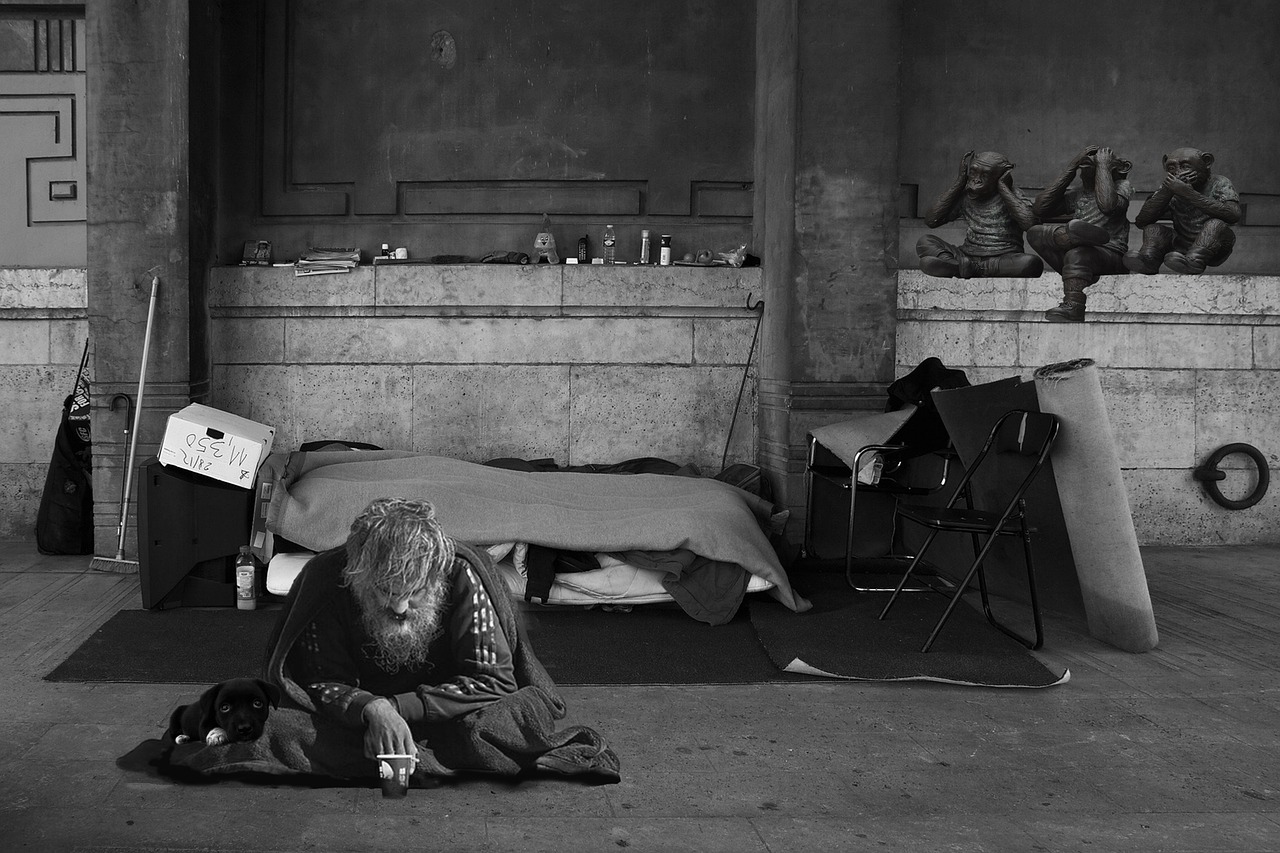
    Imagine a utopia where there are no starving millions living on less that a dollar a day, no poverty, no curable disease left uncured. Where the miracle of technology is used to heal and nurture the planet and its ecology, rather than destroy it.

    Where people live to co-operate and care for each other, rather than compete and destroy. Where capitalism is replaced by sharing and kindness. Where love of the world and everything in it becomes our dominant motive. Where the ego is relinquished in favor of reality and we stop working for our own destructive self interest.

    Does a dream of such beauty always have to turn into dystopian nightmare and should we let that fear stop us from pursuing a better society?

    Does the attempt to turn our lives into something dreamt of by Jesus of Nazareth and countless other visionaries have to be abandoned, just because in the past it has lead to the tyranny of the monolithic medieval Catholic Church or the horrors of the Gulag?

    Should we give up our longing for a better world just because we have failed to achieve it in the past? Or should we aim to reform ourselves and try and try again until we achieve the heaven on earth we all at heart long for?

    Gerard Manly Hopkins expressed the eternal human desire for a better place as follows:

    I have desired to go
    Where springs not fail,
    To fields where flies no sharp and sided hail,
    And a few lilies blow.

    And I have asked to be
    Where no storms come,
    Where the green swell is in the havens dumb,
    And out of the swing of the sea.

    If we stop dreaming beautiful dreams we waste the gift of consciousness.

  • Glimpses of “Truth”

    Glimpses of “Truth”

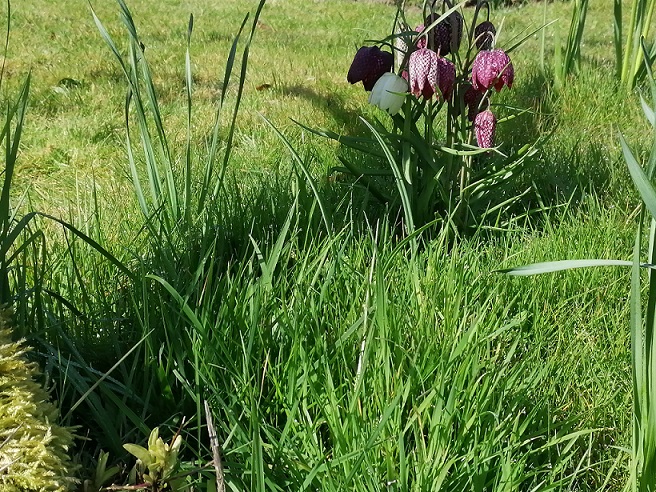
    Enjoying the cool spring sunshine this morning, I had a moment of truth as my eye was caught by dew drops in the long grass. I was sitting in our beautiful patch of wild meadow at the bottom of the garden.

    There was nothing great or overarching about this brief revelation. I did not become either omniscient or omnipotent but I did feel a deep connection with self, or at least the collection of perfectly ordinary atoms I am made of.

    Thanks to a mind which could kindly be described as unquiet, I have spent many years wondering about the koan. What is nirvana and how do you get there?

    The presence of fear has been the greatest barrier to achieving a quiet mind Although I suspect many other destructive emotions have contributed over the years to the tempest which has often raged inside me.

    I started the morning thinking about the meaning of money, its love and its strong connection to fear.

    It is not that I have lacked money over the years but the fear of lack has dominated my life. Which is odd, considering that for many years I have understood the meaninglessness of material possessions. The pointlessness of one small collection of elements from the periodic table feeling the need to control another and larger collection.

    The key of course is fear. The terror evolution has saddled us with to ensure our survival and hence the continuance of our species.

    The objects of our fear come in many shapes and sizes but they all seem to boil down to a fear of annihilation. Pain, hunger, cold. Those might be three of our greatest concerns.

    And perhaps all the other destructive emotions which can overcome us derive from these very basic insecurities. What are jelaousy, anger and envy if not the realisation that somebody else seems to have it better than we do?

    A bigger car, the better to tear around in and dominate others with our undoubted superiority. And so it goes with many other material possessions or indeed our relationships. A more attractive partner, the fitter to reproduce. More land and a bigger house, the better to keep the barbarians at the gate. Power; the power to take what we think we need and to prevent others from taking what we have got.

    The initial realisation of “truth” must necessarily involve silence, isolation and letting go. Some might call that meditation and there are many forms of that practice, not all of which entail sitting on the floor like a vegetable. Although I have no doubt some find that a valid path.

    But back to money and survival for a bit, if I may. There is that hallowed old trope about learning to fish and I think we all need that skill in equal measure if we are ever to create a better society.

    If we had a skill from which we knew we could feed and house and clothe ourselves we may not feel fear. And given such a skill, I suspect most of us would not feel the need to amass wealth. It would become superfluous.

    The problem with our society is that the ability to provide ourselves with the basics of life has always involved conflict and doing down the other. It has never been as simple as learning to fish – someone else will always claim it is his pond, his sea and will kill to maintain his “rights”.

    Fear for our own survival has, since the earliest days, meant violence. Hunter gatherers kept neighboring tribes off their hunting grounds and when agriculture was invented so were property rights.

    Suddenly, fear driven by the need for security meant grabbing land and excluding the neighbors and so it has continued.

    In feudal Britain we still have families controlling hundreds of thousands of acres. And of course we have the more modern equivalent of the feudal landlord – the business titan controlling the means of production and distribution.

    And lo! We are struck by a deadly plague and the grapes of wrath grow fat once again.

    The little man can not fish. He us banged up in a government housing block and his feudal employer has laid him off.

    Neither can the small shopkeepers and business people, purveyors of baubles and mostly useless trinkets, any longer fish for their supper.

    And nor can the myriad of human drones on the antheap. Suddenly our rods are removed and the lakes and seas of commerce are boarded off from us, fences erected to prevent the spread of the plague.

    And that is the precise point at which you recognise how fragile and foolish our society is and always has been.

    The problem is that we are all so far removed from the basic necessities of life. How many of us can literally fish to feed ourselves? Or grow crops or raise animals.

    Most of us these days produce sterile and ultimately useless services. Perhaps we all need access to the means of production. To land, water, the elements.

    I take it as a basic truth that our society needs urgent and drastic reform but I had not intended this piece to become a political diatribe, so let me return to where I started out: sitting in the meadow at the bottom of my garden. Contemplating “truth” and enjoying a series of small revelations.

    And suddenly the nature of my error strikes me as I refocus on the beauties of nature.

    Let go – society is unlikely to change yet a while, and who am I to say that it should.

    Contentment and peace come from withdrawing from the concerns of the world and in focusing on the bigger picture. I can feel, in a real sense, not my “connection” to nature, as I sit here in the middle of it, but my absorption in it. I am nature and it is me.

    Far from wishing the world and it’s peoples to go to hell in a handcart, I wish for all of us a better life.

    But I rather doubt that betterment will come from fiat.

    If it comes at all, my suspicion is that it will come from inside us and not from external utopian upheaval. That the search must be an inner journey and that only from within will the answers be found. A better world must be made individual by individual.

    Given certain basic needs, contentment can be found in simplicity. In silence, in beauty and in nature. In the realization that we are already where we are supposed to be and that there is nowhere to go.

    And the plague? If it can be avoided then well and good. If it takes us, so be it. Perhaps all is as it should be. Perhaps, as Julian of Norwich so beautifully put it:

    All will be well and all manner of things will be well.

  • Picture from the Post Apocalypse

    Picture from the Post Apocalypse

    Imagine yourself, if you will, in a world post the apocalypse to come.

    The Christians of the far right would be fine of course – they would have been raptured.  Quite why their selfish god wouldn’t choose to swoop up a few decent Jews, Hindus, Buddhists and Muslims is a question way above my pay grade, but there you go.

    Most of us would have met a grisly end – say 7.5 billion of us, leaving a mere few hundred thousand  scrabbling for survival under pre-historic conditions.

    Walking along a wind swept beach pounded by fierce waves you might come across remnants of man’s short lived supremacy on earth. The last rusting vestiges of our finest hours – a buoy, ripped from its bedding, its days of guiding maritime transport long gone. 20 feet high and rolling in the breakers; it’s lights gone out for good.

    And so for much of the world, presumably. Vines and weeds cracking the concrete of motorways and airports, ivy and rot slowly eating the tower blocks and even the most glamorous of human habitation. Animals taking back the wild; fierce dogs, rodents, the vast insect population – now unfettered by the species which had dominated the earth for a short few hundred years before it met its comeuppance.

    Without the rule of law, savagery would prevail.  The prisoners from the secure wings becoming the new warders of the sparse few left, free to inflict unbelievable barbarity and cruelty, as might became truly right.

    There never was a Noble Savage, just a savage, and now his time has come again – in the glory days of Western Capitalism, the beast devoted himself to destroying his brethren by commerce.  Freed of commerce, a more traditional violence returns. The smash and grab of late stage capitalism becomes more literal, as scarce resources are hunted down and horded by bully boy gangs, led by those who were former drug kings and modern warlords.

    In a play world of the imagination, a nihilist or nature lover might romanticize a landscape stripped of CCTV cameras, police sirens and politics.

    Imagine roaming a land free of all that, a vast vista returned to raw nature. Endless beauty, endless plants, animals and natural wonder.

    Realism would soon strike. Even in the absence of vicious human gangs, hyenas, wolves and predators would soon be back and it would simply be a continuation of survival of the “fittest”.

    So yes, an emptier world would be very attractive for all sorts of reasons. An end to overcrowding, plenty for all, no robbery of the earth’s resources.

    But whether of not we get the apocalypse we deserve, we need to move towards a better world, a fairer one. A better human race. Less greed, anger. Less Darwinism.

    Sometimes I almost think I can see the light. An American pen friend wrote some thoughts I found beautiful today.

    I can’t quite put my finger on it but what he wrote sounded so right. So familiar in some odd way. It made my hair stand on end, my skin gently ripple with a mild electric current. A sort of excitement filled me.

    That sort of inner evolution seems so tantalizingly possible. Easy to say from the peace of my quiet cottage by the sea. Less easy when we are faced with the pressures of daily life.

    Competition, aggression, greed – all of these things seem so far removed tonight. But outside the gates, the barbarians wait.  What kind of vast upheaval must we bring about to create an Eden? Is it even possible?


  • Consider the Lilies of the Field…

    Consider the Lilies of the Field…

    …how they grow; they toil not, neither do they spin…Behold the birds of the heaven, that they sow not, neither do they reap, nor gather into barns…

    I have often wanted to be a tree. Preferably an oak; preferably in some far flung province inaccessible to man.

    I have spent some weeks in meditation. Not on my knees or my backside. Not in some temple or man made edifice.

    But in simple existence, simple awareness of the passing days, the season, the comings and goings of the world.  To feel the summer breeze, the gentle waving of leaves and branches. The dawn chorus, the cooing of pigeon. Waves, sky, hot and cold. Rain and dry. Beauty in nature and in art.

    And then I spoiled it, I let the serpent into Eden, I picked the apple.  I stopped my flow, I ceased to let the world wind over and around me and I sought, once again, toil and the world of commerce.

    It was an error to open my computer, a grave mistake to enter the dark caverns of the world wide web, the dark satanic mills of finance.

    Would there have been any way of earning my daily bread which would have enabled the poetry to continue to flow? Or does “the world” always have to entail disillusion and anxiety, irritability and bad temper?

    I have been observing my moods carefully recently for a number of reasons, not the least my interest in experimenting with micro-dosing to expand the doors of my perception.

    For weeks I have been walking, wandering aimlessly, enjoying pure existence. A sparrow, if you like, or an oak tree or Ent.  I have observed as I have wandered.  And I have let go, let all things pass.  My mind has taken very different paths, my thoughts have expanded. The predominant feeling has been one of pure harmless joy; an innocence combined with a great enrichment of the imagination. An expansion of my mind without even the necessity of a hallucinogenic door opener.

    I then I blew it. I knocked on the dark doors of commerce; I spent some hours looking at financial arbitrage. I revisited the squalor of money and finance, of greed and business.

    I became less observant but before the glass darkened too thoroughly, before the mirror became too opaque, I was able to notice what it was doing to me.  Irritability was the main evil and a far decreased ability to take pleasure in what was around me.

    So I have switched it all off again; for a few weeks at least. Will I return to it when I am back in my study? Can it be done without irritation?  Can I learn to combine commerce with a joy in life?

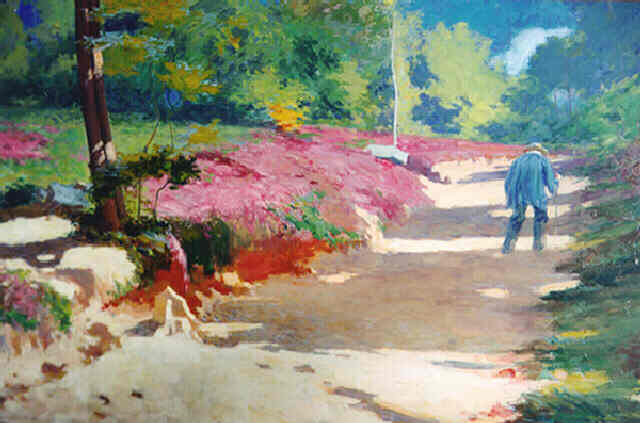
    I will have to try. And if I can not, I must switch off commerce for good. Close down the mill and head for the hills. Live in a green and pleasant land.