Tag: Church

  • King Charles’s Roman Circus

    King Charles’s Roman Circus

    Today’s £125m fancy dress party both amused and bemused me.

    Vast inherited wealth and privilege sits uncomfortably beside a world engulfed in the flames of war and beset by poverty, want and savage cruelty.

    Life is still nasty and brutish and in all probability many only wish it had remained short.

    The King himself is reputed to have inherited £1.8bn and the day found him dressed in mediaeval garb surrounded by the flummery of crowds who could surely have found better use of their day. But of course the great and the good love to see and be seen.

    Religion could have made itself a force for good but to this day panders to the powerful and wealthy rather than remaining true to its humble and sincere origins.

    We understand from the Christian gospels that Jesus of Nazareth lived a lowly communal existence while he continued his short ministry. He famously declared that the meek shall inherit the earth and the New Testament quotes Jesus as saying in Luke 18:25 that “it is easier for a camel to go through the eye of a needle than for a rich man to enter the kingdom of God” (Jesus and the rich young man).

    And yet today the church establishment continues a centuries old tradition of gratifying the fripperies and conceits of the rich and the famous, where once their founder sought to heal the sick and feed the poor and the hungry.

    The British Prime Minister ( a man of enormous reputed wealth, and, paradoxically a Hindu) read from St Paul’s epistle to the Colossians.

    “Put to death, then, the parts of you that are earthly: immorality, impurity, passion, evil desire, and the greed that is idolatry.”

    Wise words indeed from Verse 5, and much the same sentiments are to be found in all spiritual doctrines including the beautiful sacred texts of the Hindus.

    Whether Prime Minister Sunak is a supporter of such sentiments I would not know. But he would presumably have difficulty passing through the eye of a needle.

    What a great pity that as a species we have always been unable or unwilling to practice what the original holy men so rightly taught.

    I have no doubt that some of today’s “holy men” will wish to defend the institution of the monarchy and would be little wont to cast off their own regal garb and prominent position in the great Cathedrals and Abbeys. And yet one has a suspicion that Jesus of Nazareth would encourage such prelates to pull down the vast edifice they have built and to slum it with the masses.

  • Lead Kindly Light

    Lead Kindly Light

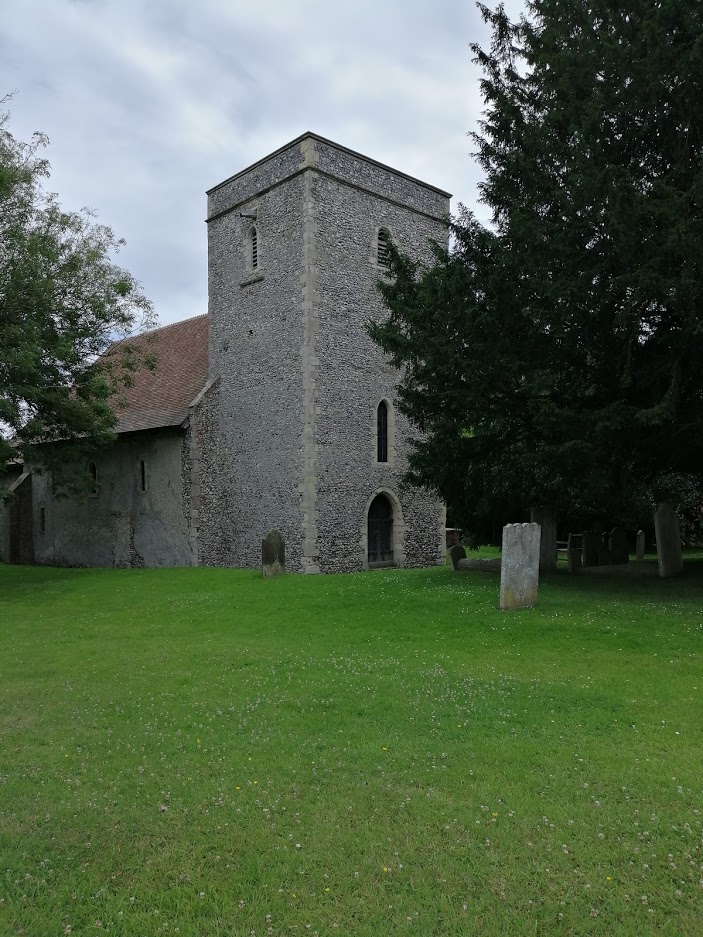
    I found myself transported back to the time of Cardinal Newman this evening, sitting in a glum old seaman’s church on the coast at Walmer.

    Neo Gothic and built in 1848, it sits opposite the sea where for hundreds of years the locals took supplies out to ships sheltering in the Downs.

    Once one of the biggest ports in the country, nearby Deal housed Nelson and Lady Hamilton on occasion, as the British fleet was anchored offshore, protected in a sheltered channel between the shingle shore and the legendary Goodwin Sands.

    The evening glowered; the light was poor and the rain drizzled down on the grey, cold and lifeless seafront.

    And yet.

    And yet there was calm, beauty even. I love dour Victorian churches with their fake Gothic arches and their heavily coloured (and equally heavily didactic) stained glass windows. The folk seemed from another time too. I was reminded of my fierce old Baptist grandmother, born at the end of the 19th Century, who lived in nearby Ramsgate.  She was present somehow, amidst these local townspeople, a part of them.

    Similar class, similar trade I guess and these people too reminded me of nothing short of Victorian shopkeepers. Was it my imagination or did I see mutton chop whiskers and frock coats? Who knows, the light played tricks on me perhaps.

    Apart from one youthful member of the Choir, I seemed to be one of the younger participants.  A not uncommon occurrence if one has a passion for sung evensong, in a format which has remained little changed since the days of Henry Tudor.

    As is my wont, I turned up early for a few minutes of peace and reflection and while the choir practiced I thumbed through the race card.

    I have often sung versions of Cardinal Newman’s beautiful poem but tonight the words struck me with more than usual poignancy.  We were to sing it as one of the hymns.

    “Lead, kindly light, amid the encircling gloom,
    Lead thou me on;
    The night is dark, and I am far from home;
    Lead thou me on;
    Keep thou my feet; I do not ask to see
    The distant scene: one step enough for me.”

    I felt a mixture of emotions. A fish out of water perhaps, despite my unmistakable Englishness.  It’s been a long time since I sat in my grandmother’s modest children’s clothing shop in Ramsgate, filching Victorian pennies out of the ancient wooden till.  With permission from the old dear, I hasten to add.

    The other side of the family was different altogether – wealthy, vulgar perhaps, with hindsight. And the years since childhood have taken me so far from Ramsgate and little shops in provincial high streets. More is the pity maybe.

    Glamour, travel, expensive hotels and, well, some degree of wealth I suppose. For all that that means.

    So it is grounding, I guess, sitting in this church. Back to my humble roots perhaps, or those of my grandmother.

    And those wonderful words of Newman – let someone else worry. Look not where your path might lead. The night was indeed dark and although I was not far from home, I felt it. Emotionally, physically.  I am all too often amidst encircling gloom and pride certainly ruled my will. Probably still does.

    To have the childlike faith Newman talks of – what a wonder that must be.

    So long Thy power hath blest me, sure it still
    Will lead me on.
    O’er moor and fen, o’er crag and torrent, till
    The night is gone,
    And with the morn those angel faces smile,
    Which I have loved long since, and lost awhile!

    But, you know, with or without conventional faith there is a lot in the teaching. The code of behavior – modesty, kindness, lack of show. The idea that you should just plug on and let it all happen. And let someone else worry about it.

    The whole experience left me feeling quiet, contemplative and satisfied. Cut out the god stuff and those Christians have got much of it spot on.


  • Alone in a Pew

    Alone in a Pew

    If you are going to church, go alone and go when it is empty.

    And preferably locked, so that you have to knock on some ancient’s door to borrow the huge old keys to the locks.  Make sure it’s old – quietly ringing with a thousand years’ of contemplation and quiet voices.  And it should have books – musty, sacred, old  books containing arcane prayers in a language you barely understand. And best if it is remote and utterly still and quiet except for a few rooks in the churchyard.

    Then you sit and you listen. Perhaps you look at some ancient prayers, not as an act of obeisance to some deity you were taught about in childhood, but to plumb the very depth of the human condition. To put you in touch with who you are and who we all are. Our common concerns and joys, our hopes and our fears.

    And yes, perhaps to access some sense of the “divine”, however you may interpret that word, that feeling. The intuition that something is out there, even if that something is a mere echo of the human spirit itself.  That is divine enough – consciousness is itself miraculous. The arising of feelings and mind from mere matter. Out of carbon and oxygen and hydrogen arose some spirit, some entity which could contemplate the universe and the very matter from which it arose. Special enough to produce a sense of the numinous.

    “Stand in awe…… : commune with your own heart, and in your chamber, and be still.”

    How apt, these ancient words and how beautiful. And how many such phrases can you find, combing through those musty old books. Reject what you will, take what you will. You drift, in and out of consciousness, in that quiet place. You pick a few words here and there and think about them. You  close your eyes, you drift into a mild trance.

    Somehow all seems right at such times. The watery sun peers through the stained glass and casts its glow on brass and wood and hewed stone. Yes, all seems right with the world. All will be well and all manner of things will be well.

    It isn’t a religious thing.  You are not looking for benediction or grace, for help or the defeat of your enemies.  You do not seek to be saved, you are not looking for reward or an after life.  You are looking for this life, here and now.  You are seeking your own essence, your own meaning and purpose.

    And sometimes you think you have found it. Sometimes, during that half hour of quiet contemplation, on that dusty old pew in the middle of nowhere, you have grasped at some truth, you have found some measure of true peace, equanimity.  Presumably thousands have found likewise over hundreds of years in that place of peace and sanctity.

    You aren’t looking for thanks, or wealth or health. You aren’t seeking advancement or gain or praise.

    You seek yourself. You seek truth, meaning, solace.

    And alone in a pew I usually find those things.

  • Joy to the World

    Joy to the World

    I will never be able to resolve my unshakable disbelief in Christian dogma with the profound peace I find singing sacred classical music in an ancient English church with a good choir.

    I sang yesterday at the Christmas service at our local church, sitting up in the beautiful Victorian choir stalls, next to one of the regular members of the wonderful permanent choir. Having sung themselves out during advent, the organist had called for help as the regular choir (or most of them) took the day off.

    Needless to say I struggled with aspects of the service, in particular the awful passing of the peace, and as usual did not take part in the wine and biscuit binge.

    And yet I could not help myself being moved by the sermon, beautifully constructed if rather gratingly delivered in a rasping American accent.

    It was about feeling the numinous, and was expressed by comparison to feeling a baby’s hand, vaguely and mysteriously, through the walls of a mothers womb.

    It was a simile I took to. There is a wonder in the world and nowhere do I feel that more strongly than in an ancient church, however crappy I find the bizarre belief system.

    That there is goodness in the world is never easier to believe than on Christmas day when I am far from thoughts of money (or rather of running out of it) and even further from words like “competition” and “business”.

    I can’t help it if I don’t believe in the birth on earth of the son of god, however beautiful the advent story. I can’t help it if my belief aligns more with the Taoists than the Christians.

    The truly wise know that the same witness to the divine can be felt as easily by the Buddhist as by the Taoist or the Muslim.

    The tragedy is that so many feel the need to push their bigoted, narrow and doubtless erroneous views as to what they believe is truly out there.

  • God’s Bleak House

    God’s Bleak House

    Said to be the second oldest parish church in the country, churches don’t come much bleaker than All Saints’ Church, West Stourmouth, Kent.

    It was a lowering, blustery day. Rain-swept with incipient thunder and the occasional flash of lightening.

    Much of this isolated, lonely marshland was once under water and the river Stour still winds its quiet way up to Canterbury. Stourmouth was once a port; perhaps it was crusaders landing here who carved their crosses into the stonework at the porch.

    It is a relic of times past, no longer ruled by stern clergy berating local sinners and threatening them with old testament monsters.

    Now no more does a pompous man of the cloth insist I am a sinner, nor point me to Dante’s circles of hell.  Or to the lake of Gehanna.  The church has closed its doors to all but the occasional service and perhaps it is all the better for that.

    There is a dark, gloomy, ascetic beauty about the place. You can almost hear the quiet moan of plainsong, the soft chanting of the liturgy of the hours.

    Is there melancholy here? Perhaps, but it is a soft and beautiful sadness, polished by ages, to be relished not lamented.

    A Saxon church, refurbished by the Normans and partly built with Roman bricks. If ever there was a place for quiet reflection, this lonely outpost of Christianity on the misty marshes of South East Kent comes close to perfection.

    No christian smile to be had here, no pompous local (trussed in his Sunday best) to shepherd you to your seat. No passing of the peace, no sanctimony; nor earnest lecturing.

  • Matins in a country church

    Matins in a country church

    In a lifelong search for meaning, I have found little to compare with matins in an English country church, on a quiet summer’s morning.

    According to Google the word is Middle English:

    A service forming part of the traditional Divine Office of the Western Christian Church, originally said (or chanted) at or after midnight. A Christian service of morning prayer, especially in the Anglican Church

    from Old French matines, plural (influenced by Church Latin matutinae ‘morning prayers’) of matin ‘morning’, from Latin matutinum, neuter of matutinus ‘early in the morning’, from Matuta, the name of the dawn goddess.

    The words to the service are contained in the Book of Common Prayer, an anathema no doubt, both to the evangelicals and to modern man in general, sacred or secular alike.  For those with a more ancient and academic set of mind, there is nothing more glorious.

    I had walked there across the fields from home; three local churches were in view but on this morning only one of them had an organist and those magical words on offer.

    The congregation was 6, while organist and cleric brought the total number to 8.  Perhaps one was my junior in age, but most were my equal or senior. The words and music rolled over me, even the responses were sung.

    The Creed, the Lord’s Prayer, Psalm 51.  Ancient, croaky voices in an ancient and sacred setting.

    It isn’t the god-stuff which takes my breath away.  It is the sheer beauty. The quiet. The stained glass, the art, the meditation. Yes, the ancient loveliness of it all.

    And a return (in my thoughts at least) to my childhood.  To the beautiful and ancient church of my early years and the little prep school choir where I sang for 5 unbelievably old fashioned years in Charles Dicken’s Broadstairs.

    We won’t have it for much longer.  The churches are shutting their doors, the ancient parishioners are the last of their breed. They aren’t making organists anymore. It is living history; revel in it, marvel at it while you may.

    And why should I care? I am as puzzled as the next man by my devotion to such anachronism. Is it because somehow, somewhere I have a small, quiet shred of belief in this ancient religion?

    No, not in any literal sense.

    The address surprised me: “Some say there are many roads up the mountain. That is not so, there is only Jesus Christ”.

    How could I possibly subscribe to such abject nonsense, such narrow minded absurdity? Are millions of Buddhists to be denied “salvation”?  And what of the rest, including the atheists?

    And yet this ancient service always brings me solace.  There is “something” as opposed to “no thing” and I always feel it in such a setting. But that something probably bears little resemblance to the “something” worshiped by Christians.

    I’m sorry to say that Jesus “Christ” is not going to bail us out of our unholy mess.  Good man though he was, he is long dead and gone.  Although in a sense his “spirit” remains, even if only in our memes and memories.

    A post Darwinian world of plenty and justice is something only we can achieve. We are not going to be able to rely on supernatural intervention.

    Science, education and awareness might eventually achieve heaven on earth if we work hard enough at it. It is at least worth trying.

    I seek the numinous, like so many others, but it is to be found within, not without.  It is to be found in a profound alteration of consciousness and it is not going to happen quickly.

    Trans-humanism is a slowly emerging reality.  If I have any creed at all, it is the belief that the human race can evolve beyond its current physical and mental limitations, by means of science and technology.  Together with a good measure of the philosophies of kindness and goodness we find in all of the world’s better religions.

    I attend matins occasionally, or sometimes evensong not because I believe in a divinity or his offspring, but because the calm beauty makes me realize what is important in life. And how to live it.

    I attend matins not because I believe god or Jesus is going to save me, but because the embrace of the culture soothes my fractious mind.

    So good old Church of England I hold you dear.  I shall miss you when you have gone. I must attend matins in a country church much more often.

  • Psalm 137: Happy the one who takes your little ones, and dashes them against the rock.

    Psalm 137: Happy the one who takes your little ones, and dashes them against the rock.

    Someone in Canterbury Cathedral (the Dean perhaps?) decided that Verse 9 was going a little far and that Jihad against the Daughters of Babylon and their kids just wasn’t on these days.

    Pity someone couldn’t have communicated the Dean’s sentiments to Bush and Blair.

    They could have explained perhaps that the “axis of evil” consisting of Iran, North Korea, and Iraq should not have included, to be fair, the countless thousands of innocent men, women and children killed in two gulf wars and the disastrous aftermath.

    One of the glories of England is its Cathedrals. I was sitting in the choir stalls at evensong listening to the choir singing Psalm 137 and following along in the prayer book. Somewhat to my surprise I noticed a verse had been left out and when I glanced at Verse 9, I realised the omission was justified!

    The dear old church of England is a decent place on the whole (although I gather life in the Cathedral close can be as bitchy as anywhere).  It isn’t blood and guts and Jihad. It is not about thrusting the violent and mad ramblings of an ancient desert tribe down the throats of the infidel.

    Although the endless god stuff can get tedious (we are all so sinful) and mealy mouthed, they are a well meaning bunch mostly (leaving aside the occasional  Obadiah Slope).

    That’s the thing about the religion of my childhood. They don’t mind me being an apostate,  they are not too concerned that I find their belief in a benign deity (or indeed any deity) faintly absurd.

    They welcome me in with open arms, hoping perhaps that I will receive a Damascene conversion while dozing gently and drifting off to the notes of Tallis, Byrd or Purcell.

    That’s what I like about the shabby old clerics and their musty churches and prayer books. They recognise that for some of us it is beauty and meditation which might lead us to a better life (even if, as an atheist, I can not hope for the kingdom of their god).

    Thank god (well – that’s a turn of phrase) for the decency, mediocrity and kindness of their ways.


    Psalm 137
    From the Psalter of the  Book of Common Prayer

    1 By the waters of Babylon we sat down and wept,
    when we remembered Zion.
    2 As for our lyres, we hung them up
    on the willows that grow in that land.
    3 For there our captors asked for a song,
    our tormentors called for mirth:
    ‘Sing us one of the songs of Zion.’
    4 How shall we sing the Lord’s song
    in a strange land?
    5 If I forget you, O Jerusalem,
    let my right hand forget its skill.
    6 Let my tongue cleave to the roof of my mouth
    if I do not remember you,
    if I set not Jerusalem above my highest joy.
    7 Remember, O Lord, against the people of Edom
    the day of Jerusalem,
    how they said, ‘Down with it, down with it,
    even to the ground.’
    8 O daughter of Babylon, doomed to destruction,
    happy the one who repays you
    for all you have done to us;
    9 Who takes your little ones,
    and dashes them against the rock.