Tag: Transience

  • Carpe Diem

    Carpe Diem

    There is nothing quite like a funeral to concentrate the mind; “carpe diem” seems such an apt phrase at such a time.

    Translated as “seize the day”, the Latin original was taken from book 1 of the Roman poet Horace‘s work Odes.

    Such meaning in three words.

    And how similar we are to those ancients, despite two thousand years difference in time and an eternity in technology.

    I am no believer in the wisdom of the ancients, let alone the apocryphal “noble savage” and yet in many deeply meaningful ways, we humans have been so consistent over time in both our strengths and our weaknesses.

    Our weaknesses are all too evident and yet perhaps our strengths can be all too easily overlooked.

    What would you call such a phrase?  More grandly perhaps you would say it is philosophy; at the very least the adjective “philosophical” seems to fit. For those who can only take philosophy seriously when it is written in the tortuous phrases and incomprehensible jargon of a Wittgenstein, then perhaps the phrase is mere folk wisdom, common sense.

    But it is a phrase you should not pass over lightly. It expresses a sentiment which should be lived and breathed – while you do still live and breathe.

    So, what should we do? How exactly should we “seize the day”?

    Oh dear I’m afraid I’m going to go back to the simple message of Bishop Michael Curry again, so beautifully and perhaps more elegantly argued by the glamorous young female clergyman in today’s service.  Love – trying to treat people decently anyway.

    I really don’t like the word “love” – it always makes me feel sheepish and embarrassed. Such an over-used word with such cloying (Uriah Heep!) overtones but one which in some contexts is nonetheless helpful.

    Perhaps I am more comfortable with the word “awareness” and I suspect my friend who was buried today would have felt much the same.

    To seize the day for me is to be fully alive to what happens each moment of each day. Not to be worrying about the future or regretting the past.

    It is about seeing people and talking to them, helping when you can. About empathy and engagement. Not in any religious sense but in a very down to earth, basic practical sense.

    My wife, my child – it is about being “with” them against that day when I will no longer be able to. And others of course but I am not a sociable individual; a few close friends and relatives makes up my world.

    And art, beauty, knowledge, nature. All these things too must be seized. To read Horace’s Odes perhaps, to potter in a summer garden, to drink in a Rembrandt or even a cup of coffee. But to notice it, to be aware. To smell the coffee, to take it all very, very slowly. Not to hurry through it to get to tomorrow or next year.

    These are the topics I would discuss with my friend. Our world views were quite similar but then I suppose we tend to be friends with those who think in similar ways.

    But there must surely be a universality of feeling in the phrase “carpe diem”; it is hard to believe that quiet reflection does not lead most of us down similar paths.   Eventually.

    Do not mourn the dead but be happy you knew them.

  • A Meditation on Death

    A Meditation on Death

    To witness death is a right of passage which comes to most if not all of us.  It is a sobering and undoubtedly sad experience but not, perhaps, without its redemption.  To suffer death comes, in the end, to us all.

    As children to witness death can be at its worst. God knows what it must be like for the child soldiers of Africa or the victims of genocide.

    In the last 70 years in Western Europe death for most of us has often been a more peaceful affair.  It is still deeply moving. It still provokes intense thought and wonder. It can often entail grief and great sadness.  But at least death in the West, whether from disease or old age, has mostly been decoupled from the senseless brutality of meaningless violence.

    For the scientist, birth is a coming together of atoms in a collection which results in consciousness. Death is the mere redistribution of those atoms back to where they came from – the world and universe all around us.

    For the religious there can be comfort in death – the existence of an immortal soul, the promise of a resurrection or a heaven. When Marx referred to religion as opiate he was in some senses very accurate. It can give comfort and strength in the extreme to the true believer.

    To the rest of us it is perhaps down to developing our own philosophy – our own view of how and why conscious life comes and goes. Or perhaps for some of us the realisation that there is no “why” just “how”.

    And the “how” can itself give a comfort and great beauty – the sheer wonder of the natural world. The endless cycles of birth and rebirth, of the planets round a sun, of the beauty of the seasons.  Of the birth and death of planets and suns and galaxies. The endless dance. The coming and going of the very universe itself.

    To have lived a good life is all that matters in the end.  A life where, if you did not manage to achieve great good, you at least did no great harm. A life where you gave and received love.  A life of the little things. The joy of children, the wisdom of later life.  The beauty you saw around you and the contribution you made to the dance.

  • Ozymandias, King of Kings

    Ozymandias, King of Kings

    Written by  Percy Bysshe Shelley in the early 19th Century, if there can be said to be polarity in Romanticism, then this poem plumbs the depths, rather than praising in the heights.  And yet there would be no yin without yang, no black without white.  No journey of the soul is complete without contrast.

    Hubris writ large, this work begs to be read by moguls and titans across time.  In a few simple and elegant lines, base ambition and materialism is exposed as futile vanity.  Our universe is governed by entropy and decay.

    And yet, tantalisingly, an eternity of sorts may be attained by “information” – knowledge and ideas transmitted through time. Arguably information needs a physical base, but the words of this poem have survived intact for 200 years and may last for many more as a popular meme in a living culture.

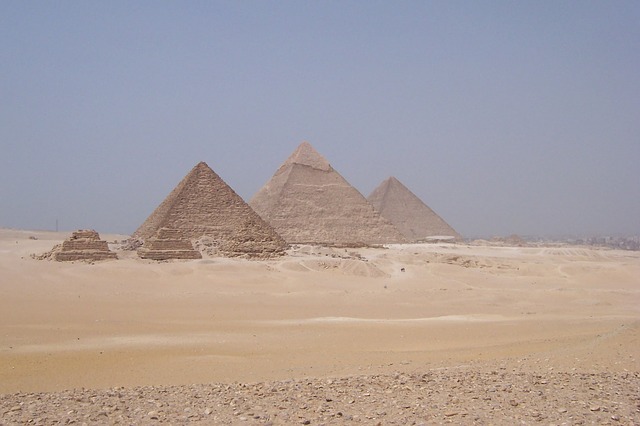
    Ideas and memes are not subject to physical decay; not so “two vast and trunkless legs of stone” which “stand in the desert”.  Not so the empire of  Ozymandias.

    Perhaps Ozymandias (or Rameses II as he was known in a different language) was the pharaoh of the Exodus.  Regardless, nothing much of him or his works has survived in material terms. His was not a 1,000 year reich.

    Does poem this inform our weltanschauung? Does it suggest a better way of life? Or at least one more meaningful.

    A search for meaning and knowledge may leave a more lasting legacy than the construction of an empire. The works of Isaac Newton or Albert Einstein may be of more lasting value than those of a business leader who constructs his empire much as a dung beetle rolls and buries his sustenance.