An enormous amount of bullshit on the topic resolves into two simple polar opposites.
Scientists believe that there is no room for true free will: there is no ghost in the machine, no non physical presence (call it a soul, or whatever you wish) which can alter or affect physical reality.
A shrinking minority still believes in a soul or that consciousness is a fundamental property of the universe. The latter being a law on par with gravity or one of the other fundamental forces of nature.
It is true that certain philosophers have tried to create an ugly botch job they call “compatibilism”: a nonsensical approach which tries to pretend free will can exist alongside pure physical determinism. But if you examine it dispassionately, you will find it depressingly feeble. It admits no possibility of any true ability to interfere in the causal chain.
“Causal Chain” – think about it in these terms. Physics (matter and energy) is all that exists in reality: every single event (including every single thought) that has ever been or will ever be, is determined by what came before it. What “caused” it. Think of it like this: reality is a giant billiard table: everything which occurs happens as one billiard ball collides with another. Absolutely no choices are made or can ever be made. It all follows an everlasting and unbroken chain – everything depends entirely on the physical event which preceded it.
So pure determinism (the idea at one polar extreme) holds that everything since the big bang and forward in time is entirely predictable and determined. Or would be if we had enough computing power and information.
If you start investigating the subject you will find a horrible mess and a whole bunch of opinionated talking heads making absurd distinctions and talking of angels dancing on pinheads.
So many hairs. So much splitting.
Ignore it. Dip in if you must, but if you are purely rational and dispassionate in your investigation you will find the situation is as I describe above. The bullshit is in the detail – the endless petty arguments and stupid words, the thousands of ways in which the two polar opposites I describe are tarted up and carved up to try and find a way out of the apparent dilemma.
It all boils down to belief: do you believe there is a ghost in the machine or don’t you.
Science is not absolute, not all powerful. Not omniscient. There are vast and glaring gaps in our knowledge of reality.
That is why the existence (or otherwise) of free will is currently a matter of belief only. There are no facts, although the scientist will try and convince you otherwise. And indeed such evidence as has been discovered by no means favours free will. We are robots, or the audience in a cinema – merely watching what passes, unable to affect anything. Unable to cause anything to happen. Indeed, our very awareness is in many senses simply an illusion. Or thus claim the physicists.
If you find yourself unable to believe in the scientific view then you might comfort yourself that what remains to be discovered about reality is likely to dwarf what we currently know.
And that a ghost of some sort may eventually poke its head out of the ether.
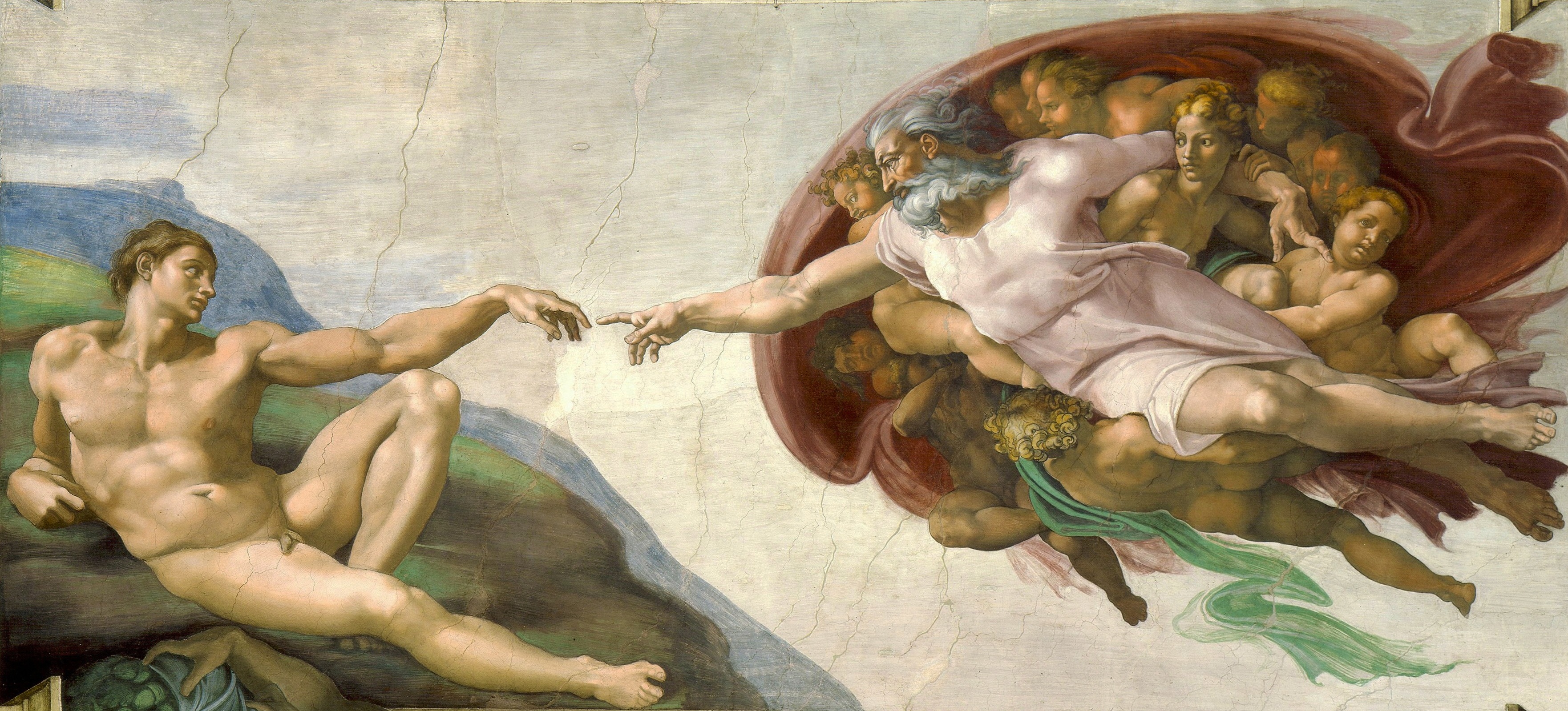
Illustration: The Creation of Adam, Michelangelo