Tag: Music

  • Lead Kindly Light

    Lead Kindly Light

    I found myself transported back to the time of Cardinal Newman this evening, sitting in a glum old seaman’s church on the coast at Walmer.

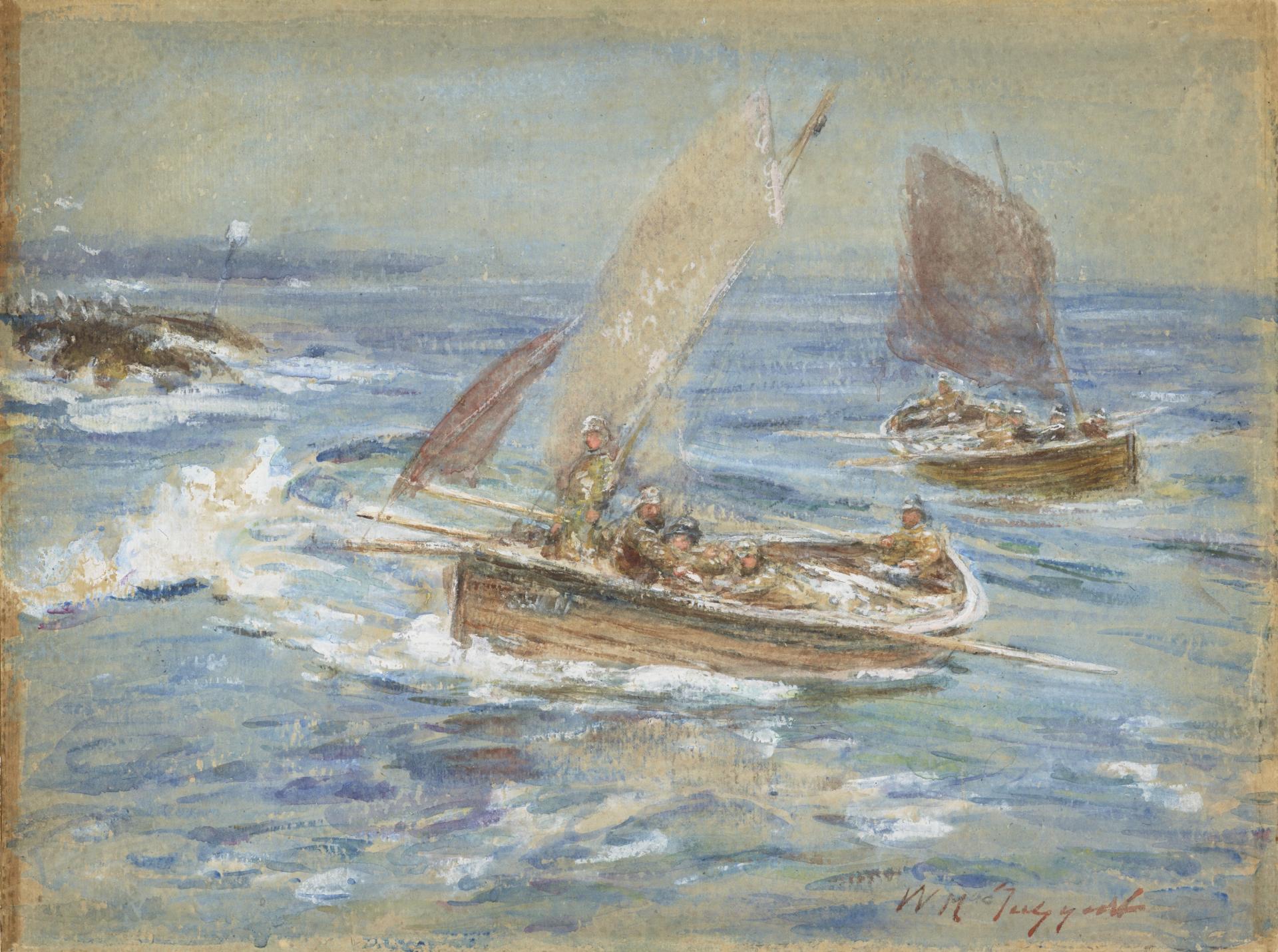
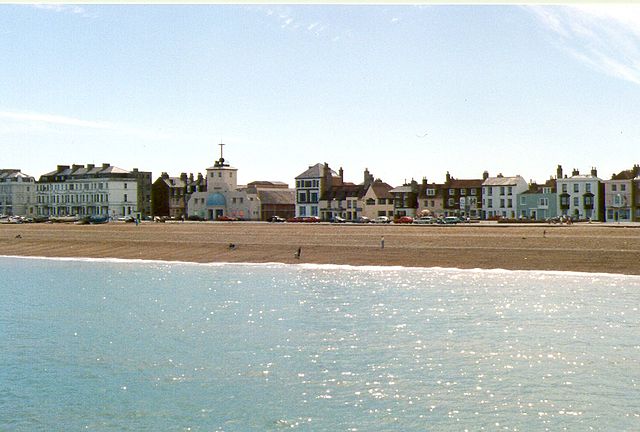
    Neo Gothic and built in 1848, it sits opposite the sea where for hundreds of years the locals took supplies out to ships sheltering in the Downs.

    Once one of the biggest ports in the country, nearby Deal housed Nelson and Lady Hamilton on occasion, as the British fleet was anchored offshore, protected in a sheltered channel between the shingle shore and the legendary Goodwin Sands.

    The evening glowered; the light was poor and the rain drizzled down on the grey, cold and lifeless seafront.

    And yet.

    And yet there was calm, beauty even. I love dour Victorian churches with their fake Gothic arches and their heavily coloured (and equally heavily didactic) stained glass windows. The folk seemed from another time too. I was reminded of my fierce old Baptist grandmother, born at the end of the 19th Century, who lived in nearby Ramsgate.  She was present somehow, amidst these local townspeople, a part of them.

    Similar class, similar trade I guess and these people too reminded me of nothing short of Victorian shopkeepers. Was it my imagination or did I see mutton chop whiskers and frock coats? Who knows, the light played tricks on me perhaps.

    Apart from one youthful member of the Choir, I seemed to be one of the younger participants.  A not uncommon occurrence if one has a passion for sung evensong, in a format which has remained little changed since the days of Henry Tudor.

    As is my wont, I turned up early for a few minutes of peace and reflection and while the choir practiced I thumbed through the race card.

    I have often sung versions of Cardinal Newman’s beautiful poem but tonight the words struck me with more than usual poignancy.  We were to sing it as one of the hymns.

    “Lead, kindly light, amid the encircling gloom,
    Lead thou me on;
    The night is dark, and I am far from home;
    Lead thou me on;
    Keep thou my feet; I do not ask to see
    The distant scene: one step enough for me.”

    I felt a mixture of emotions. A fish out of water perhaps, despite my unmistakable Englishness.  It’s been a long time since I sat in my grandmother’s modest children’s clothing shop in Ramsgate, filching Victorian pennies out of the ancient wooden till.  With permission from the old dear, I hasten to add.

    The other side of the family was different altogether – wealthy, vulgar perhaps, with hindsight. And the years since childhood have taken me so far from Ramsgate and little shops in provincial high streets. More is the pity maybe.

    Glamour, travel, expensive hotels and, well, some degree of wealth I suppose. For all that that means.

    So it is grounding, I guess, sitting in this church. Back to my humble roots perhaps, or those of my grandmother.

    And those wonderful words of Newman – let someone else worry. Look not where your path might lead. The night was indeed dark and although I was not far from home, I felt it. Emotionally, physically.  I am all too often amidst encircling gloom and pride certainly ruled my will. Probably still does.

    To have the childlike faith Newman talks of – what a wonder that must be.

    So long Thy power hath blest me, sure it still
    Will lead me on.
    O’er moor and fen, o’er crag and torrent, till
    The night is gone,
    And with the morn those angel faces smile,
    Which I have loved long since, and lost awhile!

    But, you know, with or without conventional faith there is a lot in the teaching. The code of behavior – modesty, kindness, lack of show. The idea that you should just plug on and let it all happen. And let someone else worry about it.

    The whole experience left me feeling quiet, contemplative and satisfied. Cut out the god stuff and those Christians have got much of it spot on.
     

  • Hobbiton-on-Sea

    Hobbiton-on-Sea

    One of the advantages of living in Middle Earth is observing the locals at work and play.

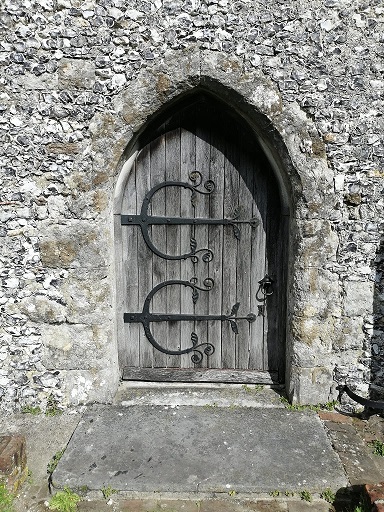
    I was wandering around looking for a golden ring I had lost and thought to drift into their local place of worship. Do they worship Ents? Tom Bombadil? Gandalf the Grey? I am never sure but no matter, their music seems good.

    Today I was lucky enough to barge in on a neophyte, female, Hobbit organ student strutting her stuff. Unusually for a Hobbit she was wearing shoes, but I understand this is just so she can reach the pedals.

    This tubby little soul is a close relative of Sam Gamgee and a keen member of the local gardening society. She has only just moved to the area (an immigrant from Bree) but is already busy baking cakes, growing vegetables, chatting to all and sundry and generally bumbling around.

    Therein perhaps lies the clue to a happy life. Engagement and simple pleasures. Playing the organ at the village church, chatting to the ladies arranging flowers for the wedding later in the day, mowing the lawn, cooking in the kitchen.

    Those of us who have led busier lives, wielding our picks and shovels at the coalface of finance, might learn from the Hobbits.

  • Jesus Christ Has Risen Today.

    Jesus Christ Has Risen Today.

    There is something deeply satisfying about a communion service at an ancient Anglican church in the Shires on Easter Sunday. Loudly singing Jesus Christ Has Risen Today.  A bohemian 14th Century hymn, written originally in Latin, and set to familiar and stirring music by …was it Wesley? I’m not sure.

    Even if you don’t believe he rose today or on any other day.  Even if you suspect the fact he has not returned as promised during the past 2000 years is an indication that he may not be be back at all.

    The sense of community was comforting. A traditionally dressed priest, the verger, sidesmen and so on.  Tradition, familiarity, continuity. Much appreciated in a universe where entropy ensures that change is the only constant.

    To my surprise, the reading from Corinthians talked of overthrowing governments and authority. Never having bothered to read (or perhaps I mean absorb) the Acts and Epistles, the anarchy came as a pleasant and amusing surprise. J.C. after all was a chap who believed in holding goods communally, in living like the lily of the field. Although he denied he wanted to overthrow Rome. Perhaps his followers held a different point of view.

    How curious then that a tyrannical church edifice sprang from these egalitarian, anti authoritarian and simple beginnings.  What would those early Christians have thought of the might of the Roman Church? The vast wealth of the medieval monasteries and their taste for trade in relics?

    All and sundry were there. The scions of a couple of grand local families, a local doctor, an organist and a small choir. My brother in law passed the peace with his usual abandon; my sister, wife, son and I remained quiet and bashful.

    I go along with it because they get life right, those people. In general terms. Peace and goodness to all. An end to strife. Although the sermon did pass a slightly partisan reference to the Muslims – something about extremist views on the fire at Notre Dame.  Some, it appears, hold that the fire represents the demise of Christianity and a new ascendancy for Islam.  What hogwash all round but there we go.

    But the core of the service and the sermon held much that is good, in a metaphorical sense. The joint symbols of the phoenix and the resurrection. Notre Dame and the Christian god rising from the ashes. Renewal, recovery from disaster. Good coming from bad. The triumph of rebirth – the seasons coming round time and time again.

    After death in winter comes renewed life in the spring and the eventual harvest in autumn, which will tide the world over once again through the bad times.

    There is pleasure to be had in reciting the hallowed and familiar words of the service (even if the language was some modern desecration of the beautiful 16th original). There is quiet reflection, music and beauty.

    Jesus Christ may not have risen today but something certainly did.


  • Vierne: Messe Solennelle

    Vierne: Messe Solennelle

    Rarely have I felt such intensity as when singing Vierne’s Messe Solennelle with Fulham Camerata last Saturday.

    It was one of those peak experiences so frequently read about and so mysterious as to be almost impossible to describe.

    Our conductor himself (Harry Castle) is intense and intensely expressive.  It was fascinating to watch his face as he conducted the Kyrie, a heavy, brooding magnificent setting of those hallowed words preceded by equally heavy and expressive organ music.

    The performance was greatly lifted by drafting in singers from Genesis Sixteen as well as our own choral scholars who are kind enough to put up with the rest of us. And we had a wonderful organist.

    Harry’s face during the Kyrie was a joy to behold. After weeks of trying to persuade a recalcitrant and belligerent bunch to actually look at him, on this occasion I believe we all did so. And it really counted. Harry was clearly enjoying at least this part of the performance as much as I did.  I’m sure others must have noticed the flow, the sheer magic of this opening movement where for one of those all too rare occasions, we seemed to have got the picture. It was like riding a wave, an experience I will not forget.

    Life does not get much better than this.

  • Crossing the Bar – Alfred Lord Tennyson

    Crossing the Bar – Alfred Lord Tennyson

    Sunset and evening star,
          And one clear call for me!
    And may there be no moaning of the bar,
          When I put out to sea,

       But such a tide as moving seems asleep,
          Too full for sound and foam,
    When that which drew from out the boundless deep
          Turns again home.

       Twilight and evening bell,
          And after that the dark!
    And may there be no sadness of farewell,
          When I embark;

       For tho’ from out our bourne of Time and Place
          The flood may bear me far,
    I hope to see my Pilot face to face
          When I have crost the bar.

    This is one of those rare poems which do not require great depth of thought or analysis to enjoy. No looking up of dull professors and their equally boring commentary. It is a piece of gentle beauty even you and I can understand.

    It is of course about the poet’s death. He wants calm at his death. He wants to cross the Styx, the Bar not in a storm, not with waves pounding on the metaphorical sandbar which separates life and death, but with quiet and peace.

    A deep, slow moving river is quiet and so with a deep, calm sea. “The boundless deep” should be a quiet place when we cross it, not full of “sound and foam”.

    Sunset, twilight and after that the dark. And yet Tennyson clearly expects to meet his Pilot, his god – he does not seem to be expecting darkness at all but some sort of afterlife. Hence there should be no sadness of farewell at his end.

    He was, it is said, a deeply depressed man, our Alfred. Full of melancholy and anxiety. Perhaps he hoped for better in death. It is a cause for wonder that a man possessed of such melancholy managed to create such beauty, such music in words.

    He was also it is said, deeply unconvinced by conventional religion. “There lives more faith in honest doubt, believe me, than in half the creeds.”

    A modern man, a man of science who does not seem to have been taken in by an anthropomorphic god. He wanted explanations of his world, he wanted the physicists and the chemists to tell him what it was all about. He didn’t want to take it on “faith”.

    His idea of the divine was pantheistic, modern. A follower not of Moses but Spinoza. His god most certainly existed but was abstract and impersonal. Not the sort of fellow who chucked a few stone tablets at you down Mount Sinai.

    God and Nature as two names for the same reality : that is certainly a god I can happily live with. Indeed if that is my Pilot, I would happily meet him.

    I first came across this poem when singing a setting by Parry, our home grown Edwardian genius. I can’t remember where we sang it – it may have been at a charity concert in Corpus Christe college Oxford.

    Whatever. I was, and remain, deeply affected both by the poem and the music.

  • Joy to the World

    Joy to the World

    I will never be able to resolve my unshakable disbelief in Christian dogma with the profound peace I find singing sacred classical music in an ancient English church with a good choir.

    I sang yesterday at the Christmas service at our local church, sitting up in the beautiful Victorian choir stalls, next to one of the regular members of the wonderful permanent choir. Having sung themselves out during advent, the organist had called for help as the regular choir (or most of them) took the day off.

    Needless to say I struggled with aspects of the service, in particular the awful passing of the peace, and as usual did not take part in the wine and biscuit binge.

    And yet I could not help myself being moved by the sermon, beautifully constructed if rather gratingly delivered in a rasping American accent.

    It was about feeling the numinous, and was expressed by comparison to feeling a baby’s hand, vaguely and mysteriously, through the walls of a mothers womb.

    It was a simile I took to. There is a wonder in the world and nowhere do I feel that more strongly than in an ancient church, however crappy I find the bizarre belief system.

    That there is goodness in the world is never easier to believe than on Christmas day when I am far from thoughts of money (or rather of running out of it) and even further from words like “competition” and “business”.

    I can’t help it if I don’t believe in the birth on earth of the son of god, however beautiful the advent story. I can’t help it if my belief aligns more with the Taoists than the Christians.

    The truly wise know that the same witness to the divine can be felt as easily by the Buddhist as by the Taoist or the Muslim.

    The tragedy is that so many feel the need to push their bigoted, narrow and doubtless erroneous views as to what they believe is truly out there.

  • Dvorak – Stabat Mater

    Dvorak – Stabat Mater

    Performing choral music must qualify as one of the most healing and meditative pastimes you can undertake.  To perform well requires iron discipline and endless practice but becomes easier over the years with familiarity.

    It is something I did with great enjoyment as a child chorister but to return to it much later in life required great effort.  After 7 or 8 years, perhaps I have achieved something of the fluency I once possessed as a treble.

    One of the many joys is to study new music and find surprising beauty in places you had so far ignored or dismissed.

    For many years I had worked on the assumption that anything written east of Berlin was cacophonous and horrible. I have been proved wrong time and again in recent years, and currently Dvorak’s Stabat Mater has shown me once again that opening oneself to new experience refreshes the soul.

    Elsewhere I wrote of the importance of doing different things, even if it is only a question of putting your butter and marmalade on different sides of the toast.

    Music is a classic case of needing to resist the temptation to stick with what you know, and to venture beyond your comfort zone.

    To me Dvorak is somewhat bohemian, exotic; the Stabat Mater, to my ignorant mind, has a flavour of gypsy rhythm.

    I found the piece quite challenging.  Some time signatures I had not done too often, some of the rhythms required concentraton.

    The effort is worthwhile.  With greater exposure over the weeks, I came to find great beauty in the music. Quiet, soft passages, rising crescendos of sound, roars and quiet contemplation, passion and sorrow.  Often with a dance like quality such as “Tui nati vulnerati”.

    My favourite section is the Eia Mater.

    Eia mater, fons amoris, me sentire vim doloris, fac ut tecum lugeam.

    Alas, mother, fountain of love, let me feel the force of your grief, so that I may bemoan with you.

  • Do Not Stand by My Grave and Weep

    Do Not Stand by My Grave and Weep

    Do not stand at my grave and weep,
    I am not there, I do not sleep.
    I am a thousand winds that blow,
    I am the softly falling snow.
    I am the gentle showers of rain,
    I am the fields of ripening grain.
    I am in the morning hush,
    I am in the graceful rush
    Of far-off birds in circling flight.
    I am the starshine of the night.
    I am in every flower that blooms,
    I am in still and empty rooms.
    I am the child that yearns to sing,
    I am in each lovely thing.
    Do not stand at my grave and cry,
    I am not there – I did not die.

    “Do Not Stand at My Grave and Weep” is a poem written in 1932 by Mary Elizabeth Frye.  It was beautifully set to music by Howard Goodall as part of his Requiem: Eternal Light.

    “Do not stand” forms the Lacrymosa.  There is a reasonable performance on Youtube but you really need to listen to the original  recording by the Christ Church Cathedral Choir (Oxford).  You can hear this version (or at least the Lacrymosa) on Spotify.

    I do love the music and was lucky enough to perform it for Howard Goodall recently, as part of a small choir. He was kind enough to express enthusiasm for the performance but then he is probably just very polite. I am sure he says the same to everyone who performs his works, however badly.

    Goodall is an excellent presenter and has recorded some wonderful programs on music,which are well worth listening too.

    He has composed much music for films and television.

    If I were to have any adverse comments at all on Eternal Light, it does perhaps come across as slightly “commercial”, slightly “popular” in the  Lloyd Webber sense.

    Nonetheless it is beautiful music and wonderful to sing.  The peoems he sets to music are superb.

    My favourite is the poem he uses for his Dies Irae:

    Dies irae, dies illa.
    Calamitatis et miseriae, dies magna et amara valde.
    That day, the day of wrath, calamity and wretchedness
    That great and bitter day

    In Flanders fields the poppies blow
    Between the crosses, row on row,
    That mark our place; and in the sky
    the larks, still bravely singing, fly
    Scarce heard amid the guns below.

    We are the Dead. Short days ago
    We lived, felt dawn, saw sunset glow,
    Loved and were loved, and now we lie,
    In Flanders fields.

    Take up our quarrel with the foe:
    To you from failing hands we throw
    The torch; be yours to hold it high.
    If ye break faith with us who die
    We shall not sleep, though poppies grow
    In Flanders fields.

  • Victoria’s Requiem

    Victoria’s Requiem

    Victoria’s Requiem,  written for the funeral of  dowager Empress Maria of Spain who died on February 26, 1603 is, out of all the music I have sung over the past decade, my favourite.

    The music is written for 6 voices and is largely polyphonic interspersed with plainsong incipits sung by a cantor

    Tomás Luis de Victoria  was a Catholic priest and is arguably the most famous composer of Renaissance Choral works.  And some say the best.

    If you want to try it out I suggest you listen to the Youtube recording below by Musica Ficta .  The advantage of this particular format on Youtube is that the recording scrolls through the score so that you can follow the different voice parts bar by bar.

    Or perhaps it would be fairer and more decent to buy the recording from this wonderful group and buy the score separately. Too much is given for free or posted for free on the internet – the so called “gig” economy.

    I will leave you to read the details about the music and its composer and will satisfy myself by giving Renaissance Choral music and this composition in particular my own little “plug”.

    The word “meditative” was never better used than when describing this ethereal, sublime, numinous music. Mere words fail to do it justice.

    As with any sort of meditation the danger is that you enter a deep trance which eventually becomes sleep. Which is fine if you are lying comfortably on a sofa at home.

    There is no danger of falling asleep if you are performing the music but looking out at the audience a few months ago, many had their eyes closed and their faces glowed softly with a quiet and peaceful smile. The music transports, uplifts, the mind drifts to a different plane.

    The dynamics are simple – the volume remains mostly constant from bar to bar. The music can be taxing to sing, one difficulty being an absence of formal bar lines in music of the period.  The choir must pay especially close attention to the conductor and to the voices of the other performers – you need to drift, to weave, to interpret to empathise, to co-operate.

  • The Beauty of Performance

    The Beauty of Performance

    Beauty comes in so many forms and is so utterly transformative wherever it is encountered.   Most recently I have been struck by the serene beauty of the skillful elegance and nonchalant, seemingly effortless performance of a music scholar who plays the piano for a choir in which I sing.

    The pianist studied at King’s College, Cambridge, where he was organ scholar and graduated with a starred first class degree in Music. Previously he was a chorister at King’s and music scholar at Eton College.

    I sang in a choir as a young treble for some years but foolishly never studied music formally.  I gave up aged 14 when music seemed to an arrogant young kid to belong to a pseudo intellectual realm to which he did not belong .

    For the past eight years I have been trying to re-capture what skills I may once have possessed but in my case nothing has ever been effortless.

    I have spent endless hours in practice and study, learning a choral piece inside out until it is indelibly etched on my mind and performance becomes if not automatic, then at least to some extent fluid.

    Each week I am struck anew by the performance of our accompanist.  Sometimes when I arrive he will be playing some complex piece entirely from his imagination. His hands will move but his eyes remain fixed somewhere in the middle distance, pondering who knows what as his fingers automatically translate into sound whatever glorious harmonies are in his mind.

    In choral pieces there are usually introductions for the orchestra or piano before the voice parts start and usually the accompanying instrumental music will continue for a while when the voice parts have finished.

    And it is at the end that I most often notice the ethereal skill of our accompanist.  We have struggled, to the best of our ability, through the complex vocal bars of a section of Dvorak’s Stabat Mater.

    Our eyes turn to the young scholar who plays the remaining bars. With a twinkle on his face and scarcely looking at the score, he dazzles us with his skill.  With a gentle flourish the piece ends as he quietly plays the final chord and the sound slowly ebbs away.