They do things differently there. Or do they? Man’s real fear is of the unknowable future.
I was sitting in a quiet Wimbledon garden chatting to my two lovely nieces. One is an undergraduate studying classics at Oxford and the other hopes to go to Durham shortly to read English. Bright, wonderful little sparks of life they do not possess an ounce of malice between them and in their quiet company I can often feel at peace with the world
We were discussing Roman literature and suddenly the glorious security and certainty of reading Cicero, Livy or Pliny struck me forcibly.
Whatever we say about re-interpreting the past, it is difficult to deny the veracity of the written word. Fools and knaves may deny the holocaust but it would take a bigger fool indeed to look at the works of a classical author, copied faithfully throughout the centuries, and claim he did not write them.
Thus, whatever re-interpretation pushy academics may place upon the words of a classical author, it is reasonably certain that many of these works remain as written. It remains the case as it has done for the past two thousand years.
There is thus a security in reading such works. This happened, that happened. This is how this author felt about his world, his life. His writing is a fly in amber, a fossil record, a tablet written in stone. Immutable.
Einstein may have posited time to be non existent; that past, present and future do not flow. But it is not so for we mere mortals. If the future is knowable, we do not know it.
How we long for gnosis, for revelation. How many questions there are for which we have eternally sought answers. How consistent and poignant our search for meaning in a capricious universe. How numerous the grand theories of reality we have invented to comfort ourselves. The gods, the voids, the nirvanas.
Do we find comfort in such things? Perhaps we do; the mystic would certainly claim so. Some of us are lucky enough to have had glimpses through the doors of perception; or at least to believe so.
We look for certainty in the past and can find great comfort in its famliliar and sometimes warm embrace. The very stones of Oxford itself breathe a kind of warmth, a blanket of security and beauty. There was I too, many years ago, reading history in those ancient hallowed halls. Walking those paths where scholars have walked for nigh on a thousand years.
Feeling continuity, peace, a sense that all is well.
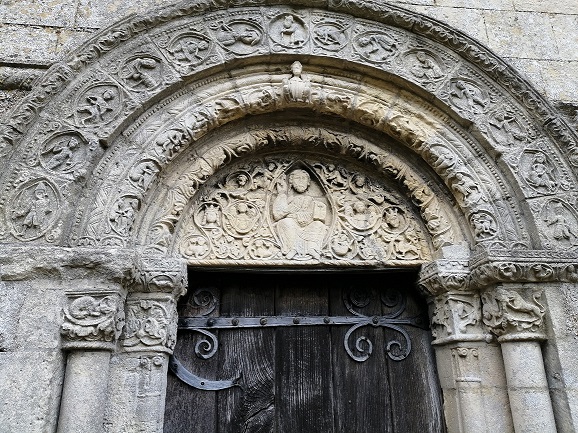
Do I seek the same thing in my beloved country churches? A sense that even if the future is unknowable, I can at least wrap myself in the familiar clothing of Norman arches and ancient stained glass windows.
Far from being a foreign country, I would argue to my nieces that the past is a present comfort to us. That we can derive joy and meaning from our living history and use it to help us see our place in our vast and ever changing universe.
Not so that we become ossified, not so that we find ourselves fossilised in these ancient writings and stones. But so that we can congratulate ourselves on some of our better achievements, our greater glories. So that we can more clearly see our past mistakes and look to a brighter if unknowable future. Where there we may indeed hope to do things differently.