Tag: Future

  • From the Hymn of Empedocles

    From the Hymn of Empedocles

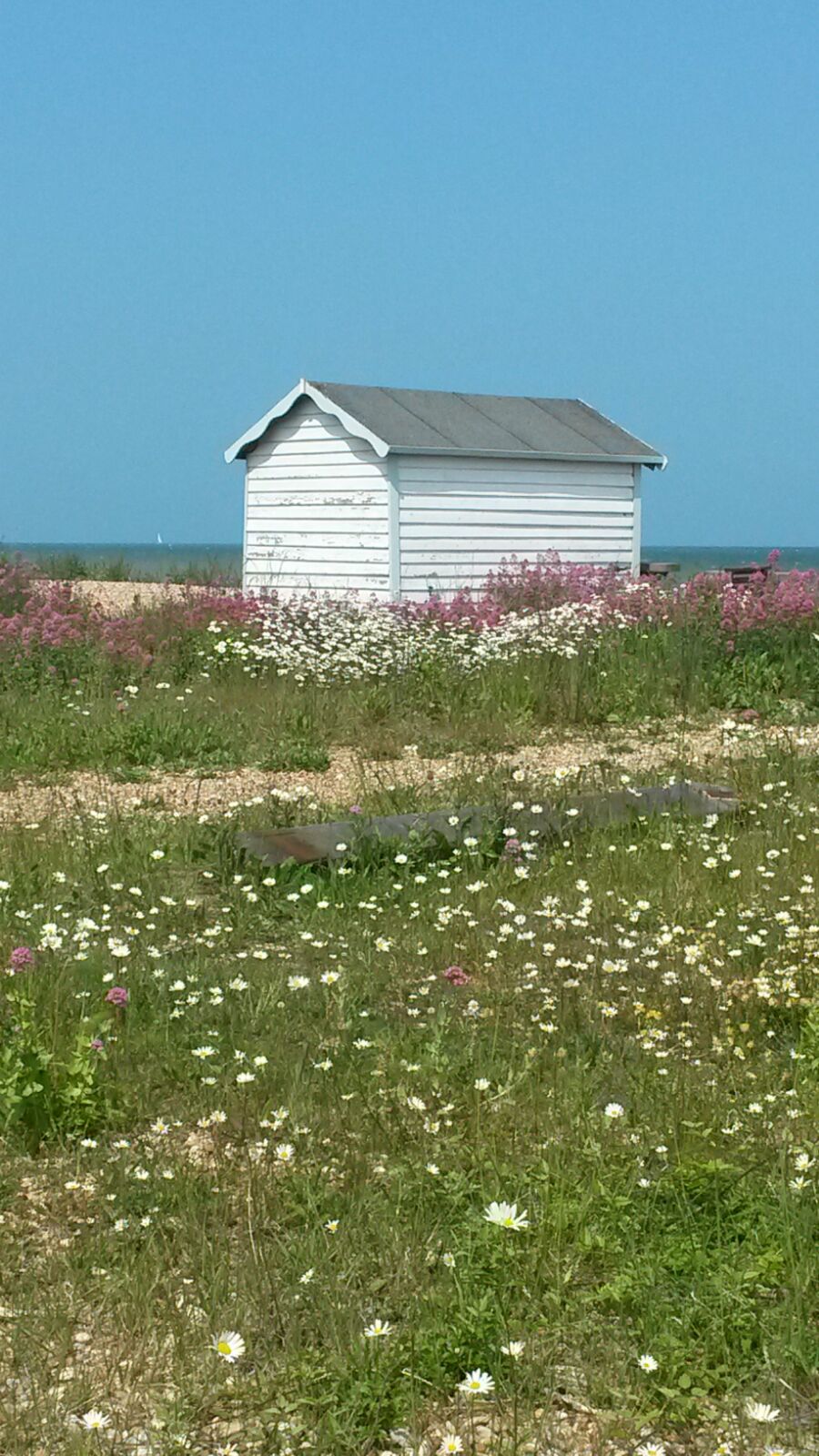
    We overlook everyday beauty, dogged as we so often are by anxiety about the future. Here is how Mathew Arnold puts it.

    IS it so small a thing
    To have enjoy’d the sun,
    To have lived light in the spring,
    To have loved, to have thought, to have done;
    To have advanced true friends, and beat down baffling foes;

    That we must feign a bliss
    Of doubtful future date,
    And while we dream on this
    Lose all our present state,
    And relegate to worlds yet distant our repose?

    Not much, I know, you prize
    What pleasures may be had,
    Who look on life with eyes
    Estranged, like mine, and sad:
    And yet the village churl feels the truth more than you;

    Who ‘s loth to leave this life
    Which to him little yields:
    His hard-task’d sunburnt wife,
    His often-labour’d fields;
    The boors with whom he talk’d, the country spots he knew.

    But thou, because thou hear’st
    Men scoff at Heaven and Fate;
    Because the gods thou fear’st
    Fail to make blest thy state,
    Tremblest, and wilt not dare to trust the joys there are.

    I say, Fear not! life still
    Leaves human effort scope.
    But, since life teems with ill,
    Nurse no extravagant hope.
    Because thou must not dream, thou need’st not then despair.

    Mathew Arnold was an English poet and an inspector of schools in 19th Century England. The son of Thomas Arnold, renowned headmaster of Rugby school. A bright cove, he was educated at Winchester and then Balliol College Oxford.

    Did he embody the principles he so eloquently describes in his poetry or was his a life of drudgery, disappointment and pain?

    Arnold was, it seems, a good man. A lifelong Liberal and supporter of Gladstone – the only politician for whom I have ever had much time. He criticized “the great Philistine middle-class, the master force in our politics.” And how right he was; dumb materialism, the pursuit of wealth, the desecration of a once green and pleasant land by the ugly stain of greed and industry.

    These Philistines were “humdrum people, slaves to routine, enemies to light”. And still they are.

    As to religion, he veered in a very modern direction. Talking of Salvation by Jesus Christ, he commented:

    “Never let us deny to this story power and pathos, or treat with hostility ideas which have entered so deep into the life of Christendom. But the story is not true; it never really happened”.

    “The personages of the Christian heaven and their conversations are no more matter of fact than the personages of the Greek Olympus and their conversations.”

    Arnold was captivated by the beauty surrounding religious belief, whilst deeming it a man made fable, invented to soothe man’s troubles in a random and fearful universe.

     Arnold’s dramatic poem Empedocles on Etna (from which the above extract was taken) concerns events leading up to the supposed suicide of Empedocles, the pre-Socratic Greek philosopher. It is said he cast himself into the flames of Mount Etna.

    Clearly Empedocles is imputed with something of the poet’s own disillusionment with the world:

    He is too scornful, too high-wrought, too bitter.
    ‘Tis not the times, ’tis not the sophists vex him;
    There is some root of suffering in himself,
    Some secret and unfollowed vein of woe,
    Which makes the time look black and sad to him

    As so often there is a stark contrast between the ideal that we seek and the inner discontent we suffer. Clearly like all of us, the poet seeks happiness and fulfillment and in the brighter lines of the poem he seems to have found a route to satisfy those wishes. We should enjoy the sun, we should revel in the beauty around us. We should live for the moment, we should not pin our hopes as the religious do on the fable of a blessed state to come.

    We should not “feign a bliss Of doubtful future date“. We should live in the now and not mortgage ourselves to some promised and doubtful future.

    And what of the historical Empedocles? He lived 2,500 years ago in Sicily, we are told. Apparently he sought release from the wheel of re-birth by purification and abstinence. Not a happy soul then? Or was he? Perhaps he achieved the bliss he so clearly sought.

    Whether we speak of Arnold or Empedocles, it seems clear that both looked for what so many of us have sought in the hundreds of thousands of years of human consciousness. Happiness, peace, release from fear and uncertainty. Purpose and meaning.

    In a sense if you feel compelled to write about such a quest (whether in verse in 19th Century England or in prose on a 21st Century website) then you are not quite there.

    And yet we are told there are means by which we may climb off the wheel of re-incarnation. Techniques by which we may return to union with the whole, to be re-absorbed by the divine.

    I find myself in the shoes of Sisyphus at a later and more satisfactory juncture in his tale. I have pushed the rock to the top of the hill for the last time and have dismissed the false gods who condemned me to such absurdity.

    I have kicked the rock of Sisyphus into the abyss and have walked off to enjoy the sun and to live lite in the spring.

    I wonder if Arnold ever achieved this?
  • This too shall pass

    This too shall pass

    The world is full of annoyance and “noise” in the statistical sense.  Meaningless “stuff”, which in the bigger picture it is best to ignore. To shrug,walk away from. Forget.

    Charged by angry bullocks on a local footpath I inquired as to the landowner, thinking to make, if not a complaint exactly, then at least a quiet remonstration lest others might not escape so lightly.

    I asked a fellow walker and discovered the owner was none other than a local big-shot intent on desecrating this beautiful area by building 4,000 houses in the middle of nowhere.

    Perhaps the fellow needs a new Bentley? A second fur coat for his wife? A servant to put toothpaste on his toothbrush? Who knows. It is odd he should want to piss on his own doorstep (the dreaded new town is but a stone’s throw from his ancient and beautiful walled estate).  Perhaps he intends to collect his lottery winnings and go and ruin some other part of the country and somebody else’s life.

    The kind lady told me she and her husband are members of the Green Party, which is one of a number of organisations campaigning against the monstrosity, and I was briefly haunted by old thoughts, dead ambitions.

    Join Greenpeace and Amnesty International. Take up the banners, fight for what I believe in.  Combat greed and greedy people. Help the poor. Feed the needy, free the oppressed.

    And then I was struck by the futility of such action. Human nature will not change. Greed will always be our prime motive and if it means shitting on your neighbor or his doorstep, well if you don’t do it, someone else certainly will.

    If that sounds unconstructive and selfish, if that sounds defeatist and destructive then have yourself a Carl Sagan moment. A Pale Blue Dot sartori. Think of this tiny, insular, silly little planet stuck in the middle of nowhere in a possibly infinite multiverse.  Does any of it really matter?

    99% of all species which ever existed here are now extinct. We too shall pass. So will Mr Big Shot and all the other Big Shots. So will the poor and the oppressed and the needy.

    You are watching a huge, slow moving river flow. The river of time. There are horrors, injustices. There is poverty and hunger. Torture and murder.

    In that context is it really worth getting excited about a new housing estate? Is it really worth getting fussed about anything at all?

    Thousands of years of philosophy and religion, some good, some bad, have tried to make a dent, an impression. To turn the tide, to create a Utopia. Or a hell, a dystopia.

    I am reminded of Harry Lime looking down from the Ferris Wheel in post war Vienna. Would it really matter if those distant dots on the ground “stopped moving forever”?

    Well I am not selling penicillin and I don’t want those dots to stop moving. I don’t want beauty spoiled, the rich to inherit the earth or the poor to be oppressed.

    But it will all happen with or without anything I may do. Or not do.

    So on reflection, I will let it pass. I will wish well to those who have the strength to fight against the tide. But I will let the “ten thousand things” move on without me.  I will listen to the white noise, the cosmic radiation background and move on.

    I will recognize that we are all mere noise.  And so is everything we do.

  • Happiness and Genetic Bingo

    Happiness and Genetic Bingo

    We are born from a giant genetic lottery and there is little we can do about it.  We can not “change our mind” we can only make the best of it.

    Deep into a scarcely imaginable future, we may be able to adjust our qualia, to choose our emotions.  To elect to suffer or live in Elysium.  I believe that day will come. Kurtzweil and gang, the redoubtable David Pearce – their day will come.

    “Thy kingdom come. Thy will be done, on earth as it is in heaven” as it says in Matthew 6:9-13.

    Except of course it will not.  Not unless we ourselves make it so.

    In the meantime we must fend for ourselves, struggle along as best we can with what blind fate alloted us.

    I have argued elsewhere that we can expect limited success in our endeavours to change but some change is better than none. And if we learn what drives us we may be able to tip the balance in our favour.

    On really, really “bad hair days” go and lie in a darkened room and switch the world off. Part of meditation for some of us is the ability to tune out.  Tubby old Siddhartha may not have approved of this use of the technique, but what do I care. You shouldn’t either.

    Part of my “meditation” technique is to almost physically switch off what passes for my brain. To simply refuse to function. It is a difficult discipline but works a treat when you can get it right and is probably rather better for you than ketamine or quaaludes.

    It also has the advantage of being legal. I don’t think even sharia law bans it, although I would have to check that one out; it seems to ban much else in life.

    So next time you feel like god has got you in a vice and is squeezing your extremities, give it a go. You usually wake up the next day feeling no end of improvement.