Category: The Creative Cosmos

  • Life on Earth

    Life on Earth

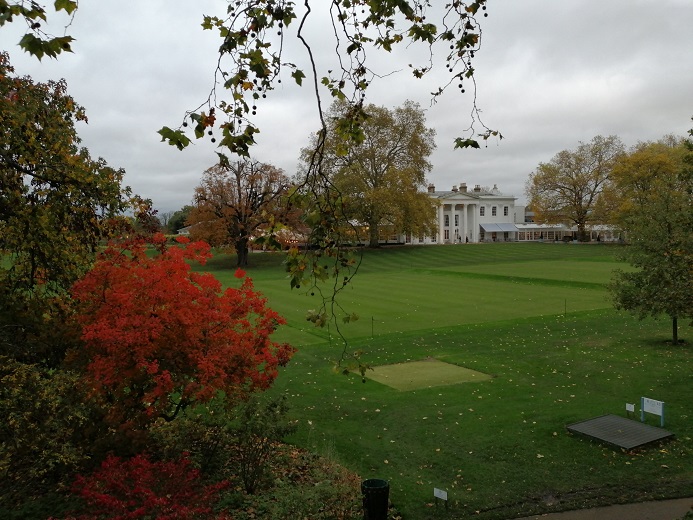
    In a perfectly manicured estate beside the Thames in Central London, he came to the conclusion that life, as such, did not matter so very much.

    Wrapped in layers of wool, shod in the thickest hiking boots and wearing a large felt hat with a wide brim, he made a curious spectacle. Warmed by the sun, the air was nonetheless winter cold, but drifting in an internal world, consensus reality passed him by.

    In some distant land, yet another brutal dictator had unleashed Armageddon on an innocent neighbor. In England, the ruling political party had been accused of a cash for access scandal. He was dimly aware of the whine of police sirens somewhere on the other side of the river. Overhead a ceaseless stream of jets spread poisonous fumes on their way to land at a grim airport, sprawling somewhere in the industrial wasteland west of the city. Helicopters chopped through the air on their way to Battersea heliport, carrying the self important and impatient, the mindless automatons who believed life was a race to collect more, do more, be more.

    The newspapers of the day carried frenzied tales of murder and intrigue. Pundits opined on impending disaster in financial markets, the ecosphere, and politics.

    Business, in other words, as usual.

    “The race is not to the swift, nor the battle to the strong, neither yet bread to the wise, nor yet riches to men of understanding, nor yet favour to men of skill; but time and chance happeneth to them all.”

    Thus wrote some ancient scribe in the Palestinian desert but few seem to have the time or inclination to heed such nonsense in a world full of getting and doing. Few can comprehend that all is chance.

    As the same fellow noted, “The thing that hath been, it is that which shall be; and that which is done is that which shall be done: and there is no new thing under the sun.”

    The historian might appreciate this truth, but few others will as they grasp and strive and struggle through the same endless circles of life.

    Let it pass he thought. Let it go, on and around and through, up and down and beyond. Let the people do what they have ever done, let them strut their stuff.

    Wrapped in his bubble in a safe corner of the world, perhaps he could afford such nonchalance. And yet he was coming to suspect that he would feel much the same way wherever he sat. In less comfort perhaps, shorter maybe of the necessities of life. In greater danger from the insanity which raged throughout much of the planet.

    Maybe. And yet he would not be seen manning the barricades. Rioting held little appeal nor did the thought of railing against cruelty and injustice on the soapbox or in the press.

    He looked at reality and decided that it was not. Not real that is. Not important, meaningful or worth the bother.

    He did not feel unmoved by the plight of those great masses so very much less fortunate than himself. Quite to the contrary.

    And yet he had come to believe that, in a sense, what he saw happening around him was a play of some sort. A charade perhaps, rather than a calamity. People suffered and died. Physical “reality” was no less cruel than the human flotsam it had spawned. For every brutal tyrant and torturer was matched by a famine, an earthquake or, occasionally a meteor strike. In which case it was probably game over. No winners, no losers at the end of the day. Just a continuum.

    Did his realisation lower his spirits? Did he cower under the bench rather than sit on top of it. Was he depressed, let down, disappointed.

    None of these things. No. He had reached a stage when his only ambition was to quietly observe the chaos and to withdraw. Into a different reality which seemed to exist within his own mind. Or elsewhere – perhaps his mind was showing him a different place, another plane where life on earth seemed increasingly irrelevant.

    Fight the tyrant by all means he thought, but you do so in vain. Defeat one brute and another will soon enough spring up to take his place. House the poor and feed them. An admirable goal he felt and yet unachievable in a world which was so very far from an age of post scarcity.

    “Chance happeneth to them all”, he said to himself. There is nothing new under the sun.

    And so he chose to see a different reality and hoped that it was true. Sometimes he had glimpses of such a place, such a state and he longed to dwell there. And sometimes, dwell there he did. When the dark clouds receded for a while and a sense of unity and omniscience replaced doubt.

    But true or false, he needed to make a choice as Pascal had once done. Increasingly he felt he had made such a choice and with that, the reality he believed he saw was a very different one.

    Peace, he knew, could only come from making that choice and acting upon it.

  • Beyond

    Beyond

    The urge to write seems to be a purge, to be taken from time to time to express what it is one believes one has learnt. To be cleansed and purified in mind by the art of manifesting in words the inner workings of one’s soul.

    I have come out. Not in the sense of some base sexuality but in a declaration to myself that I believe in something rather than nothing. That I believe in mind or rather, perhaps, the “soul”.

    Transcendence, what a word. To witness an existence beyond the normal or physical level. How they laugh, the materialists, how they scorn belief in anything that can not be measured, weighed or dissected by man.

    And yet it happens, it is there and to those who have glimpsed such states (even if rarely or from afar) it seems obvious that the world’s ills stem in a large part from our species’ unwillingness or inability to see beyond the dark and brutal struggle for physical survival on a rocky outcrop in the middle of nowhere.

    A young organ scholar professed to me his disbelief in the Christian faith and I to him but we both met somewhere on that magical field of transcendence. The western choral tradition is, for some, an avenue to beyond. It provides a glimpse, a view through a mirror darkly, of another world altogether.

    Aspiciens a longe we sang, set to the music of Palestrina.

    I look from afar:
    and lo, I see the power of God coming,
    and a cloud covering the whole earth.

    It was a dark and cold winter’s night and the ancient church was lit by candles. Family and friends were there, and the Matin Responsory reached them from a few unseen, unaccompanied voices hidden from sight in the South Transept of this lovely building. Would that we sang with the perfection of the Gesualdo Six but perhaps our efforts made our case well enough.

    In that place, at that time, nothing else existed. Wrapped in beauty, nothing else mattered. Power and wealth, greed and struggle seemed laughable and the route to paradise so clearly marked.

    I do not seek to convert, nor ever will. There is no-thing to which I cling, in any doctrinaire sense. No-thing to which I would direct our unhappy and misguided species.

    But with ever increasing clarity I know.

    I know what is not.

    Much, so much of what we do and think and believe is “not”. And yet what we could become is so very different.

    In those quiet moments, in that ethereal place beyond the mundane I know what is. And I know that it is something rather than nothing.

  • Words from a Garden

    Words from a Garden

    Why is there something rather than nothing, he mused. Does life have any purpose.

    Are we merely a jumbled collection of quarks and leptons or part of some grand design, something much bigger altogether.

    He wondered, as he sat in his Edenic and walled garden, why he so badly needed to know. Why, since early childhood the concept of “no thing” had so disturbed him. If not this universe then what. How was “no thing” possible.

    What were the answers and where were they to be found. Did he but know it he had spent his life seeking. In all the wrong places.

    Had he advice to give, anything to help his younger self stumbling along the path. Or any other soul seeking to make sense of the maelstrom of life on earth.

    There is no sense to be found, cried the materialists. All is physics they said and life a random element of evolution. Consciousness they claimed is an illusion, we have no self merely a string of memories we use to guide us in making predictions. Driven be a sightless urge evolved to spread our virus, our very lives no more than a carrier and we no better than a disease.

    Surely, he reasoned, we might be said to be greater than the sum of our parts. Or was the ability to witness our universe and to sense our very existence yet another mirage dreamt up by a mindless algorithm.

    I refute it thus, he thought and buried himself deeper in the mystery. Appealing not to the stone of Bishop Berkeley, but to the witness of his own changing thought patterns. To his ripening ability to enter a different reality even if only within the confines of his own mind.

    He leant back in his chair and closed his eyes. A mist descended and that world so often called reality receded to be replaced by something other. Something altogether more benign. Which then was more “real”, internal or external.

    Gradients of bliss were what he sought and in that alternate reality he often seemed to find them. He asked to be “where no storms come…out of the swing of the sea”. In such moods he found himself ” in fields where flies no sharp and sided hail and a few lilies blow”.

    In such a world all became clear. Brutality and hunger did not exist, ambition and the quest for ever more made no sense. Creed and foolish dogma held no sway there and man did not kill man in pursuit of some fabricated ideal.

    Was it an escape from harsh mundanity, from the often cruel and pointless. Was it a valid quest, this journey into a different reality which seemed at such times so close. He thought he saw transcendence, witnessed it, entered into a realm where all was well.

    At these moments, the world made sense, if world it was he witnessed. Who was there, did anyone come to meet him. A creator perhaps or at least an omnipotence. He thought not, at least not persons or entities that he would normally recognize on a more terrestrial plane.

    Something was there though. An indefinable sense of being. And well being at that. Creature of his own mind some would say and yet if so, what a creation, what a different way to exist. What a state to enjoy.

    Drifting deep in meditation he sometimes found himself in a situation he recognized from waking “reality” and sometimes not. He is aware that he is aware. He is aware that he perceives, that he has or is consciousness. But what he is or quite where he is often eludes him altogether at such moments.

    Sometimes he believes he may be a note of music as he seems to hear the deep and dark melody of a glorious cello. His being is intertwined with that music, that note. He is it, it is him. Who is playing or where the playing is performed does not matter and time itself seems to have no purchase. He is. No more seems necessary, no explanation required.

    At other moments or places in this sea of infinity he is colour and pattern. He is in and integrally part of some great and beautiful scene, abstract at times and then something more recognizable. A field of flowers perhaps, gently waving in the breeze. A barque upon a sea whose white and wind filled sails lead on to some fabled land beyond a wall of blue water, where snow glistens upon distant mountains and the sun shines on gentle uplands. A blue sky with a light wind and the cry of wheeling gulls. The tang of a salt breeze.

    Where are you he said, show yourself if you are to be found. But the answers were not so much ill defined as unexpected and arcane. It is not that simple they seemed to say. We are and we are not. Things work differently here. We are you and you us. Or neither, perhaps even existence itself is illusory.

    While some may find alarm in such apparent chaos, he found great joy and calm. He did not expect to find sense in any conventional terms.

    And yet sense he did find in an altogether more satisfactory manner. Common sense ceased to matter. Material existence was nowhere to be found, just a profound peace in an infinity without beginning or end.

    The numinous some would say, the divine. Back in the world of men and letters such states had been described as best they might for thousands of years and across all races and creeds.

    The Cloud of Unknowing wrote one such contemplative some 700 years ago. A liberation wrote another, sitting under a tree. A state of perfect peace and nothingness at the very fount of all that is or ever was or will be.

    When he woke to find physical presence once again it was with a slowness and a realization that life was to be lived for the sort of dreams and ecstasy he had found within. If indeed there was any such difference between within and without. Increasingly he came to understand that there need not be.

    Quietness and slowness and silence were the way to lead life, he knew. And simplicity within and without. To see and hear beauty at every twist and turn in a world which, while apparently physical, was in most senses as immaterial as anything encountered in the midst of meditation.

    Matter they said had no solidity. All was energy arranged in such a way as to produce the appearance of stability. How wonderful then was this world and how closely did it reflect the visions he had seen from within.

    And so he would listen to birdsong along the shoreline and he would play music and sing in quiet and ancient places. He would live among flowers and trees and he would write and he would read.

    Why is there something rather than nothing, he mused. Does life have any purpose. I am, he said. Let that be enough.

  • Doubt and Daemons

    Doubt and Daemons

    While some may appear to lead a life unperturbed by fear and doubt, many are driven by forces less benign.

    Who knows the answers to questions I have spent my life asking. Some believe, fervently even, that they have found terra firma in an ever shifting universe. Others see only an uncaring cosmos which, wondrous as it undoubtedly is, leaves us to make our own meaning, since none is provided out of the box.

    With ever increasing conviction, I believe that the ancient philosophies of the east have the answers. At heart, the infinity we see around us just “is”. And always has been. Live with that, says the Tao. Do not battle the forces which surround you, row your boat gently down the stream.

    Buddhism seems to go a step further. Recognize, it says, your own non-existence. Accept that your “self” is a mere illusion and abandon all attachments that your senses crave. Much like Susan Blackmore or Daniel Dennett might tell us, consciousness is not what it seems.

    I do not believe that this absolves us of responsibilities, nor that it necessarily precludes enjoyment of the material world. Hard as enjoyment is for some of us to find. Nothing obliges us to act in any particular way (“good or “bad”), and I find it increasingly hard to concede that moral absolutes exist in objective reality. And yet we can proclaim our own rights and wrongs, our own morality. We can and must create our own meaning.

    If we do not exist, then in a very real sense we have created a seeming existence out of nothing. For there is indeed “something that it is like” to be human.

    Perhaps we too are creators then. Spawned by inert matter and blind mathematical evolution , we seem to have “emerged”. In a phrase used and abused by science and philosophy alike, we appear to be more than the sum of our parts.

    And in that, a certain beauty may be found, hope even.

    My hedonic set point is below average and yet I see how, as creators, that might be changed. For me, for all. If we arose from nothing, then we became quite something.

    We became beings able to alter our own circumstances. To better ourselves. To develop societies and morals, fire and farmed food.

    And yet, it is said, we do not exist. Perhaps clarification is called for. We exist to the extent that we feel emotions, we have senses. Pain and pleasure perhaps being the most obvious. Anger, greed and lust belonging to the least desirable of those qualia.

    We exist to the extent we have memory, necessary no doubt to be able to navigate our way around a complex physical environment. We exist to the extent that we are aware of ourselves and our world, even if we do not grasp its true nature.

    Now there is duality, if ever that word had meaning. A duality of existence and non-existence.

    We are like a flowing river perhaps, or a candle flame, little more. A physical process which just happens to have evolved a way of being aware of itself and its surroundings. A material interaction commonly known as “life” which on its own, means little else other than biological self re-production.

    None of that is to say that we can not become more. The birth of life from inert matter is a miracle which may be bettered. Bettered by ourselves, bootstrapping ourselves from the level of the beast to a technological prowess undreamt of even decades ago.

    There, then, lies my optimism in bleaker moments.

    In the power of the mind to elevate and improve ourselves. To paint glorious works of art, to build structures of exquisite beauty. To think wondrous thoughts, to write great novels and ethereal music.

    To cure all ills, to provide a world where scarcity becomes a dim memory. Where money becomes an arcane memory.

    Those then are my dreams, my better moments. Where beauty and hope is to be found.

    In the patter of gentle rain, in the pounding of waves on a beach. In the gentle Norman chapel, and the light of stained glass. In the trance of Tchaikovsky, Handle and William Byrd.

    We may not exist in the way we might suppose we do. But we have created something out of nothing. Black horror as well as paradisiacal beauty.

    I dream of more of the latter and less of the former.

  • Chaos and Uncertainty

    Chaos and Uncertainty

    I have not found it any easier to accept uncertainty in recent years, despite my intellectual acceptance that it is unavoidable.

    Covid has (thus far) been a walk in the park when compared to the wholesale slaughter and general bestiality of the 20th Century. Not for those who have died of course, or their families, but numerically speaking.

    The shocking examples from the last century are so well known, they are hardly worth revisiting. A Jew in the 1930s and 40s. An intellectual in communist Russia or China. A parent during two obscene world wars. What need to continue. Covid is not so alarming by comparison.

    And yet it has helped me to organize my thoughts somewhat, even though I have been little inconvenienced personally. I was isolated enough before the modern plague struck and so repeated lockdowns have provided little physical or mental irritation.

    But the events of the past year have put human life, human travails in sharper than ever perspective for me.

    A friend and neighbour in London owns and runs a large retail chain, a household name in UK high streets. The enterprise was founded some 150 years ago and has presumably suffered both rough and smooth during that period. And yet to me it has always seemed a bastion of security, a fixed reference point in an ever shifting world.

    In reality, such security has never existed and I was interested to hear the moves necessary to survive in the current market. Shop rent has to be paid out of capital reserves while little income has been earned. Presumably like most other retailers, this chain was also suffering anyway from online competition.

    A young man of my acquaintance has lost his job in finance I gather, and I am told his wife was also made redundant. I hope that their youth will make them resilient enough to weather this storm, and that they will soon find new jobs to support their two children and mortgage.

    A relative has been operated on for cancer – I have no idea how serious her plight may be. Friends have started dying. Nothing so surprising there perhaps, given my age but none the less, change is never welcome, however much it is expected. In the same vein, my parents died 5 years ago and in the interim my wife’s relatives are going the same way.

    None of this seems quite so shocking when you are young. We tend to feel exempt, immortal. Death and disaster happens to others, elsewhere. As life goes on our mortality becomes ever more evident and certainty fades.

    I believe that if you look for reasons for what is happening around you, you will find cause and effect to be a slippery customer. At very short time frames, it is of course possible to say that the plight of many retailers has been greatly worsened by the onset of Covid. Or that your relative died because he had developed a brain tumor.

    But such reasoning is highly unsatisfactory and inevitably leads back to the big existential questions. The big scientific questions.

    The biggest question is probably “Why?” and we have not begun to answer it. “Why is there something rather than nothing?” being one of the biggest conundrums we have yet to face.

    In terms of our current stage of technological and scientific advancement, the answer to most of the big “Why?” questions has to be: “it just is”.

    It may transpire over the millennia that there is no other answer to be found.

    But of course that will never satisfy us. We will keep looking.

    My guess is that eventually intelligent civilization will be able to mitigate the effects of chaos and uncertainty on our lives. Meaningless deaths from cancer. Poverty, illnesses of all sorts. Even death itself may be abolished as we learn to upload our personalities from our frail biological framework to a more durable medium.

    We may even learn to transcend physical reality – free our minds to roam in heavenly lands without worrying about paying bills or the lights going out.

    Back in the 21st Century however, we are still subject to chaos. We remain as flotsam in an apparently meaningless universe. Jetsam, a by product, an accident of evolution. If we survive that long, then over the next few thousand years, we may hope to make our own meaning where their was none.

    But what can we do today to mitigate the anxiety and torment of our still all too precarious lives?

    Historically, the answer has been to take as much as we can from others and pile up riches in an attempt to secure our own precarious existence.

    Although of course, there have been non materialist attempts to quell anxiety and find purpose. Chief among these have been the invention of gods – all sorts of different gods, stretching back to the times we first gained sentience.

    Gods answer the question “Why?” for those who believe. Gods also mitigate our anxiety over chaos. Propitiate this or that fearsome thug in the sky and your crops will grow, your enemies will wilt and your soul will exist in an eternal bliss after your body has rotted.

    More modern gods have tended to be slightly nicer that the older monsters. They have apparently strung themselves up and died for us and if we only believe in them, they will save us.

    All well and good for those who can convince themselves, less useful for those of us that are sure we are either a) on our own or b) in a malevolent virtual reality slung together by an evil super coder.

    So where does all that leave us? If you don’t buy the god stuff and don’t have a few millennia to hang around and become a technological god yourself, then you need some method to cope with uncertainty. With untamed chaos.

    The only answer I have come up with over many years is to shut my eyes and say “f**k it”. Rather like the Buddhists really!

  • On Good and Bad

    On Good and Bad

    If I am a judge, then at whose appointment? And by what right?

    A fly ensnared in a web’s steel embrace. How should I judge the spider that feeds on its essence.

    The bird that feeds off the spider; is it loved by its prey I wonder. What is good, what is bad. Who or what is the arbiter. And from what perspective.

    Rock worn over eons by wind and rain has a simple consciousness of sorts. Is it good, the wind. Or bad. And the rain; by whom shall it be judged, that destroyer of rocks. And what will that judgement be.

    The black hole, slayer of stars and galaxies. Is there any who will judge it, and by what standards. Good, its behavior, its actions. Or bad; who will say. What the rules.

    And the human species. Out of ingredients pillaged from stars, like all else, its focus survival. Driven by evolution, selfish genes. Carbon and some water come to life takes over a rocky planet and devours it. Pushing all else aside, killing to grow and prosper.

    Where in the food chain do we sit. On whom or on what do we prey. Food – a simple transfer of energy. From sun to plants and from thence to animals. Dog eat dog as they say. Sitting on the same food chain as the fly and the spider, we kill to survive and eat. Are we good or bad; who is to judge?

    For the unaware, survival is all. All thoughts, all actions driven by instinctual urges. It need not be so but few understand in their rush for more.

    A warlord rapes, pillages and steals. A business man in like fashion bribes and cheats to feed an empire designed to ensure his survival. Are they wrong these people? Bad?

    A monotheist condemns the heathen for his disbelief. Seeks the survival of his meme. Blows down tall towers in great cities. Kills and maims for a muddled dream. Good or bad and who is to say?

    Are we judges, should we adjudicate?

    Our small package of atoms will tomorrow or the next day be dispersed to re-appear in some other guise. Will we side with spider or fly. Should we condemn warlord or business man. The monotheist, the rock, the black hole – judged good or bad. And on what grounds.

    All may seem to be perspective. Birds and spiders, flies and black holes. Each has a view. Even the man who blows down tall towers in distant cities.

    Yet the emergence of higher sentience may have brought new rules. May have created judges capable of seeing through the thick, impenetrable veil of self interest.

    The abolition of suffering for all sentient species – a new banner for a better age.

    There is hope but enlightenment is the price of entry. Awakening no less, often preached and yet still so distant.

    Will we rise to the challenge. Or remain bound by the chains of evolutionary conditioning. Will we make a better world for all, a different universe. Or will the wheel of samsara never be broken.

  • Equanimity

    Equanimity

    In the end, there will be nothing left to do besides let go. Equanimity. Accepting unity, recognizing duality as an imposter.

    Good and bad, darkness and light, sickness and health. Yin and Yang. Trump and Biden. Imposters, all.

    Two vast and trunkless legs of stone
    Stand in the desert…..Nothing beside remains.

    Peace, seeing existence as it is. Our purpose, to be; for a while. Moments in the sun, others in darkness. In and out, up and down, round and round. Then back to where we came from, dissolution into the elements from which all is made.

    If we seek meaning, we may invent it for ourselves as man has always done but you will not find it writ in the particles of physics. Or anywhere else.

    Meaning, if it is to be found at all, is in the beauty and continuity of the eternal cycles of which we are a part. Meaning is the coming together of particles and their eventual dissolution. A universe springs into existence from some primal black hole and great wonders are the result.

    Stars and galaxies and eventually clumps of matter which are aware of their own existence. Wondrous indeed.

    And then they go, as do we. Do not cling to life as the wise have said over so many generations, for to do so will lead to disappointment. Accept our ephemeral nature and rejoice in it while we may.

    Wealth and power, land and possessions, happiness and joy. Suffering and pain, poverty and ill health. Kindness and bestiality. Bigotry, ignorance and prejudice. All pass.

    “The present life of man upon earth, O King, seems to me in comparison with that time which is unknown to us like the swift flight of a sparrow through the mead-hall where you sit at supper in winter, with your Ealdormen and thanes, while the fire blazes in the midst and the hall is warmed, but the wintry storms of rain or snow are raging abroad. The sparrow, flying in at one door and immediately out at another, whilst he is within, is safe from the wintry tempest, but after a short space of fair weather, he immediately vanishes out of your sight, passing from winter to winter again. So this life of man appears for a little while, but of what is to follow or what went before we know nothing at all.”

    A bleak message for some, to others such reality has a stark attraction. Clinging to the gossamer of human life makes little sense. And yet while we live, we should embrace it. Accept that existence “is” and that it has beauty. Lay no claim to others nor yet to our non existent selves.

    We are. There is little else to be said.

    Following the base desires foisted upon us by evolution may help our selfish genes, but will bring our awareness, our consciousness little joy.

    And so what is reality and what is my part in it? It is an infinity of energy, a bubbling cauldron of primal forces endlessly creating and destroying.

    Live a while and witness reality for yourself. There is great comfort in seeing the comings and goings for what they are. Drop greed, ambition, violence and live as the lily of the field.

    And then a beauty and comfort and joy seems to emerge from the unity and chaos of the ten thousand things.

    Drop pretense and foolish posturing.

    Despise nothing, accept everything. Serenity will be the result.

  • Being

    Being

    Sitting in the garden listening to the rain.

    There may be no more to be said than that. Call it a koan if you will, or a haiku perhaps. But do not be entangled by words or definitions.

    If you must subscribe to any line of thinking, let it be Eastern. I am Zen. Doing nothing.

    I am the Tao. I am the Hsin Hsin Ming.

    And so are we all, did we but know it.

    In the quiet, I have seen my origins. I have witnessed my past and my future. In me as in all of us, there are a million, million years of history.

    In meditation, it is not too fanciful to speak to your long deceased father. Or mother. Or any of the millions of things you have been in the past, or will become in the future.

    I sense a life in the woods, way back in time. I witnessed my consciousness emerge from all those eons of experienced time. And somewhere a monastery, in more modern times. Always a monastery.

    And I saw the way it must end. Or rather, not end. Continue.

    As I sense my father in me, my son, if he cared to think about it, would sense me in him. And his mother.

    A seeker eventually finds. I have found. The truth, the way, reality – call it what you will.

    It is devastatingly simple and of incredible complexity.

    The simple part is to be. To feel the waters and flow of time around you and to go, to drift with the gentle current.

    There is no more to it than that. If you seek contentment and meaning, then accept the river, the flow and do not try to go against the stream.

    If you seek complexity, you will certainly find it, but it will avail you little.

    Complexity is to be found in your body and the millions of working parts which make you what you are.

    Complexity is to be found in the society and economy we have created.

    Let it all pass. It will do so of its own accord in time. All is change, there are no constants.

    Being, that is all there is to it. Sitting in the garden and listening to the rain.

  • Unspoken, Unwritten, Unthought

    Unspoken, Unwritten, Unthought

    The happiest mind may be the empty mind. The mind of pure experience. Empty of thought but full of life itself.

    Perhaps an oak tree has such a mind, growing in silent nature in a forest far away from man. Perhaps the bird has it, circling with its wings above the forest.

    Man does not have an empty mind but he should seek one if he desires freedom and contentment. The mind of a happy child becomes sullied, trammeled with course habit as he enters an adult world where the mind becomes a tool to survive at all costs.

    The work of an adult seeking peace is to regain the purity of childhood, but better it by discarding the baser emotions which even a child must own to.

    The intellect does not give peace. Not unless it is largely used in the search for tranquility rather than the pursuit of possessions and status. The work of a scientist may well give insight into why base elements gave rise to our world and ourselves. A philosopher may ponder matters which science can not yet reach.

    And yet it is doubtful that such intellect can ever provide the thinker with unity with the world around him or a sense that all is well. With him or the world. To the contrary, he may see himself as separate and superior.

    How much less can the business man enjoy peace when his sole aim is competition. Not co-operation, but competition. To defeat his competitors. What a joyless goal. As with the politician, who in most cases seeks power and aggrandizement not peace for all and the common good.

    Consciousness is a great gift, some say, and yet used badly it can only be a cause of great suffering.

    If consciousness can be said to equate to the self then its absence is a greater joy than its presence. As so many have noted through the millennia, the ego is endlessly restive, endlessly acquisitive. Looking to the past with regret, worrying about the future.

    A man who recognizes the truth of this must seek for a way to navigate his life using his mind to achieve better balance with the universe, and integration rather than separation.

    Words that are spoken and give pain are words which should not have been uttered. It is better that thoughts remain unthought than that they lead to a life of unhappiness.

    In practical terms such realisations, if taken seriously, will lead inevitably to some measure of withdrawal from the world which most humans inhabit.

    The path of unthought leads away from factories and offices. Away from airports and motorways. From pollution and commuting. From pointless consumerism and the shackles of the mortgage and the credit card.

    How can humanity survive by inaction and unthought? How can man better himself by retaining an empty mind?

    It is a matter of degree and attitude. It is a matter of direction and intent.

    An empty mind need not always be devoid of thought but such thought should not be heavy with acquisitive intent. Such thought should focus on the beauty and sanctity of life. How to preserve our planet and our universe. How to provide for our modest needs without causing suffering, misery and despoilation.

    Such thoughts are likely to bring peace and calm purpose to the mind. A far cry from the usual reward of unfulfilled and insatiable desire.

    How such a mode of life may be practiced in the 21st century is probably not that much more of a conundrum than it would have been in any other era.

    The urban jungle is not so very different from any setting in man’s history. The same problems have always been there. The same problems remain.

    The provision of food and shelter, the need for survival.

    Not easy tasks for the man determined to banish thought. And yet harmful thought can be minimised and much thought switched off completely.

    On a personal basis it is open to us to opt for a quieter life.

    There are those who say that silence is to be found in among great confusion and noise. That it is mind over matter. Maybe so and all the better for that. All the easier for a man who can retain his soul in the midst of the chaos of modern life.

    However it is to be achieved, the man who can leave most matters unspoken, unwritten and unthought is likely to sail on calm waters.

    The answer must surely be to practice emptiness wherever and whenever we can. And to switch on our powers of thought only when strictly necessary to provide ourselves with what we need to survive.

    To restrict ourselves to producing only what is essential and not what we think we want. To forget about keeping up with our neighbor. To ditch snobbery and recognize that while we may appear better off in some fashion than our neighbor, the reality is that we are the same set of elements from the periodic table.

    To understand that if we ditched all pretension and wasteful consumerism, if we and lived a quieter and simpler life we would make a better world.

    It can only be achieved person by person. If ever.

    But the rewards to the individual are substantial even if society at large continues in its well trodden path.

  • Nosce Te Ipsum

    Nosce Te Ipsum

    Can we ever know ourselves? And what is there to know?

    I was led back to this old, old topic by a recent blog post from Ron Pavellas – “You don’t know me”. It is well worth reading. If we do not or can not know ourselves, how could we hope to truly know another?

    Perhaps Ron’s most telling lines are these:

    There are things I carry with me that no one has ever or will ever know about: guilts from having done wrong to a person or to my own sense of propriety and integrity; pains of embarrassment from having done foolish or thoughtless things, even if no one was aware; having been found ignorant of something generally known; having harbored evil thoughts, even if they were not acted upon.

    I hear you and I know that I feel likewise. I may not wish to spell these things out or to recount them in public but in private, and particularly in more recent years, I have come to recognize and to exorcise these feelings and acknowledgements. And to silently and privately regret and apologies for past thoughts and actions (or indeed inactions).

    So yes, I do think it is possible to know ourselves if we are honest and reflective enough. A fellow blogger writes under the banner Self Aware Patterns and regardless of what consciousness actually turns out to be, I feel this description applies rather well to me.

    I do seem to be a series of patterns. We do seem to be a series of patterns. Those patterns repeat and that seems to be what makes “me” or my personality.

    I am led to think of patterns of human behavior with greater force than usual thanks to my practice of tinkering with algorithms. As Ron himself said, my algorithms are my motorcycle as in “Zen and the Art of……” I am seeking patterns in stock market data which may indicate that a stock is about to behave in a certain fashion. Repeating patterns which indicate that another specific pattern is likely to follow. Wish me luck!

    My own repeating patterns will have become familiar to my bored readers (as well as to myself). I drone on about the same sort of stuff – I am habitually inclined to turn to music, mysticism, nature, silence and meditation. And to drone on about those subjects as an entry point to long sought after peace.

    I am aware that I also try and break out of these patterns from time to time in search of the new and the restorative. This in itself is also a “pattern” of my behavior.

    So yes, I believe we can know ourselves given enough thought and self awareness. And honesty. Owning up to one’s less attractive patterns as well as laying claim to some better ones.

    What is there to know? That is something I find rather more difficult to answer.

    Observing and acknowledging our patterns, our behavior is one thing. And a very valuable one if we seek change.

    But we are all (or most of us) also obsessed with the uneasy suspicion that there is more we need or want or should discover. It is difficult indeed to accept the scientists’ view that we are chemical scum, evolutionary accidents, pimples on the bum of this rocky little outcrop.

    And so again, it is to patterns we turn in seeking answers. Complex ideas or theories which appear to have some explanatory power. And we most of us tend to turn to those patterns which give us most comfort and accord to how we would like the universe to be. Rather than face a reality in which we are or may be a complete irrelevance.

    Self Aware Patterns continually seeks answers to the nature of consciousness and prefers a materialistic explanation. I do the same but inevitably end up preferring something less bleak – panpscychism for instance.

    I seek reason and purpose where none may exist. Or perhaps it does exist and the arid, sterile dogma of materialistic determinism may prove to be categorically wrong.

    In any event, my point rests. It is clear to me what sort of person I am. It is equally clear to me that there is far more that I feel a need to know. You can know yourself it seems, but knowing the nature of reality is a far greater challenge.